


Status Assessment 2026 - Sabellaria Spinulosa Reefs
The status of the Sabellaria spinulosa reefs is poor in the Greater North Sea (OSPAR Region II), poor in Celtic Seas (Region III) and unknown in the Bay of Biscay and Iberian Coast (Region IV). The species does not occur in Arctic Waters (Region I) and the Wider Atlantic (Region V). The potential for the occurrence of reefs is thought to be larger than the current distribution. Key pressures like fisheries and habitat damage still pose a significant threat to the Sabellaria spinulosa reefs and have resulted in a declined range. Protected areas against bottom disturbing fisheries will help the recovery of the species.
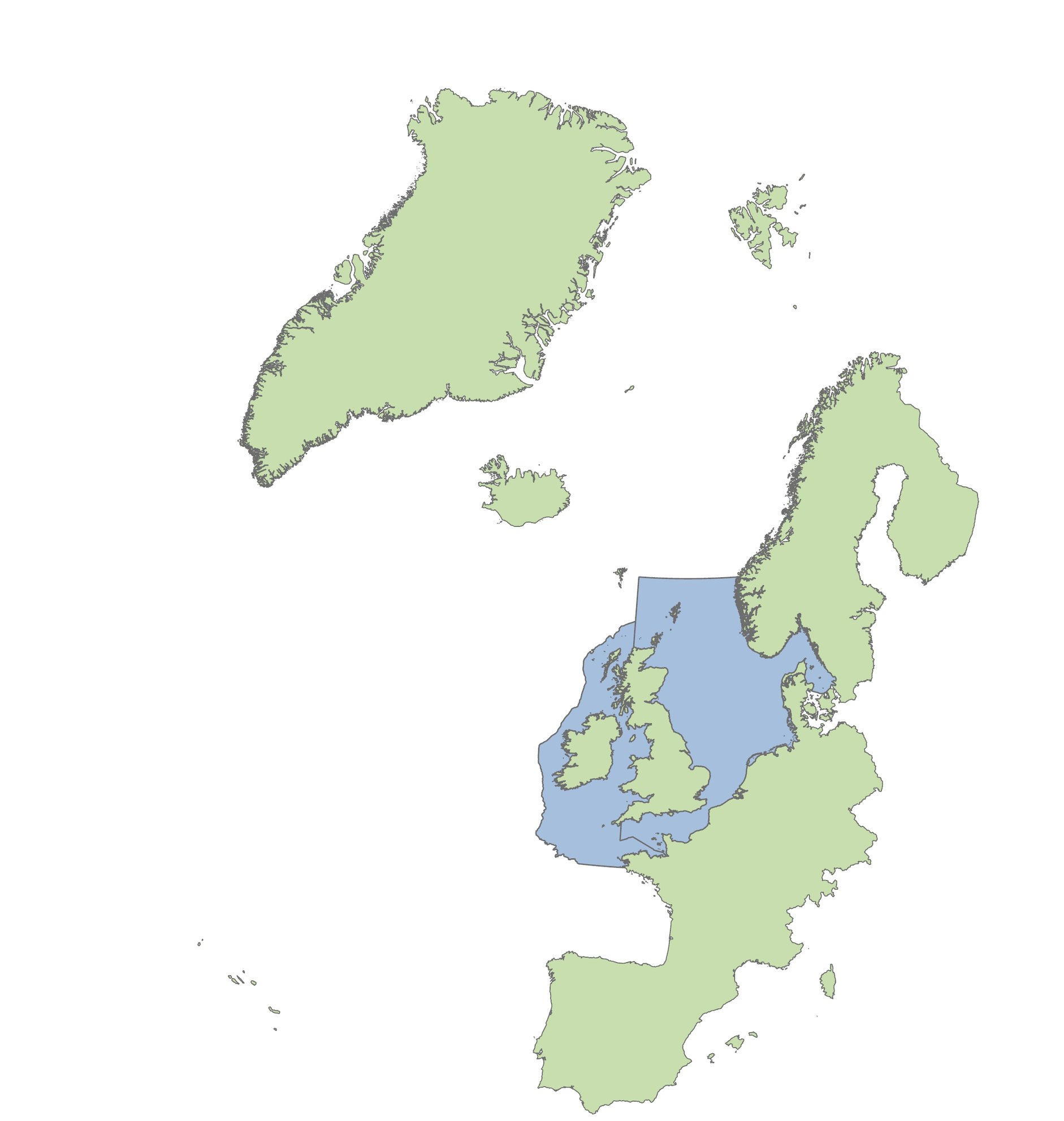
| Assessment of Status | Distribution | Extent | Condition | Evidence of status | Status (overall assessment) | |
|---|---|---|---|---|---|---|
Region | I | NA | NA | NA | NA | NA |
| II | ?3 | ?3 | ?3 | Expert judgement | poor | |
| III | ?3 | ?3 | ?3 | Expert judgement | poor | |
| IV | NA | NA | NA | NA | NA | |
| V | NA | NA | NA | NA | NA | |
Assessment of Threats | Fisheries | Installations and structures | Dumping of wastes or other matter | Sand and gravel extractions | Penetration and/or disturbance of the substrate below the surface of the seabed, including abrasion | |
|---|---|---|---|---|---|---|
Region | I | NA | NA | NA | NA | NA |
| II | ?3,5 | ↑3 | ↑3 | ↑3 | ↓ | |
| III | ?3 | ↑3 | ↑3 | - | ↑3 | |
| IV | NA | NA | NA | NA | NA | |
| V | NA | NA | NA | NA | NA | |
Explanation to table:
Evidence of Status*
red – poor
green – good
? – status unknown
NA - Not Applicable (Regions I and V: species does not occur here; Region IV: no assessment was made by CPs).
*applied to assessments of status of the feature or of a criterion, as defined by the assessment values used in the QSR 2023 or by expert judgement.
Trends in status (since the assessment in the background document)
↓ decreasing trend or deterioration of the criterion assessed
↑ increasing trend or improvement in the criterion assessed
←→ no change observed in the criterion assessed
? trend unknown in the criterion assessed
Evidence of threats or impacts (overall assessment)
↓ key pressures and human activities reducing
↑ key pressures and human activities increasing
←→ no change in key pressures and human activities
? Change in pressure and human activities uncertain
red – significant threat or impact;
green–no evidence of a significant threat or impact
Blue cells – insufficient information available
NA – not applicable
NOTES:
- For species with pronounced seasonal migration pattern and/or different populations occurring in one OSPAR Region, additional rows can be added to provide separate assessments for each (sub-) population. For example, for all bird species, please add extra rows to provide separate assessments of population size and distribution of breeding and non-breeding populations.
- Evidence of decline this may require an integration rule – please provide details of methods in the audit trail section at the end of the template and follow any relevant integration established within OSPAR.
1 – direct data driven.
2 – indirect data driven.
3 – third party assessment, close-geographic match.
4 – third party assessment, partial-geographic match.
5 – expert judgement.
Background information
Year added to OSPAR List: 2013
- Decline: Sabellaria spinulosa reefs are widely distributed within the OSPAR Regions II, III and IV and absent in Regions I and V. The density is low, however. Reef forming individuals can create reef structures, but only in favourable conditions with high levels of suspended sediment.
- Sensitivity: The greatest sensitivity is still believed to be physical damage. Other threats are mentioned to be chemical contamination, increased sedimentation and burial, biological pressures and hydrological changes (OSPAR Commission 2013a).
- Last status assessment: OSPAR (2013a) reported difficulty in assessing a potential change in status.
Geographical Range and Distribution
Reefs are present in OSPAR Regions II, II and IV in sublittoral and littoral environments (Gibb et al. 2014, Baptist et al. 2024; Cordier et al. 2024) and absent in Regions I and V (Cordier et al. 2024). Figure 1 shows S. spinulosa reefs, as submitted to OSPAR, for the last 15 years (2010-2025). In addition, Figure 2 provides an overview of S. spinulosa occurrences as collated by Cordier et al (2024) on an adapted abundance scale for reefs (SACFOR) for the period 2010-2023. Part of these observations will include reefs under the OSPAR definition, but this has not yet been verified. This dataset also contains occurrences of individual S. spinulosa (not shown on the map).
Sabellaria spinulosa, after an initial pelagic larval phase, attach themselves to (preferably hard) substrate. When a first colony has settled, the attachment can continue, with reefs able to grow widespread to tens of hectares (references in Baptist et al. 2024).
In Region II, Sabellaria spinulosa reefs are present in three MPAs of the UK. Sabellaria spinulosa reefs were also found in the Dutch Brown Bank, North Sea, which is not protected from fisheries (van der Reijden et al. 2019; Gaida et al. 2025). In the past, intertidal reefs were known to be present in the German Wadden Sea but disappeared in the early 2000s, and described, but not confirmed for the Dutch Wadden Sea (Baptist et al. 2024). In Region III, locations of Sabellaria spinulosa reefs are known from the east and west coasts of Ireland. In Region IV, some reefs have been reported for subtidal environments in France and Spain. Historical records suggest a wider distribution in the past (Cordier et al. 2024). The reported distribution is likely to be different from the actual distribution of this habitat, since Sabellaria spinulosa reefs may be confused with Sabellaria alveolata reefs and reefs may not have been monitored or identified.
The distribution of Sabellaria spinulosa individuals (not shown) in the OSPAR Area is widespread in Regions II, III and IV, with no occurrences in Region I (Cordier et al. 2024) and rare occurrences in Region V (Jackson & Hiscock, 2008; Cordier et al. 2024). The species occurs in all European coasts, including the Mediterranean but excluding the Baltic (Gibb et al. 2014, Cordier et al. 2024).
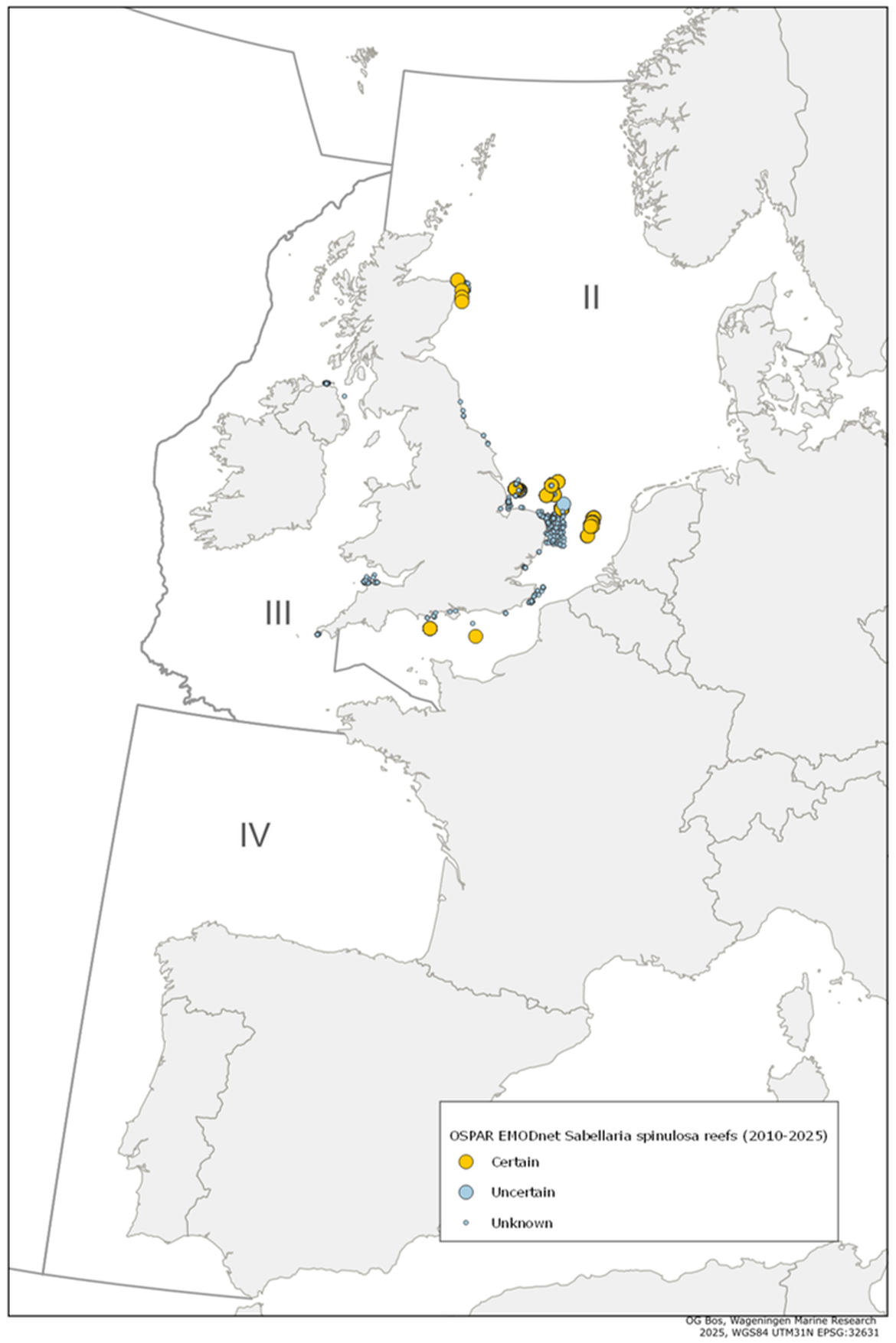
Figure 1: Reported distribution of Sabellaria spinulosa reefs reported after 2010 (OSPAR T&D 2025 database)
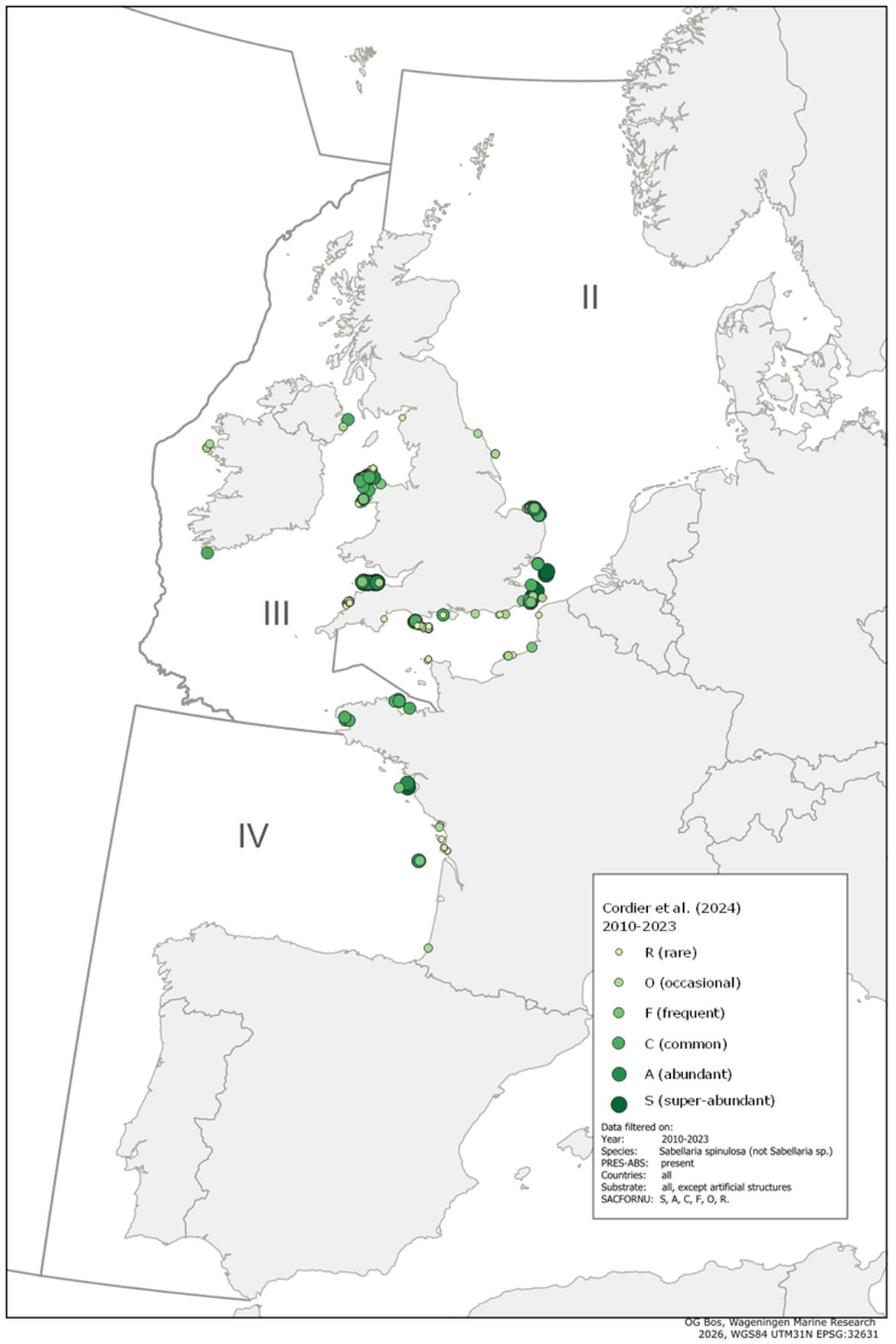
Figure 2: Reported distribution of Sabellaria spinulosa occurences on an adapted SACFOR scale for reefs (see 113573.pdf) filtered for the period 2010-2023 (Cordier et al. 2024).
Population/Abundance
Sabellaria spinulosa reefs are known to be present in the OSPAR Regions II, II and IV, but the extent of the reefs often remains unknown. Reefs are known to be currently present in UK sites (Region II and III), Irish sites (Region III) and a number of sites in France and Spain (Region IV). For other areas, such as the German Wadden Sea and German Bight, mainly historical records are present and reefs are currently absent (Cordier et al. 2024). Also new offshore reefs were discovered due to increased monitoring efforts (Brown Bank area, Netherlands Region II) (Gaida et al. 2025).
Condition
Condition can be difficult to assess, since Sabellaria spinulosa reefs can be threatened, but are also naturally short-lived (Jenkins et al. 2018). In the UK OSPAR Region II, the condition is said to be poor. For the UK OSPAR Region III, the condition is unknown. In the Dutch North Sea (Region II) (Brown Bank), the condition is not known. In the Dutch Wadden Sea, the occurrence was likely, but only individuals are found (Baptist et al., 2024). In the German Wadden Sea, reefs used to occur but are gone (OSPAR Commission 2013b). In the Belgian part of the North Sea, the condition is not known. For Region IV, the condition is not known.
Threats and impacts
Fisheries are a key pressure.
Installations and structures – offshore wind farms and other marine energy developments can lead to habitat destruction and increased sedimentation.
Dumping of waste or other matter (as well as deposits of dredged materials) can lead to habitat destruction.
Sand and gravel extractions can lead to exceeding sedimentation during extraction or too little sediment left for reef forming.
Climate change is also likely to threaten the habitat, but knowledge needs to be improved on this matter.
Measures that address key pressures from human activities or conserve the species
In Germany, Sabellaria reefs are nationally protected according to § 30 of the Federal Conservation Act (BNatschG) and in the coastal waters of Lower Saxony, there are two areas within the Wadden Sea National Park dedicated to Sabellaria protection to enable resettlement. As a consequence, all actions that destroy, damage or cause irreversible change to the seafloor are forbidden therein.
In the UK, Sabellaria spinulosa reefs lie within the UK’s network of MPAs and as Annex I habitat. Demersal gears are prohibited in the areas where Sabellaria spinulosa occurs withing the MPA Skerries and Causeway (N-Ireland). In Wales, scallop dredging is banned.
In the Netherlands, Sabellaria spinulosa reefs are not yet protected as a habitat type under the HD and not yet included in MPAs. As a first step toward change, the definition of HD habitat type 1170 will be changed in the future to include biogenic reefs.
In Belgium, protective measures for reefs are underway with the delineation of fisheries management zones and marine reserves, to restrict bottom-disturbing activities.
Conclusion (including management considerations)
The ecological status of Sabellaria spinulosa reefs can be difficult to assess because these formations are naturally short-lived and highly variable, both in their height or density and in the area they cover. Consequently, the status of Sabellaria spinulosa reefs in OSPAR Regions II and III is mostly unknown. The status is stable in some areas, although this can indicate that Sabellaria spinulosa reefs used to be present historically, and have not recurred in recent decades.
Knowledge gaps
Differentiating S. spinulosa from S. alveolata : The Sabellariidae family includes ecotypes with relatively different ecological niches and significant morphological variability (particularly regarding the cephalic crown). It now seems necessary to review the genera of Sabellariidae, as well as the species of the genus Sabellaria, by combining morpho-anatomical approaches with the latest molecular tools.
Location of reefs: dedicated mapping using a combination of acoustic techniques and Artifical Intelligence (AI) can be used to determine the distribution of reefs more accurately (Gaida et al. 2025, Jenkins et al 2018). In 2023, a systematic survey was done for a part of the Dutch Brown Bank (Gaida et al. 2025). Based on historic acoustic data (SSS), areas of interest were determined and examined with acoustic, Remote Operated Vehicle video and grab methods. In the end, this yielded an AI classification model that can predict presence of reefs based on other SSS data. Detection of S. spinulosa by eDNA sampling techniques is probably less informative, because larvae (Van Walraven et al. 2025) and adult individuals occur widespread (Cordier et al. 2024).
In OSPAR Region II, S. spinulosa reefs can be intertidal. Mapping approaches using drones and processing chains dedicated to identifying these reef structures are now essential complementary tools for defining spatial coverages in intertidal zones.
Effects of certain pressures such as marine litter, introduction of light, electromagnetic fields and underwater noise are not known (Gibb et al. 2014). The relatively short-lived period of a reef (Jenkins et al., 2018), makes it difficult to assess a trend of condition over decades. The extremely variable nature of S. spinulosa reef formations (in terms of their height and spatial coverage) makes their condition difficult to assess. It means that snapshot mapping quickly becomes obsolete. Regular monitoring and return-to-site protocols are suited to these heterogeneous habitats and should be deployed more widely.
It is suggested that there is a correlation between windfarm development and reef extent, but the methodology is too limited to be certain (Jenkins et al. 2018).
It is still not very well known which are the exact conditions for S. spinulosa reefs to become re-established, so it remains to be seen whether the areas where human bottom disturbance is or will become abolished are adequate for reef formation. Also, it is not certain, whether some interventions (such as supplying substrate) may significantly speed up (Sabellaria spinulosa) or hamper (Lanice conchilega) reef formation (Sas et al. 2023)
Baptist MJ, Bos OG, Coolen JWP (2024) Historisch en huidig voorkomen van Sabellaria-riffen in de Waddenzee als uitgangspunt voor herstel.
Bos O, Kingma E, van der Wal JT (2024) Biogenic reefs in the Dutch North Sea in relation to Offshore Wind Energy locations : Actual and predicted probability of occurrence of reef forming shellfish and worms in new wind farm zones and search areas for wind farm zones. (Wageningen Marine Research report; No. C091/24). Wageningen Marine Research. https://doi.org/10.18174/683402
Cordier C, Firth L. B., Dubois S, Board C, Bocher E, Cox C, Cox R, Ducker J, Gruet Y, Kerckhof F, Lovatt C, Segeat B, Curd A (2024). A broad-scale long-term dataset of Sabellaria spinulosa distribution and abundance. SEANOE. https://doi.org/10.17882/102259
Envision Marine Ltd. (Benson, Turnbull, Aldis, Clarke, Sotheran). 2025 Biological analyses of underwater video footage collected from 2020-2024 in Scottish waters
Gaida T, Binnerts B, Van Der Stappen C, Cuperus J (2023) Sabellaria monitoring trial: summary report TNO Intern ONGERUBRICEERD Releasable to the public Title TNO Intern Report text.
Gaida TC, Binnerts B, Bos O (2025) Semi-Automated Classification of Side-Scan Sonar Data for Mapping Sabellaria spinulosa Reefs in the Brown Bank, Dutch Continental Shelf. J Mar Sci Eng 13.
Gibb N, Tillin H, Pearce B, Tyler-Walters H (2014) Assessing the sensitivity of Sabellaria spinulosa reef biotopes to pressures associated with marine activities.
Jackson, A. & Hiscock, K. (2008). Sabellaria spinulosa Ross worm. In Tyler-Walters H. and Hiscock K. Marine Life Information Network: Biology and Sensitivity Key Information Reviews, [on-line]. Plymouth: Marine Biological Association of the United Kingdom. [cited 17-10-2025]. Available from: https://www.marlin.ac.uk/species/detail/1133
Jenkins C, Eggleton J, Barry J, O’Connor J (2018) Advances in assessing Sabellaria spinulosa reefs for ongoing monitoring. Ecol Evol 8:7673–7687.
OSPAR Commission (2013a) Background document on Sabellaria spinulosa reefs. Biodiversity Series. OSPAR, London, UK.
OSPAR Commission (2013b) Background document on Sabellaria spinulosa reefs. Biodiversity Series. OSPAR, London, UK.
Sas H, Van Duren L, Herman P, Van Der Have T, Kamermans P, Bos O, Kingma E, Bouma T, Kardinaal E (2023) Reef-building species and biogenic reef enhancement in the Dutch North Sea. Background documents.
van der Reijden KJ, Koop L, Mestdagh S, Snellen M, Herman PMJ, Olff H, Govers LL (2021) Conservation Implications of Sabellaria spinulosa Reef Patches in a Dynamic Sandy-Bottom Environment. Front Mar Sci 8.
van der Reijden KJ, Koop L, O’Flynn S, Garcia S, Bos O, van Sluis C, Maaholm DJ, Herman PMJ, Simons DG, Olff H, Ysebaert T, Snellen M, Govers LL, Rijnsdorp AD, Aguilar R (2019) Discovery of Sabellaria spinulosa reefs in an intensively fished area of the Dutch Continental Shelf, North Sea. J Sea Res 144:85–94.
van Walraven, L., Hoekendijk, J., Jak, R., Keur, M., Peck, N., Polling, M., van Dalen, J., & van Oevelen, D. (2025). Development of integrated zooplankton monitoring for the Dutch North Sea within the MONS project: ID14 MONS Monitoring Zooplankton Phase 1. (Wageningen Marine Research report; No. C013/25). Wageningen Marine Research. https://doi.org/10.18174/688432
Sheet reference:
BDC2026/Sabellaria spinulosa reefs