


Feeder Report 2026 - Aquaculture
Executive Summary
Global aquaculture production reached a record 130,9 million tonnes in 2022, with an estimated farmgate value of approximately USD 310 billion, and for the first time supplied over 50% of aquatic animal production for direct human consumption. Within the OSPAR Maritime Area, European aquaculture output reached approximately 2,89 million tonnes in 2024, having grown steadily from approximately 15 million tonnes in 2008. Norway dominates the region, accounting for around 57% of European output, almost entirely through Atlantic salmon production. The United Kingdom is the second largest finfish producer in the North-East Atlantic and the third largest global salmon producer. The European Union (EU) production volumes have, however, stagnated at approximately 1,1 million tonnes since 2018, declining by around 1,7% per annum between 2014 and 2023, though economic value grew by 3,4% annually over the same period, driven by high-value species. The UN’s Food and Agriculture Organization (FAO) projects a 1% decline in European production by 2032, contrasting sharply with 17% growth globally, reflecting persistent licensing bottlenecks, with new licence applications in the EU falling 33% between 2021 and 2023 and processing times in some countries now ranging from three to five years.
Shellfish constitute a significant portion of production by volume, with Spain and France as the leading producers. The EU produced over 522,000 tonnes of bivalves and molluscs in 2022 at a record value of €1,30 billion. Bivalve production has, however, declined by approximately 2% per annum over the past decade due to environmental pressures, climate change, and predation. Algal farming is growing rapidly from a low baseline, up 240% since 2016, and France has emerged as the EU leader in seaweed cultivation. Recirculating Aquaculture Systems (RAS) represent a developing land-based alternative, though production volumes have declined since 2019 to approximately 16,600 tonnes across OSPAR countries in 2023.
The economic significance of the sector is substantial. Norwegian finfish production reached a record value of NOK 105,8 billion (€9 billion) in 2022, rising further to €10,5 billion in 2023. The EU sector as a whole employed around 73,000 people (41,000 full-time equivalents), with shellfish production in France and Spain underpinning significant coastal livelihoods, often through small, family-run operations.
Looking ahead, there are ambitious national growth targets across the region. These ambitions are partly framed by the EU Strategic Guidelines for a More Sustainable and Competitive EU Aquaculture (2021–2030) and supported through the European Maritime, Fisheries and Aquaculture Fund (EMFAF). Norway aims for a six-fold increase in biomarine industry revenues by 2050, Scotland targets doubling its aquaculture economic contribution by 2030, Iceland aims to double production from 2020 levels, and England's Seafood 2040 initiative supports a tenfold increase over 20 years. Offshore aquaculture is an emerging frontier, with Norway preparing licensing rounds for offshore sites.
The sector generates a range of environmental pressures that vary considerably by species and production method. For finfish farming, key concerns include organic waste accumulation and localised eutrophication from nutrient enrichment; genetic interactions between escaped farmed and wild fish; transfer of sea lice and disease to wild populations, with peer-reviewed evidence confirming that lice from aquaculture reduce marine survival of wild Atlantic salmon at population-relevant scales; and the use of chemicals including antifoulants, veterinary medicines, and pesticides with potential toxic effects on non-target species. Phosphorus emissions from Norwegian aquaculture nearly doubled between 2005 and 2021. For shellfish, pressures include localised sediment and water column changes, potential stripping of primary production at high intensities, and the spread of non-indigenous species such as the Pacific oyster, whose range continues to expand under warming conditions. Marine litter from aquaculture gear is estimated at 3,000–4,000 tonnes per year across the European Economic Area (EEA), with oyster and mussel nets among the most commonly recorded aquaculture items in OSPAR beach surveys. Climate change compounds all of these pressures through increased storm risk, harmful algal blooms, ocean acidification affecting shell-forming species, and thermal stress on farmed stocks.
Low-trophic species (i.e. shellfish and algae) can provide positive ecosystem services including carbon sequestration, nutrient removal, and buffering of local acidity, and are highlighted in the FAO's Blue Transformation strategy as a means to meet rising seafood demand sustainably. Integrated Multi-Trophic Aquaculture (IMTA) systems co-cultivating seaweed and shellfish show promise in enhancing these benefits, though commercial scaling remains challenging. Recirculating Aquaculture Systems (RAS), when integrated with renewable energy sources, are moving toward a reduced carbon footprint, though challenges remain around dissolved nutrient effluents, energy intensity, and accumulation of pollutants including microplastics and antimicrobial resistance genes.
OSPAR has strengthened its regulatory and monitoring frameworks since its Quality Status Report (QSR) 2023, reinstating monitoring under PARCOM Recommendation 94/6 on toxic chemicals from aquaculture and proposing a comprehensive revised framework covering hazardous substances, nutrient loads, feed composition, waste management, and permitting. The OSPAR Riverine Inputs and Direct Discharges (RID) programme confirms that aquaculture is now a major direct point source of nitrogen and phosphorus in the Maritime Area. OSPAR's Regional Action Plan on Marine Litter 2 includes dedicated actions to prevent and reduce aquaculture litter. At EU level, the Water Framework Directive, Marine Strategy Framework Directive, Birds and Habitats Directives, and Animal Health Law provide the overarching legislative framework, supplemented by the TAPAS Aquaculture Sustainability Toolbox and recent EU guidance on access to space, climate adaptation, and decarbonisation.
Significant knowledge gaps remain, particularly regarding the long-term ecological impacts of aquaculture at population and ecosystem scales, the effectiveness of mitigation measures for unintentional releases and therapeutants, carrying capacity for shellfish and offshore systems, and the cumulative effects of multiple stressors.
Introduction
1.1 This report summarises the status of marine aquaculture (mariculture) within the North-East Atlantic and measures taken to manage its environmental impacts. It briefly notes key messages from previous holistic OSPAR assessments, namely the Quality Status Report 2010 (QSR 2010), the Intermediate Assessment 2017 (IA 2017), the Quality Status Report 2023 (QSR 2023) and reports on progress since then. This includes consideration of findings from the OSPAR background document on marine litter from aquaculture, which provides sector-specific insights into waste management and litter contributions.
1.2 The analysis covers production of finfish, molluscs, crustaceans, aquatic plants, and miscellaneous aquatic products in the North-East Atlantic, in marine and brackish waters. The report recognises that environmental impacts, ecosystem services, and socio-economic advantages vary significantly between these different types of aquaculture (e.g., finfish vs. low-trophic species), and they are addressed separately where relevant.
Distribution, Intensity and Trends since QSR 2023
Overall trends
2.1 According to the most recent assessment by the Food and Agriculture Organisation of the United Nations (FAO), global aquaculture production reached 130,9 million tonnes in 2022, with a farmgate value of approximately USD 310 billion. For the first time, aquaculture supplied over 50% of aquatic animal production for direct human consumption (FAO, 2024). The sector continues to expand more rapidly than capture fisheries, driven largely by growth in Asia, though Europe remains a significant producer of high-value species. The growth of global aquaculture is shown in Figure 1.
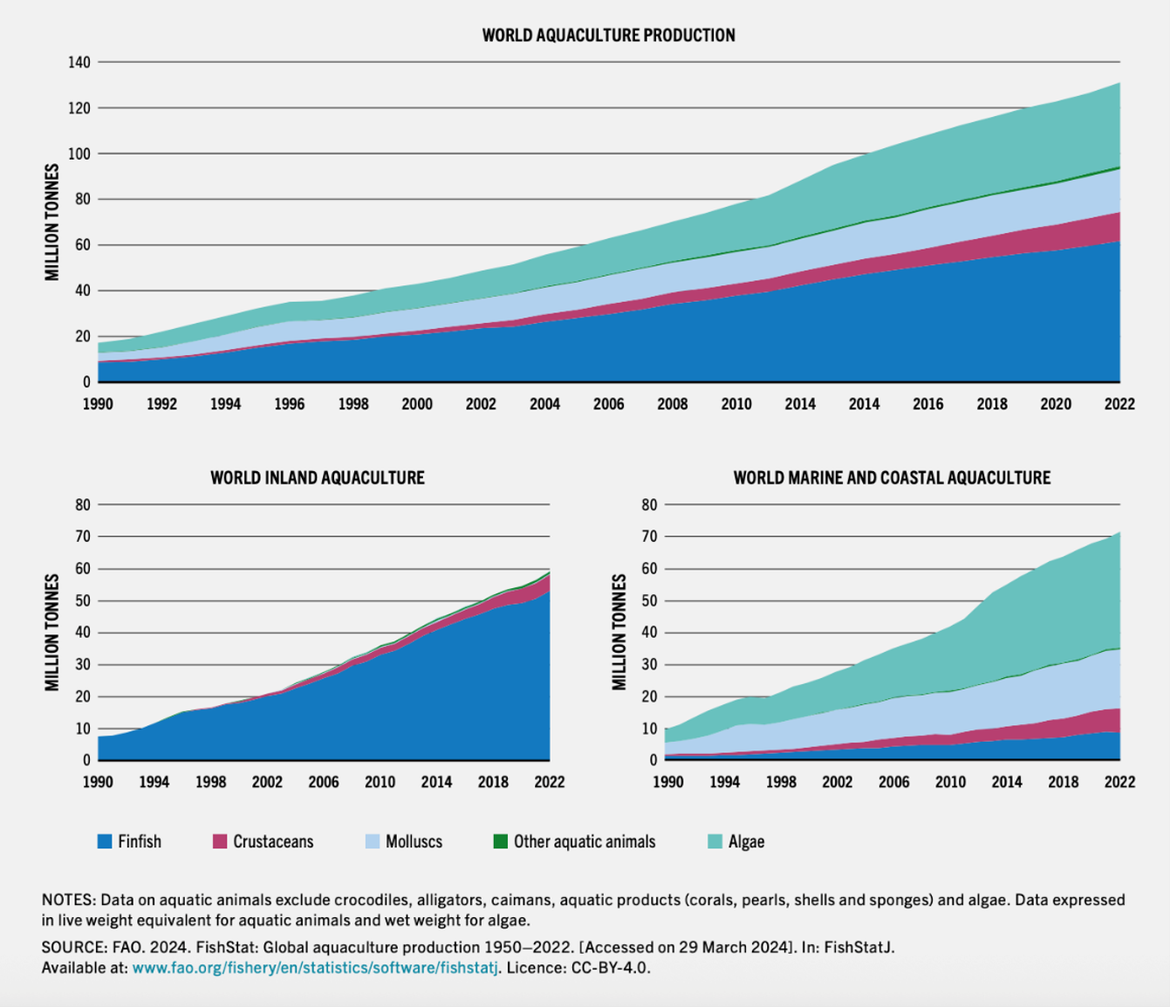
Figure 1: World aquaculture production from 1990 to 2022. Taken from FAO (2024)
2.2 QSR 2010 reported that almost 1,5 million tonnes of farmed fish and shellfish were produced in the OSPAR Maritime Area in 2006. It noted that production of finfish had grown by over 50% in the previous decade, mainly in Arctic Waters (Region I) and the Greater North Sea (Region II), while shellfish farming had remained stable. It anticipated increased activity in all OSPAR Regions other than the Wider Atlantic (Region V).
2.3 Subsequent developments in the volume of marine aquaculture varied according to individual countries, OSPAR Regions, and the type of species being farmed. Data from the FAO showed that production by weight in the North-East Atlantic (including the Baltic) increased from approximately 1,5 million tonnes to approximately 2,2 million tonnes between 2008 and 2018. Norway remained by far the largest producer. Norwegian production in Region I and Region II accounted for well over half of total OSPAR countries’ production weight, and for the bulk of the overall increase since the QSR 2010 analysis (data from FAO, 2020a).
2.4 Since 2018, aquaculture activities within the OSPAR Maritime Area have continued to increase, albeit with nuanced regional differences. The Federation of European Aquaculture Producers (FEAP) 2023 production report provides a robust regional perspective. In 2023, European aquaculture output reached approximately 2,89 million tonnes, marking a light increase of 0,4% compared to 2022. Marine cold-water species (chiefly Atlantic salmon, Salmo salar) constituted 70,7% of total production, with Norway dominating at 80,8% of European output followed by the United Kingdom at 9,8%. The most commonly farmed species remain salmon, trout, seabream, and seabass, which (along with the freshwater species carp) collectively account for 94% of total European aquaculture (FEAP, 2023).
2.5 Thus, when combined with earlier FAO estimates of roughly 2,2 million tonnes in the broader North-East Atlantic by 2018, these figures suggest that OSPAR-region production has likely surpassed 3 million tonnes by 2023, assuming continuity of Norwegian dominance and growth in cold-water species.
2.6 EU Member State trends since 2018 reveal persistent stagnation in production volumes. Eurostat data for 2022 and 2023 show aquaculture output holding at about 1,1 million tonnes with a value of approximately €4,8 billion. Notably, species profiles remain consistent, with mussels forming the bulk by weight and trout and seabream sustaining high economic value (Eurostat, 2025). FAO’s 2020 assessments indicate that OSPAR countries, such as France, Germany, and Ireland, have seen little to no rebound in production following earlier declines (FAO, 2022).
2.7 Similarly, the 2025 Mid-term Assessment of EU Strategic Guidelines (Huntington, 2025) indicated that EU production volume decreased by approximately 1,7% per annum between 2014 and 2023, totalling approximately 1,05 million tonnes in 2023. However, the economic value of this production increased by 3,4% annually over the same period, driven by high-value species such as salmon, seabass, and the ranching of Bluefin tuna.
2.8 Notably, the 2025 assessment reveals a downward trend for low-trophic species: bivalve production has declined by roughly 2% per annum over the last decade due to environmental pressures, climate change, and predation. Conversely, algal farming has shown explosive growth from a low baseline (up 240% since 2016), signalling a shift toward diversification into novel species.
2.9 Policy efforts continue to shape the sector. OSPAR's QSR 2023 highlights advancements in sustainable aquaculture practices, including the shift toward more dispersive cage siting to mitigate organic waste impacts, improved regulations to reduce escapes, and innovative use of cleaner-fish (e.g., lumpfish and wrasse) to control sea lice. While mitigation strategies like effluent modelling and containment technology have gained traction, knowledge gaps, particularly regarding unintentional releases, therapeutants, shellfish impacts, and offshore expansion, persist (OSPAR Commission, 2023b).
2.10 Despite progress in spatial planning, with three-quarters of EU Member States now including aquaculture in their national Marine Spatial Plans (MSPs), the 2025 Mid-term Assessment of EU Strategic Guidelines identifies persistent 'licensing bottlenecks.' New license applications fell by 33% between 2021 and 2023, and processing times in some OSPAR countries, such as Denmark, now range from 3 to 5 years, hindering the expansion of the sector.
2.11 The OSPAR QSR 2023 also underscores how habitat degradation, especially of benthic habitat, is tied to aquaculture pressures, particularly high-trophic finfish production in net cages. In regions like the Celtic Seas (Region III) and Bay of Biscay (Region IV), benthic habitats remain in poor status, not least due to farm-related modifications alongside other stressors like trawling and pollution (OSPAR Commission, 2023a; QSR synthesis). These impacts underline the urgency of integrating aquaculture management with broader ecosystem-based strategies.
2.12 To summarise, aquaculture within the OSPAR Maritime Area has evolved steadily since 2018: European output recently peaked at approximately 2,87 million tonnes, with Norway continuing as the strong growth engine. EU-level production has remained static in volume but gained economic momentum through high-value species. OSPAR’s latest assessments point to stronger environmental management measures being deployed, whilst regulatory and scientific uncertainties persist. Looking forward, advancing monitoring, mitigating environmental impacts, and safeguarding habitat resilience will be pivotal to the region’s aquaculture trajectory.
Finfish aquaculture
2.13 Finfish aquaculture in the OSPAR Maritime Area is dominated by salmon production, particularly from Norway. In 2018, Norwegian production from all marine aquaculture (fish, shellfish and other organisms) was over 1,35 million tonnes, mainly of salmon, around 60% more than in 2008, though relatively little changed since 2012 (FAO, 2020a). Norway’s production represented around 1,65% of global aquaculture fish production in 2018; nearly 90% of production (freshwater and marine) was in Asia. Norway (second) and the United Kingdom (tenth) were among the largest global producers of marine and coastal finfish (FAO, 2020b). Norway is the largest global producer of farmed salmon; the United Kingdom is the third largest global salmon producer (FAO, 2020c).
2.14 FEAP report total European aquaculture production at approximately 2,89 million tonnes (Figure 2), with cold-water finfish (mainly Atlantic salmon) representing 67% of that output and Norway accounting for 57% overall (FEAP, 2026).
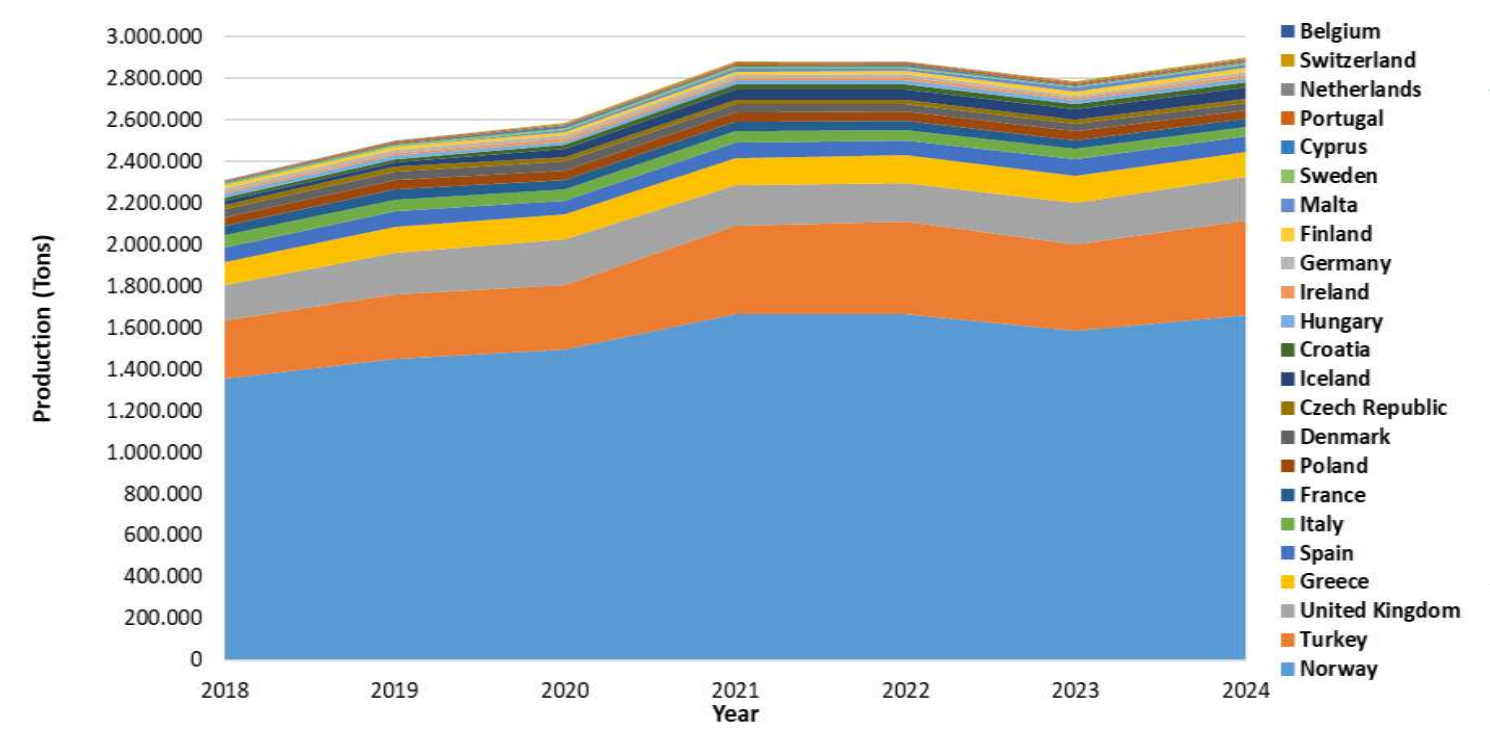
Figure 2: Fish farming production in Europe from 2018 to 2024. Taken from FEAP (2026)
2.15 Forecasts from Rabobank and the Global Seafood Alliance indicate that world production of Atlantic salmon is expected to resume growth in 2024, with Norway leading this recovery (Rabobank & GSA, 2023). At the EU level, the EU Fish Market report for 2024 notes that Europeans consumed about 6,82 kg per person of farmed seafood in 2022, the highest level in the past decade, and that aquaculture products’ share of apparent consumption continues to rise (European Commission, 2024). Salmon imports remain economically vital: salmon import value surged, driven by higher prices paid predominantly to Norway (83% of the increase), even as volumes declined (European Commission, 2023).
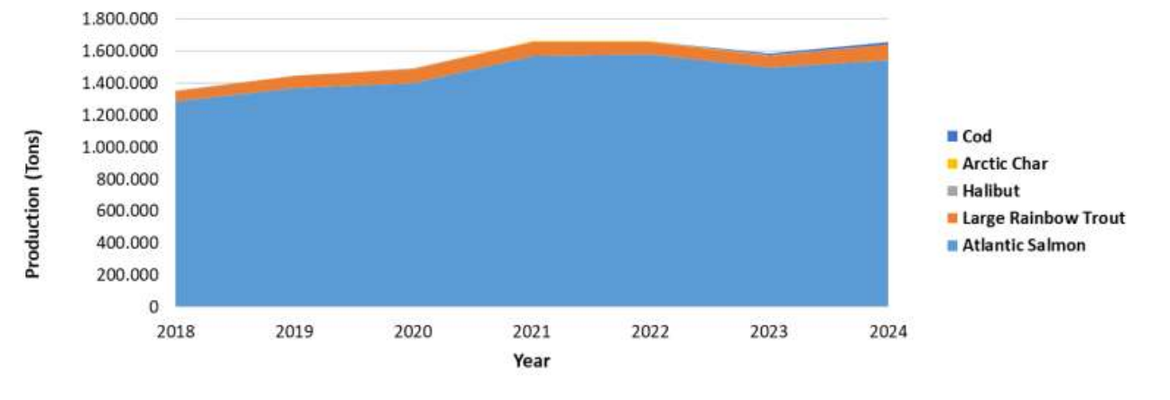
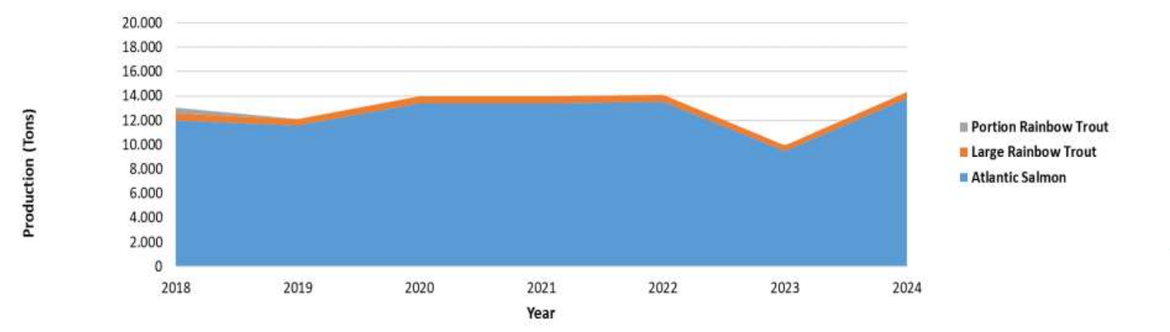
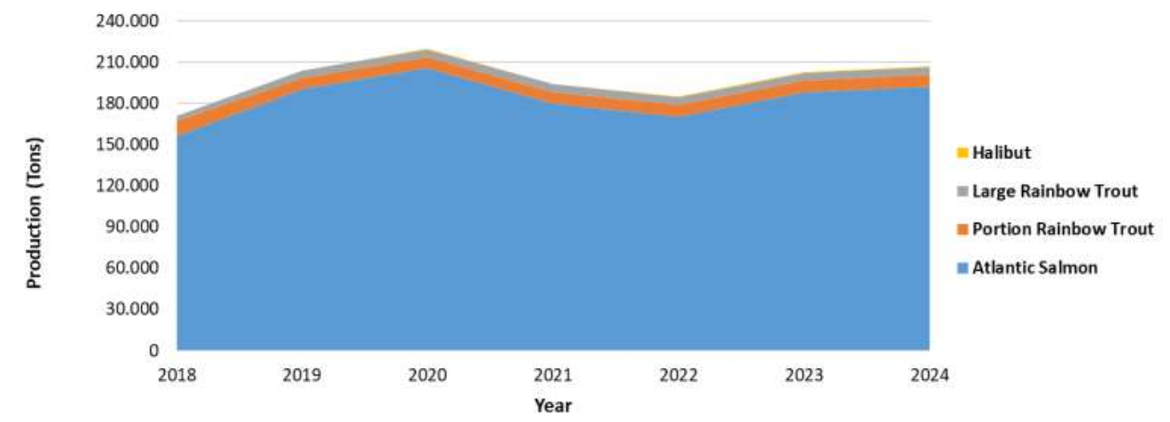
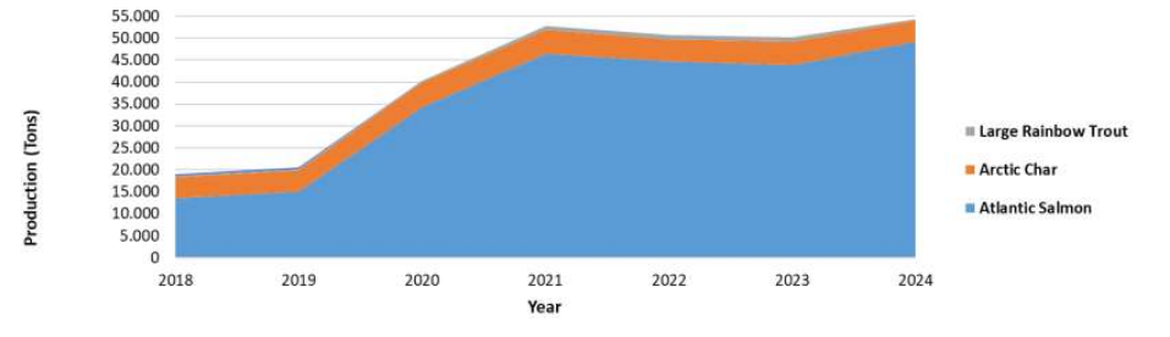
2.16 Behind Norway, the United Kingdom was the second largest producer of finfish, almost entirely due to salmon production in Region III and the northern part of Region II. In Region III, Ireland is also a salmon producer; the Faroe Islands and Iceland are producers of salmon in Region I. Charts of aquaculture production between 2017 and 2023 in these countries are shown in Figure 3. Sweden and Germany have no finfish aquaculture in the OSPAR Maritime Area. Swedish courts question whether open cage farming is consistent with best available techniques (Svea Hovrätt, judgment M 8673-15 (2017)).
Norway
Ireland
United Kingdom
Iceland
Figure 3: Aquaculture production (in tons) in Norway, the United Kingdom, Ireland, and Iceland between 2018 and 2024. Individual country charts taken from FEAP (2026).
Shellfish aquaculture
2.17 Shellfish are increasingly recognised as essential components of a sustainable food production system within the OSPAR Maritime Area. Unlike high-trophic finfish, these species do not require external feed inputs; shellfish filter naturally occurring nutrients and phytoplankton from the water, while algae utilise photosynthesis and dissolved inorganic nutrients. This 'extractive' nature allows the sector to contribute to food security by providing high-quality protein and micronutrients with a significantly lower carbon and freshwater footprint than terrestrial animal farming. Strengthening these sectors is identified in the FAO’s 'Blue Transformation' strategy, as a way to meet rising seafood demand while providing ecosystem services such as carbon sequestration and nutrient mitigation (FAO, 2022).
2.18 In 2022, the European Union produced over 522 000 tonnes of bivalves and molluscs, a 6% decline in volume from 2021, though value rose to €1,30 billion, the highest in five years. Mussel production formed over one-third of this volume, amounting to 396 390 tonnes and valued at €455 million. Spain continued to lead EU mussel output with 192 195 tonnes in 2022, despite a 5% decline that year, while production value rose 13% to a decade-high €156 million. France primarily produces blue mussels (Mytilus edulis), sold at a higher average price of €2,37/kg compared to Spain’s €0,81/kg for Mediterranean mussels (Mytilus galloprovincialis) (EUMOFA, 2024).
2.19 Spain’s maritime regions, especially Galicia, maintained their role as the EU’s centre of mussel aquaculture, largely through off-bottom raft systems. In 2021, shellfish accounted for most of Spain’s marine aquaculture, with mussel production reaching 203 226 tonnes worth €137,4 million. Marine finfish such as seabass, turbot, and trout also contributed significantly, with sea bass production at 21 447 tonnes (€139,7 million) and turbot at 8 538 tonnes (€70,2 million), while mussels dominated the volume share (Eurofish, 2021).
2.20 Shellfish cultivation techniques remain largely consistent: Spain relies on off-bottom raft systems, while countries like the Netherlands and Germany deploy on-bottom cultivation using designated beds after seed collection on ropes or poles: methods that differ in ecosystem impact due to maintenance and extraction practices (EUMOFA, 2024; European Commission, 2012).
2.21 Environmental and biological pressures, such as disease outbreaks, spawning failure, and climate-driven stress, continue to shape production dynamics. Spain’s initial post-2018 decline in mussel output was attributed to disease, low seed availability, and economic pressures, though rising value helped offset lower volume (EUMOFA, 2024). France experienced lower oyster production in 2019 following a hot summer and continued setbacks from juvenile oyster mortality linked to the OsHV1 µvar virus (STECF, 2018). More recently, Galician mussel farms have grappled with harmful algal blooms, prompting innovation: machine-learning tools trained on remote monitoring data are now being piloted to predict closures more accurately with the aim of reducing unnecessary harvest disruptions (Molares-Ulloa et al., 2024).
Other aquaculture
2.22 Other marine aquaculture products are minor, but some notable developments are occurring, particularly in macroalgae cultivation.
2.23 Crustacean farming in marine coastal zones continues to represent a minor portion of the regional aquaculture footprint. Previous FAO data indicated approximately 346 tonnes of crustaceans farmed in 2018 (FAO, 2020a), and more recent aggregated figures suggest little change in overall weight production. Eurostat’s holistic reporting on aquaculture remains under the category “aquatic organisms” but underscores that crustaceans continue to account for a very small slice by volume; no significant expansion has been noted in the North-East Atlantic region between 2018 and 2023 (Eurostat, 2025).
2.24 In contrast, aquatic plant (notably macroalgae or seaweed) cultivation, although still small-scale, is evolving. While precise tonnage data remain sparse, the Blue Bioeconomy Report and other EU sources highlight that Europe—including the North-East Atlantic—is home to the fastest-growing segment of its blue economy in algae cultivation systems, though production remains fragmented and under-regulated (European Commission, 2023). Estimates from globally oriented sources suggest that global farmed aquatic plant production hit 37,8 million tonnes in 2022, up from just over 30 million tonnes in 2016, although Europe’s contribution remains under 1%, largely via Norway, France, and Ireland (European Commission, 2023a).
2.25 France has emerged as a leader in EU seaweed cultivation, hosting the greatest number of macro- and microalgae producing companies and various innovative pilot systems though annual production remains modest (Sensalg, 2023). Meanwhile, Spain is growing its footprint in organic aquaculture: According to the Spanish Ministry of Agriculture, Fisheries and Food, total organic aquaculture production in 2023 amounted to 4 306 tonnes, including 1 715 tonnes of mussels, 1 042 tonnes of algae, and 1 050 tonnes of other cultivated aquatic plants, demonstrating early momentum for sustainable-algae integration (Blue Life Hub, 2024).
Recirculating Aquaculture Systems
2.26 Recirculating Aquaculture Systems (RAS) can be closed containment land-based facilities (the majority) or marine based floating closed / semi-closed containment systems (currently in development). Currently the main species cultured in RAS in the OSPAR Maritime Area are finfish. According to Eurostat, the production of fish for human consumption in ‘recirculation systems’ across OSPAR countries has declined steadily since 2019, with total production in 2023 being approximately 16 628 tonnes (compared to 21 615 tonnes in 2019).
Distribution
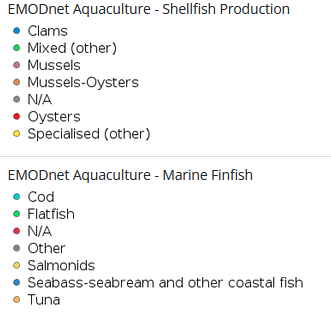
2.27 Figure 4 illustrates the distribution of marine aquaculture in the OSPAR Maritime Area. While current spatial datasets may show gaps for certain countries, such as England and Wales, comprehensive production data across all OSPAR countries have been considered within this report to ensure a complete regional overview.
Figure 4: Map showing distribution of Finfish and Shellfish aquaculture within the OSPAR Maritime Area.
(Source of Data: EMODnet)
Economic value
Finfish
3.1 The economic value of marine finfish aquaculture in the OSPAR Maritime Area, especially for high-value species like salmon, has continued to climb strongly since 2018. The data included within the following paragraphs is taken from Eurostat’s dataset on aquaculture production (fish_aq2a; Eurostat 2025b) unless otherwise stated.
3.2 Within the EU, total aquaculture production was valued at approximately €4,9 billion in 2022, decreasing slightly to €4,8 billion in 2023, which equates to an estimated 78% rise since 2010. While the volume of production remained broadly constant at around 1,1 million tonnes live weight (TLW), the rising average value underscores improved market conditions and product diversification.
3.3 As with production volumes, the economic value of finfish is dominated by Norway. In 2022, Norwegian finfish production reached their highest-ever value at NOK 105,8 billion (€9,0 billion), marking a 30% increase over 2021 despite slightly lower volumes. By 2023, the export value rose further to NOK 122,5 billion (€10,5 billion). This is more than double the EU’s aggregated value. Finfish aquaculture remains capital-intensive, with Norway’s industry embracing automation and scale. The 2023 report from Kontali highlights strong profitability: large Norwegian companies saw net sales jump by over 27%, and EBIT (Earnings Before Interest and Taxes) margins rose from 20,8% to 28,5% year-on-year (Kontali, 2023). Resources like Norway’s resource rent tax have added complexity.
3.4 The United Kingdom had the second highest marine aquaculture production value among OSPAR countries, again dominated by salmon. The value of United Kingdom salmon production grew in the decade to 2023 from around €500 million to around €1 billion. Increases in production value of salmon were also reported in Ireland and Iceland.
3.5 The FAO reports that farmed Atlantic salmon is one of the most profitable and technologically advanced aquaculture industries in the world, backed by coordinated international marketing and product innovation. Factors limiting supply, such as site availability and regulatory constraints, have led to price increases. Shorter term prices can be quite volatile – for example, the FAO’s Globefish information exchange reported steep falls in global salmon prices in the first half of 2019, linked to good production in Norway and Chile, but prices reaching near record levels later in the year, driven by strengthening demand in traditional and emerging markets (FAO, 2020b; FAO, 2020c).
Shellfish
3.6 Changes in shellfish production value have been less substantial than for finfish. France’s production of molluscs in the North-East Atlantic was worth over €400 million annually across the decade, making France the third highest aquaculture producer, in terms of value (finfish and shellfish) in the OSPAR Maritime Area. The value fluctuated year on year, with a dip in 2014 and 2015, but did not increase significantly across the period. Nearly three-quarters of the value in 2017 and 2018 was from oysters, with most of the remainder due to (blue) mussels. Shellfish production (mainly mussels) accounted for over half the production value in Spain (North-East Atlantic), and showed some increase over the decade (Eurostat, 2020).
3.7 Between 2018 and 2025, the economic value of shellfish aquaculture, especially mussels and oysters, has shown moderate but meaningful improvement. In 2022 the EU produced 522 019 tonnes of bivalves and other molluscs, achieving a record value of €1,30 billion, which equates to a 2% increase from the previous year and the highest in five years (EUMOFA, 2024).
3.8 Mussels, predominantly produced using off-bottom raft systems in Spain and blue mussels in France, made up over one-third of the total by volume. In 2022, mussel production reached 396 390 tonnes, valued at €455 million, reflecting an 8% drop in value from 2021 but steady unit price growth from €0,87/kg in 2018 to €1,15/kg in 2022 (EUMOFA, 2024).
3.9 Spain maintained its lead in mussel production within the EU, contributing 192 195 tonnes worth €156 million in 2022, the highest value on record for the past decade, marking a 13% increase despite declining volumes (EUMOFA, 2024). In contrast, France continued to specialise in higher-value blue mussels and oysters. Blue mussels produced in France fetched significantly higher prices—€2,37/kg on average in 2022 (EUMOFA, 2024). In 2023, France’s overall value from aquaculture expected to total around €906 million, slightly ahead of Spain at €802 million, underscoring strong price dynamics in shellfish markets (Eurostat, 2025).
Employment
3.10 Table 1 shows marine aquaculture employment statistics in OSPAR countries for which 2022 data was available through the STCF (2024) report.
| Employees in finfish aquaculture | Employees in shellfish aquaculture | |
|---|---|---|
| Belgium | 81 | |
| Kingdom of Denmark | 137 | 38 |
| France | 0 | 15 198 |
| Finland | 147 | 0 |
| Germany | 0 | 146 |
| Iceland | n/a | n/a |
| Ireland | 272 | 1 782 |
| Netherlands | 0 | 224 |
| Norway* | 7 903 | n/a |
| Portugal | 874 | 1 080 |
| Spain | 2 025 | 12 420 |
| Sweden | 0 | 69 |
| United Kingdom* | 1 900 | 700 |
Figures include employment in non-OSPAR regions, data taken from STCF (2024); *denotes countries where updated data was not available, and therefore figures listed are from 2018; n/a indicates that employment data for these specific categories was not reported in the STCF datasets; For Belgium, the source data does not differentiate between finfish and shellfish sectors; the total figure is provided in the merged cell.
3.11 Employment in marine aquaculture across OSPAR Regions continues to play a vital socioeconomic role, particularly in shellfish production in France and Spain, where small, family-run operations—often employing seasonal workers—are a cornerstone of local coastal livelihoods. In contrast, mussel aquaculture in the Netherlands and Germany is characterised by larger, capital-intensive enterprises with fewer employees. Countries such as Denmark, Ireland, Portugal, and the United Kingdom sustain steady employment across both finfish and shellfish sectors, though their labour numbers remain modest compared to Norway, Spain, and France. Norway, with its extensive salmon and trout farming industry, maintains substantial full-time employment and supports robust economic value. Overall, EU data reflect around 73 000 aquaculture jobs—41 000 full-time equivalents—underscoring both the economic significance and labour-structure diversity across the region. Seasonal and part-time work is especially common in the shellfish sector, while finfish operations—particularly those tied to salmon—tend toward more consistent, full-time employment patterns, reflecting the sector’s scaling, automation, and year-round market demand.
Future Trends
4.1 While growth in global aquaculture was lower in the past decade than the high rates of the 1980s and 1990s, it is still an expanding sector globally. FAO data confirm that aquaculture output surpassed capture fisheries for the first time in 2022, reaching 130,9 million tonnes (51 % of global aquatic animal production) and setting a new production record (FAO, 2024) The FAO’s 2020 report on the state of the world’s fisheries and aquaculture projected an increase of around 32% in world aquaculture between 2018 and 2030. This is a slower rate of growth than in the previous decade, due to factors such as limits on production sites, better environmental regulation, aquatic diseases, and decreasing productivity improvements. Nevertheless, aquaculture, rather than capture fisheries, is expected to remain the driving force behind overall increases in global fish production1 . The FAO also projected that fish prices generally would remain high, with increases in nominal terms albeit with some decline in real terms (FAO, 2020b).
4.2 In their updated 2024 report on the state of the world’s fisheries and aquaculture, the FAO projects aquaculture production to rise by approximately 17% between 2022 and 2032, compared to just 4 percent growth in capture fisheries, underscoring aquaculture’s expanding role in meeting global seafood demand. At the same time, aquaculture and overall fisheries production are expected to increase by 10% up to 2032, though this reflects a marked deceleration from the strong growth of previous decades (FAO, 2024). However, this global trend masks a critical regional divergence: while production is projected to grow on all other continents, the FAO anticipates a 1% decline in production for Europe over the same period. This highlights the specific structural and environmental challenges facing the sector within the OSPAR Maritime Area, contrasting sharply with the 'Blue Transformation' growth seen in Asia and Africa.
4.3 Within the OSPAR Maritime Area, overall projections of future aquaculture volumes are, as now, highly influenced by Norway’s trajectory. The FAO’s 2024 SOFIA report projected an increase of nearly 20% in Norwegian aquaculture production between 2022 and 2032, to over 1,8 million tonnes (FAO, 2024). For the longer term, the Norwegian Government’s 2017 ocean strategy refers to an estimate of the potential for a six-fold increase in revenue for Norwegian biomarine industries by 2050, with a large proportion of this growth from aquaculture. As well as salmon, this could include new species and algae such as seaweed and kelp (Norwegian Ministry of Trade, Industry and Fisheries, 2017). An update to the ocean strategy refers to a new system for adjusting aquaculture production capacity to facilitate predictable and environmentally sustainable growth of salmon and trout farming. Norway is also refining its regulatory system to facilitate new developments in offshore aquaculture (Norwegian Ministry of Trade, Industry and Fisheries, 2019) and therefore growth of the sector is strictly regulated through an environmental 'traffic light' system that ties production capacity directly to the health of coastal ecosystems (FAO, 2024).
4.4 Alongside this ocean strategy, Norway has significantly advanced its approach to regulation and innovation. In 2024, Det Norske Veritas (DNV) published a report detailing new, area-specific impact assessments to support sustainable offshore aquaculture development. The government is now preparing offshore licensing rounds expected to begin in early 2025, marking a regulatory shift that could unlock substantial new production capacity (WeAreAquaculture, 2024).
4.5 Research informing the International Council for the Exploration of the Sea (ICES) Working Group on Scenario Planning in Aquaculture (WGSPA) referred to a Norwegian expansion target of a fourfold increase by 2050 (Froehlich et al, 2020). The ICES ecosystem review of the Barents Sea notes that aquaculture is increasing along the coasts and in the fjords of northern Norway and Russia, with several commercial fish farms producing salmon, trout and shellfish (ICES, 2019). Furthermore, the number of applications to the local and regional authorities for land-based aquaculture in Norway is increasing (Norwegian Environment Agency, personal communication).
4.6 Several countries within the OSPAR Maritime Area are actively pursuing growth strategies in aquaculture. In Scotland, the government continues to support sustainable growth of the sector, as set out in the Vision for Sustainable Aquaculture (Scottish Government, 2023). The Icelandic government has set a target to double production from 2020 levels, building upon the significant growth achieved in recent years (Statistics Iceland, 2020). Ireland’s National Strategic Plan for Sustainable Aquaculture Development outlines 58 actions to be implemented up to 2030, focusing on sustainable practices and innovation (Government of Ireland, 2021). In England, the Seafood 2040 initiative supports a growth strategy aiming for a tenfold increase in aquaculture production over the next 20 years, with a focus on sustainability and innovation (Seafish, 2023).
4.7 These national efforts are framed by the EU Strategic Guidelines for a More Sustainable and Competitive Aquaculture (2021–2030), which establish a strategic framework aimed at ensuring that sectoral growth is firmly anchored in environmental sustainability, climate-change adaptation, and strengthened biosecurity. This framework encourages Member States to develop multiannual national plans that incorporate measures to minimise environmental impacts, enhance water and energy-use efficiency, promote low-emission production systems, and reinforce resilience to climate-related risks.
4.8 Spain’s contribution to the Strategic Guidelines for a More Sustainable and Competitive EU Aquaculture for the Period 2021–2030 (EsAcui 21–30) represents a proposal for spatial planning for aquaculture, ensuring a coherent allocation of space and water resources for the sustainable development of the sector. Among the strategic objectives of the EsAcui 21-30 workplan, OE.3 aims to strengthen the environmental sustainability of aquaculture by promoting better environmental practices, contributing to sustainable food systems, and supporting the development of the bioeconomy and circular economy, while also preparing the sector to address and mitigate the impacts of climate change. OE.4, in turn, focuses on addressing scientific and technological challenges and ensuring effective knowledge management and transfer, so that research and innovation can respond more swiftly to current and future needs of the sector, fostering synergies and avoiding duplication of efforts.
4.9 The scale of any growth will in practice be influenced by several factors. Future economic developments globally and in Europe will have an impact. For example, the FAO’s January 2020 update on world seafood markets noted that these markets are highly sensitive to wider economic conditions, and reported that in 2019, Brexit-related economic challenges and trade issues had contributed to a slowdown in seafood trade in the EU. The COVID-19 pandemic further exacerbated these challenges, disrupting global seafood supply chains and affecting consumer demand. In 2020, EU first sales of fish products decreased by 8% in volume and 12% in value compared with the previous year, with prices also declining, although the volume decline was more pronounced (Pititto et al., 2021). Despite these challenges, the EU aquaculture sector demonstrated resilience. Producers who adapted by shifting their sales channels from the hospitality industry to retail and developing direct sales and home deliveries managed to mitigate some of the negative impacts (Pititto et al., 2021).
4.10 However, the long-term outlook for the region remains constrained compared to global trends. The FAO SOFIA 2024 report projects a 1% decline in production for Europe by 2032, contrasting with a 17% growth rate globally. This regional stagnation is a key focus of the November 2025 Mid-term Assessment published by the EU’s Aquaculture Assistance Mechanism. That assessment concludes that while the sector has shown resilience to short-term shocks, 'licensing bottlenecks' and administrative burdens identified in the Multi-annual National Strategic Plans (MNSPs) continue to prevent the expansion needed to reverse this declining volume trend.
4.11 International competitiveness will also influence the sector’s economic performance. The EU-funded Aquaspace project noted that a strong competitive advantage of EU aquaculture is related to the quality and sustainability of its products, and future success depends in part on maintaining healthy marine environments (O’Hagan et al, 2017). For example, Spanish mussel producers now have a certification of Protected Denomination of Origin in the EU, which will help with market image (FAO, 2019).
4.12 There are also uncertainties or constraints specific to aquaculture. Aquaculture may be competing for space with other uses such as tourism and recreation, shipping, fishing, aggregate extraction and energy production, although there may be some synergies with offshore wind structures (European Commission, 2020). The Aquaspace project advised that while improvements in nutrition and feed, species growth, disease treatments and production methods can achieve some production expansion, more space for aquaculture would be necessary if growth potential were to be achieved. The project looked at how to optimise and increase the area available for both marine and freshwater environments, through an ecosystem approach to aquaculture. For example, it noted that development of maritime spatial planning would be important if production is to take place offshore (O’Hagan et al, 2017). Similar issues are identified by ICES work on aquaculture (Froehlich et al, 2020). A review of global experience of using an ecosystem approach concludes that it has promoted greater sustainability in aquaculture but has had varying degrees of uptake (Brugère et al, 2019).
4.13 The EU funded FutureEUAqua project is working on ways to promote the sustainable growth of climate-change resilient, environmentally friendly aquaculture of fish and low trophic organisms. Areas of interest include genetic selection, ingredients and feeds, monitoring technologies, innovative products, and optimal production systems (more details at FutureEuAqua, 2020). In the case of feeds, while fish meal and fish oil were traditionally the bulk of feed, recent years have seen a shift towards use and development of other sources including terrestrial plant- or animal-based proteins, seafood processing waste, microbial ingredients, insects, algae and genetically modified plants (e.g., Costello et al, 2020). According to the Norwegian Government, around 70% of ingredients in salmon feed are vegetable, while the remainder is from marine raw materials, including trimmings and by-products from fisheries (Norwegian Ministry of Trade, Industry and Fisheries, 2019).
4.14 The development of these innovations, including genetic selection and sustainable feed, is heavily supported by EU financial instruments. The 2025 Mid-term Assessment highlights that the European Maritime, Fisheries and Aquaculture Fund (EMFAF) is the primary source of funding for these transitions. Between 2021 and 2025, EMFAF has prioritised projects that reduce the environmental footprint of the sector and enhance climate resilience, though the assessment notes that more targeted support is needed to help small-scale producers adopt these high-cost technologies.
4.15 The EU-funded TAPAS project has explored the potential for offshore aquaculture of species such as salmon, blue mussel, and oyster. It suggests that large areas of the seas could be used for aquaculture if logistical and administrative issues are overcome (Wallhead et al., 2020). The TAPAS project supports fish farmers in assessing the feasibility of moving bivalve aquaculture to new offshore sites and integrating novel species into future cultivation (TAPAS-H2020, 2024). An ICES working group on open ocean aquaculture (WGOOA) is examining issues such as environmental influences, technical challenges, system design, site selection, and economic aspects, with the aim of developing a roadmap for future open ocean aquaculture (ICES, 2024).
4.16 Historically, marine aquaculture in the OSPAR Maritime Area has been dominated by a few species. The EU Aquaspace project noted that more understanding and new strategies would be needed if this were to change, and that failed attempts to produce Atlantic cod (Gadus morhua) in Norway, United Kingdom and Iceland illustrate the difficulty of introducing new species economically to aquaculture. In addition, new species may not deliver the same commercial returns as existing species (O’Hagan et al, 2017). As well as aquaculture of fish species, the idea of managed cultivation of seaweed is a potential new development in areas such as the Netherlands and Greenland. Expansion of seaweed aquaculture has potential as a source for food, animal feed, fuel, cosmetics, and pharmaceuticals, but understanding of possible impacts such as disease, alteration in population genetics and alterations to the physio-chemical environment still needs to be developed (e.g., Campbell et al, 2019).
4.17 Climate change remains one of the most significant uncertainties for aquaculture in the OSPAR Maritime Area. Its potential negative effects include damage to infrastructure and loss of production from extreme weather events, increased prevalence of diseases and harmful algal blooms, and stress on farmed species due to suboptimal temperatures. Ocean acidification continues to threaten shell-forming species such as mussels and oysters, while rising sea levels and salinisation put coastal aquaculture sites at risk. Fluctuating water temperatures can exacerbate challenges such as controlling sea lice in salmon and managing escapes, while access to feed from marine and terrestrial sources may become more constrained (OSPAR, 2023c; OSPAR, 2023d; Peck et al., 2020). Despite these challenges, climate change may also create opportunities, such as extended growing seasons and the potential to cultivate species in areas where environmental conditions were previously unsuitable (STECF, 2023).
4.18 The EU-funded CERES project has reviewed the potential impacts of climate change on European aquaculture, including direct effects of changes in temperature, pH, dissolved oxygen concentration and salinity, as well as developing tools to project the occurrence and risk of indirect effects such as disease, algal blooms, and jellyfish (synthesis report at Peck et al, 2020). The CERES synthesis report also summarises the impact of scenarios on productivity by mid-century and end-century of certain finfish and bivalve species used in aquaculture, in the economic performance of aquaculture sectors, and in the vulnerability to climate change of aquaculture in individual countries. Projected impacts vary according to different scenarios and sectors; this is illustrated further in individual case studies produced by the project (CERES, 2020).
4.19 Regional studies illustrate the complexity of predicting climate impacts on aquaculture. In Norway, salmon aquaculture is expected to face stress from temperatures exceeding thermal optima, especially during heatwaves, although growth rates could improve in some areas. The socio-economic outcomes and potential adaptation strategies are difficult to generalise due to variation among farming sites and evolving technology (Climefish, 2023a). In the United Kingdom, warmer waters may accelerate growth for many farmed species, but challenges such as sea lice, gill disease in salmon, and increasing occurrences of harmful algal blooms and jellyfish swarms are likely to intensify. Rapid technical and management developments within the industry make long-term projections uncertain (Collins et al., 2023).
4.20 In north-west Spain, some research suggested mussel aquaculture could benefit from higher temperatures and increased summer northerly winds, but the risk of harmful algal blooms and extreme weather events remains a concern, which could result in detachment of mussels or damage to mussel rafts (Climefish, 2023b). However, more recent research (deCastro et al., 2025) indicates that rising sea-surface temperatures and increased water stratification are likely to make future conditions for mussel production less favourable. Studies conducted by CETMAR and IIM-CSIC have documented climate-driven stress in mussel stocks, emphasising the vulnerability of the Galician sector to anomalous warming events and the long-term sustainability risks posed by a warming ocean. Predicting the socio-economic consequences of these changes is challenging, emphasising the importance of region-specific adaptive approaches (Climefish, 2023b).
OSPAR Quality Status Report 2023 and Intermediate Assessment 2017
5.1 The QSR 2023 outlined several environmental issues linked to marine aquaculture, such as:
- Genetic interactions between farmed and wild fish stocks, leading to potential genetic dilution and reduced fitness of wild populations.
- Transfer of parasites and diseases from farmed to wild fish, which can impact biodiversity and ecosystem health.
- Spread of non-indigenous species, such as farmed shellfish, which may outcompete native species and disrupt local ecosystems.
- Dependence on industrial catches of wild fish for aquaculture feed, raising concerns about the sustainability of fishmeal and fish oil sources.
- Eutrophication resulting from nutrient enrichment due to feeds and effluents, leading to oxygen depletion and harmful algal blooms.
- Competition between escaped farmed fish and wild stocks for spawning grounds, potentially affecting wild fish populations.
- Release of chemicals used to prevent equipment fouling or to treat parasites and diseases, which can have toxic effects on marine life.
- Displacement of bird and seal populations due to the use of scaring devices employed in aquaculture operations.
- Physical disturbance to benthic habitats through dredging or the removal of wild biomass, from shellfish harvesting and mussel seed collection, potentially affecting associated species and the availability of natural seed stocks.
- Marine litter, including plastics and other debris, resulting from aquaculture activities and associated infrastructure
5.2 These issues are being addressed through various measures, including the implementation of best environmental practices, adherence to OSPAR's Eutrophication, Hazardous Substances, Biodiversity and Ecosystems Strategies, and national and EU regulations. Additionally, risk assessment protocols from ICES guide the use of non-indigenous species in aquaculture to mitigate potential ecological impacts.
5.3 IA 2017 did not specifically cover aquaculture, but its discussion of eutrophication in OSPAR’s Third Integrated Report on the Eutrophication Status of the OSPAR Maritime Area commented on nutrient inputs from aquaculture (OSPAR, 2017). This has since been superseded by the Quality Status Report 2023. The QSR 2023 thematic assessment on eutrophication (specifically the fourth application of the Common Procedure) provides the most current analysis of nutrient pressures, noting that while impacts are often localised, aquaculture remains a significant contributor to nutrient loading in specific fjord and coastal systems.
Analysis of Specific Pressures, Impacts and Measures
Cross-cutting issues and measures
6.1 The potential environmental impacts of finfish and shellfish aquaculture listed in paragraph 5.1 were described in OSPAR (2009) and OSPAR (2021a). The potential impacts remain substantially the same, and so that analysis is not repeated in depth here. The existence of a potential pressure does not necessarily mean that harmful impacts will occur but means that assessment of the location and management of individual facilities is important in limiting pressures. Table 2 provides an overview of the key environmental impacts of fish farms, along with their receptors and possible control measures.
| Source | Type | Impact On | Effect | Control |
|---|---|---|---|---|
| Uneaten food, faeces, pseudofaeces, scales. | Solid organic | Seafloor +-100m | Enrichment, elimination of fauna. H2S outgassing | Improve feeding, site rotation and harrowing |
| Excreta and food leachate | Soluble organic | Water – generally localised | Eutrophication and toxic ammonia | Site selection and rotation |
| Harvesting and seed dredging | Ecological change Physical | Fish, benthic communities, seabed habitat damage. | Wild and commercial stock viability and habitat destruction | Fisheries and seed management |
| Therapeutants, antifoulants, feed additives, disinfectants, net washings | Chemical contamination | Water, sediments and biota | Toxicity to organisms, water and sediment quality, food chain | Proper usage, good husbandry, site selection and mechanical cleaning |
| Escapees | Ecological change | Wildfish, ecosystem, and habitat. | Disease, sea lice, genetic, competition and displacement | Site and equipment selection, maintenance, marking, recapture, containment |
| Stock | Disease parasites reservoir | Wildfish and wild shellfish | Infections and disturbance | Site selection, management, husbandry, treatment |
| Translocation of stock | Alien species | Ecosystems and habitats | Displacement, competition | Certification of stock, containment and restriction of movement |
| Predation | Behavioural | Birds and mammals | Mortalities, behavioural | Predator nets, scarers |
| Access and onsite activity | Visual disturbance, compaction | Birds, mammals, seabed, | Disturbed feeding and roosting | Limited access (frequency and timing), single access route |
| Space utilisation | Physical Presence | Other Users | Visual impact, navigation, other users | Site selection, spatial planning, marking |
6.2 Environmental pressures from aquaculture vary considerably depending on the species being cultivated and the production methods being used. For example, at a general level, the pressures from finfish farming are very different to those from shellfish cultivation. The scale and location of impacts can be particularly important to consider for aquaculture, and the impact of potential pressures is strongly influenced by local environmental circumstances, including hydrographic conditions, and the nature and sensitivity of local ecosystems. This means that assessment of the location and management of individual facilities is important in limiting pressures (OSPAR, 2009; European Commission, 2012; ICES, 2014).
6.3 Recent assessments have highlighted the cumulative effects of various human activities, including aquaculture, on marine ecosystems and biodiversity. These activities contribute to significant and measurable impacts, emphasising the need for integrated management approaches to address multiple pressures simultaneously (OSPAR, 2023).
6.4 Significant progress has been made in developing and implementing measures to mitigate the environmental impacts of aquaculture. These include advancements in modelling approaches and the establishment of best practices. ICES Working Group on Risk Assessment of Environmental Interactions of Aquaculture (WGREIA) has been instrumental in this regard. Their 2020 report provides an extensive summary of various environmental impacts and how these are regulated and monitored across different countries. The report also identifies areas where improved aquaculture management can enhance environmental performance and offers recommendations for prioritised research (ICES, 2020).
6.5 In the Baltic Sea region, the Baltic Marine Environment Protection Commission (HELCOM) has developed Recommendation 37/7 on sustainable aquaculture. This Recommendation provides guidance for the development and maintenance of ecologically sound aquaculture practices, aiming to minimise environmental impacts. In March 2025, Recommendation 37/7 was superseded by Recommendation 42-43/10, which introduces more ambitious nutrient reduction targets intended to meet the 2030 goals of the Baltic Sea Action Plan and places a stronger emphasis on regional cooperation to manage cumulative environmental pressures.
6.6 In December 2023, HELCOM published the draft BAT/BEP Descriptions of Sustainable Aquaculture in the Baltic Sea Region, providing comprehensive guidelines aimed at minimizing the environmental footprint of aquaculture activities. These guidelines are designed to support the sustainable development of aquaculture in the region, aligning with the objectives of the Baltic Sea Action Plan (BSAP). (HELCOM, 2023). This draft was formally finalised in October 2025 with the publication of the BSEP 200 report. The final BSEP 200 report establishes modernised technical standards, including mandatory Best Available Techniques (BAT) for nutrient recycling in land-based systems. It also introduces more rigorous engineering protocols for preventing the escape of non-indigenous species and standardised monitoring requirements for nitrogen and phosphorus discharges.
6.7 Despite these advancements, challenges remain. Knowledge gaps persist in areas such as the long-term ecological impacts of aquaculture, the effectiveness of mitigation measures, and the development of sustainable feed alternatives. Addressing these gaps is crucial for ensuring the continued sustainability of aquaculture practices.
OSPAR measures
6.8 Since 2020, OSPAR has enhanced its regulatory and monitoring frameworks to better manage environmental pressures from aquaculture, particularly regarding hazardous substances, nutrient discharges, and marine litter.
6.9 In recognition of rising environmental concerns, OSPAR reinstated its monitoring efforts under PARCOM Recommendation 94/6 on Best Environmental Practice (BEP) for the Reduction of Inputs of Potentially Toxic Chemicals from Aquaculture Use. A new reporting round was initiated in 2020, and results were compiled in 2022. These disclosed that significant quantities of harmful substances, including antifoulants, disinfectants, veterinary drugs, and other operational chemicals, remain in use across the OSPAR Maritime Area. In response, OSPAR is now proposing to revise or replace the Recommendation with a more comprehensive framework that addresses not only hazardous substances but also nutrient load management, fish feed composition, feeding practices, waste management, permitting requirements, and staff training. A dedicated cross-cutting task group has been established to integrate these work streams within a broader aquaculture governance structure (OSPAR, 2023). Additionally, in 2024 OSPAR clarified internal distinctions between its Decisions, Recommendations, and Agreements to improve governance transparency (OSPAR, 2025)
6.10 The OSPAR Riverine Inputs and Direct Discharges (RID) programme continues to provide annual data on nutrients, selected metals and recommended organic pollutants from point-source discharges, including aquaculture. The RID 2022 data compilation confirms that reported inputs from aquaculture have grown over recent decades and that aquaculture is now a major direct point source of nitrogen and phosphorus in the OSPAR Maritime Area; these RID data were used in the QSR 2023 assessments to quantify nutrient pressures linked to aquaculture (OSPAR, 2024; OSPAR, 2023).
6.11 Under the OSPAR North-East Atlantic Environment Strategy (NEAES) 2030 (OSPAR Agreement 2021-01), OSPAR has committed to substantially reducing marine litter, including that originating from fishing and aquaculture activities. The Regional Action Plan on Marine Litter 2 (RAP ML 2) (OSPAR Agreement 2022-05) translates these goals into concrete actions. In particular, Action B.4.2 aims to “Stimulate circular design and developments in waste management for fishing and aquaculture gear”, while Action B.4.7 seeks to “Prevent and reduce marine litter from aquaculture”. Through these actions, OSPAR will work to gather information, promote good practice, and develop guidelines on litter prevention, monitoring, retrieval, and site decommissioning.
6.12 Recognising the current lack of comprehensive information on aquaculture’s contribution to marine litter, OSPAR is prioritising stakeholder engagement to build sectoral awareness and secure industry buy-in ahead of regulatory or procedural measures. Early stages of implementation therefore focus on awareness raising and evaluation of existing best practices, which will form the basis for more robust future actions that could include the integration of litter prevention measures into licensing frameworks and standard operating procedures. These initiatives are aligned with NEAES Strategic Objective 4, which calls for the prevention of and significant reduction of inputs of litter, including microplastics, in the marine environment, and contribute to OSPAR’s broader goal of achieving a clean, healthy, and biologically diverse North-East Atlantic by 2030.
Cross cutting international and national measures
6.13 Within the EU, key overarching directives have set a framework within which aquaculture operates:
- The Water Framework Directive (WFD), which requires EU Member States to take measures to prevent deterioration of the ecological and chemical status of waters, restore polluted waters, reduce pollution and cease or phase out inputs of hazardous substances2 . Its scope includes coastal waters one nautical mile out to sea and, for chemical status, out to twelve nautical miles. It also contains requirements for monitoring and management of shellfish protected areas;
- The Marine Strategy Framework Directive (MSFD) aims to achieve good environmental status (GES-MSFD) in marine waters by 2020;
- The Environmental Impact Assessment Directive and the Strategic Environment Assessment Directive, which set procedures to ensure that implementation of plans, programmes or projects, including aquaculture, takes account of their likely environmental effects;
- The Birds Directive, which protects wild birds and their habitats, and the Habitats Directive, which protects rare, threatened or endemic animals, plants and habitats;
- Regulation (EU) 2016/429, the Animal Health Law, covering health requirements and disease prevention and control in aquaculture.
For EEA countries, some of these directives apply but in other cases, national legislation provides the overarching framework.
6.14 In addition to this legislative framework, the European Commission have adopted “Strategic Guidelines for a More Sustainable and Competitive EU Aquaculture for the Period 2021–2030.” These guidelines provide a voluntary but influential policy roadmap to support the growth of a climate-neutral, environmentally sustainable, and socially responsible aquaculture sector. They identify four interlinked objectives: (1) building resilience and competitiveness, (2) ensuring environmental sustainability, (3) improving social acceptance and consumer information, and (4) increasing knowledge and innovation. The guidelines promote the use of spatial planning tools, stronger environmental performance indicators, circular-economy principles, and coordinated data collection to improve governance and transparency across the EU aquaculture industry
6.15 In December 2024 and February 2025, the European Commission released key Staff Working Documents focused on access to space and water for aquaculture, climate-change adaptation plans, and energy transition and decarbonisation in the sector (European Commission, 2024b; European Commission, 2025). These documents build on earlier frameworks such as the Water Framework Directive (WFD), Marine Strategy Framework Directive (MSFD), Birds and Habitats Directives, Regulation 2016/429, the Animal Health Law, providing actionable strategies to address licensing bottlenecks, enhance climate resilience, and support sustainable energy transitions.
6.16 Earlier efforts, such as the 2012 Natura 2000 guidance and 2016 WFD/MSFD guidance, have been extended into operational tools. The TAPAS project (2016–2020) produced the Aquaculture Sustainability Toolbox, a decision-support system offering modelling tools, environmental risk assessments and governance guidance to support licensing and marine spatial planning (TAPAS Project, 2020; CORDIS, 2020).
6.17 Natura 2000 areas continue to host sustainable aquaculture models. Post-2020 guidance now emphasises rigorous spatial risk assessments, incorporating carrying capacity and habitat sensitivity analyses to maintain long-term ecosystem integrity and biodiversity (European Commission, 2024b).
Specific impacts and measures - finfish
6.18 Finfish aquaculture in large net cages, such as those used for salmon, have the potential for multiple environmental effects. This could include accumulation of organic waste, such as excretory products or uneaten food, affecting factors such as sediment chemistry and benthic organisms, and nutrient enrichment through nitrate, ammonia, phosphate and organic carbon, leading to local eutrophication. There may also be physical impacts of cages, or harm to predators attracted by the farmed fish.
Nutrients
6.19 The nutrient inputs from the largest finfish aquaculture systems in the OSPAR Maritime Area were referred to in OSPAR’s 2017 report on eutrophication (OSPAR, 2017). In some areas, aquaculture can be a significant source of nutrients. For example, Norway had reported increases in ammonia inputs from aquaculture into the Norwegian Sea, Barents Sea and North Sea. Fish farms in the north and west of Scotland may be a significant source of nutrients in areas where freshwater inputs are low; the report noted that while they may not be available for immediate use by algae or higher forms of plant life, they are likely to make an important contribution to biogeochemical cycling.
6.20 More recent RID data indicate that nutrient loads from aquaculture have continued to contribute to regional nitrogen and phosphorus inputs. For example, OSPAR’s recent RID data report (OSPAR, 2024) shows that aquaculture-derived discharges remain particularly significant in fjord and coastal systems of Norway and Scotland.
6.21 Regional data from Scotland’s Marine Assessment (2020) reveals that between 2007 and 2017 there were statistically significant increases in nutrient inputs in the Orkney Islands and Outer Hebrides, attributed to marine pen fish farming, as well as a notable decrease in the Shetland Islands linked to reduced fish biomass (Marine Scotland, 2020).
6.22 Similarly, a recent multiscale phosphorus flow analysis in Norway found that phosphorous emissions nearly doubled between 2005 and 2021, with phosphorus use efficiency (PUE) at just 19% in 2021. Strategies such as use of phytase supplements, integrated multi-trophic aquaculture (IMTA), and sludge collection can substantially reduce emissions by several kilotonnes annually (Pandit et al., 2023).
6.23 Conversely, as the seaweed sector expands, the risk of nutrient removal must also be considered. Research such suggests that at high intensities, seaweed farms can compete with wild primary producers for available nitrogen and phosphorus, potentially impacting the base of the natural marine food web (Deltares, 2021). This risk is compounded in OSPAR regions where land-based nutrient reduction measures (from riverine and atmospheric inputs) are already successfully lowering nutrient levels. In such 'nutrient-limited' environments, the addition of large-scale seaweed farms could inadvertently push coastal waters below the thresholds required to support healthy wild ecosystems. This underscores the need for ecosystem-based spatial planning to ensure cultivation stays within the ecological carrying capacity of the Maritime Area.
Impacts on wild fish – escapes and diseases
6.24 Advice from ICES, requested by the North Atlantic Salmon Conservation Organisation (NASCO) in 2022, underscores strong evidence that salmon farming can negatively affect wild Atlantic salmon through sea lice transmission and farm escapees, reducing wild populations’ productivity with substantial geographic and temporal variability in impact (NASCO 2022). Consistent with this, NASCO adopted updated guidelines in 2024, endorsing a precautionary approach to prevent sea lice proliferation, farmed-wild interbreeding, and disease transfer (NASCO, 2024)
6.25 Escapes of farmed fish, resulting from operations or from incidents such as technical defects, accidents or bad weather, is a particular threat from finfish aquaculture, with potential impacts on the genetic structure of wild populations, and on transfer of disease. Climate change could add to the risks of storm events. OSPAR Contracting Parties who are also NASCO Contracting Parties have agreed that “Each Party shall take measures, in accordance with Annexes 2, 3 and 4 to this Resolution, to: minimise escapes of farmed salmon to a level that is as close as practicable to zero through the development and implementation of action plans as envisaged under the Guidelines on Containment of Farm Salmon (CNL(01)53)”.
6.26 The EU Prevent Escape project, running from 2009 to 2012, looked at the scale of this issue and ways to manage it. One aspect looked at escapes from salmon production in Norway following the introduction of a new technical standard for sea cages in 2006. The number of escaped salmon declined from over 600 000 per year between 2001 and 2006, to less than 300 000 fish per year between 2007 and 2011. Based on this success, it recommended that European policymakers introduce a technical standard for sea cages, combined with enforcement mechanisms (Prevent Escape, 2013).
6.27 In Norway there is a national monitoring programme for escaped salmon, and fish farmers have to report escapes to the national authorities. Numbers of escapees vary between years and can be affected substantially by large events. In 2019, nearly 285 000 salmon escaped from Norwegian aquaculture: of this number, nearly 180 000 were from one event involving fish of 0,02 kg, and another 50 000 from an event involving fish of 4 kg (Barentswatch, 2020). Figure 6 is taken from this source, noting that this source has not been updated with data since 2019. Other countries also have issues with escaped aquaculture fish, for example an incident in the UK in 2025 where 75 000 salmon escaped after a storm.
6.28 Norway continues to link growth permissions to estimates of lice-induced wild smolt mortality through the “traffic-light” system; several production areas have remained constrained or required biomass reduction where modelled mortality exceeded thresholds (Norwegian Government, 2024; IMR, 2024). Annual risk assessments document the status of lice pressure and management performance. Reported escapees in Norway have fluctuated, with preliminary monitoring indicating ~96 105 escaped salmon in 2024 driven by a small number of large events (IMR, 2025). This underscores that while routine containment has improved, residual risk from storms, operational failures, and predator interactions persists (IMR, 2024; IMR, 2025; Jakobsen et al., 2023).
6.29 In the UK, Scotland’s sector-wide “Technical Standard for Scottish Finfish Aquaculture” was introduced to reduce structural failures and gear-related escape risk; implementation was phased and is now embedded across consenting and enforcement (Scottish Government, 2015; Marine Scotland, 2021). Escapes are reportable to the competent authority and to the public portal “Scotland’s Aquaculture,” which provides event-level records (Marine Scotland, 2021; Scotland’s Aquaculture, 2025). The public record shows multiple incidents annually since 2018, including several weather-related losses; for example, large single-event releases were recorded in late 2020 and again in 2022–2024 at individual sites (Scotland’s Aquaculture, 2025). While the technical standard and associated inspections have improved mooring integrity, peer-reviewed synthesis indicates that preventing large, low-frequency events remains a critical challenge across salmon-producing nations (Escobar-López et al., 2022; Jakobsen et al., 2023).
6.30 On disease control, management is applied at farm and area scales (coordinated stocking, synchronous fallowing, and biomass caps), supported by vaccination, early detection, and prescribed therapeutics (ICES, 2022a). However, resistance evolution in salmon lice has necessitated diversified, non-pharmacological control: thermal and freshwater baths, mechanical delousing, depth-based barriers, skirts and snorkel-cages, and extensive use of cleaner fish (Barrett et al., 2020; Helgesen et al., 2023; IMR, 2024). Evidence reviews show that stricter lice thresholds can reduce on-farm counts but may also increase intervention frequency and welfare risks if not carefully managed (Kvalvik & Robertsen, 2021; Helgesen et al., 2023). Scottish policy was revised in 2021 to require weekly reporting of adult female lice per fish and to enable escalating enforcement when thresholds are exceeded, aligning more closely with an adaptive, risk-based regime (Scottish Government, 2021).
6.31 Two technological avenues remain prominent but are not silver bullets. First, sterile (triploid) salmon can reduce genetic introgression risk, yet peer-reviewed trials point to ongoing welfare and performance constraints that limit near-term wide-scale deployment (Sambraus et al., 2017; Fraser et al., 2020). Second, partial or full closed-containment and hybrid systems (including deeper, submersible, or semi-closed cages) can substantially reduce lice exposure and escape risk, though cost, energy use, and fouling remain operational constraints; the evidence base has expanded, but commercial scaling in the North-East Atlantic is still emerging (Bui et al., 2020; Escobar-López et al., 2022; IMR, 2024).
6.32 The science on interactions between farmed and wild salmonids has also strengthened since 2020. A recent meta-analysis confirms that salmon lice originating from aquaculture reduce marine survival of wild Atlantic salmon, with effects detectable at population-relevant scales (Vollset et al., 2023). ICES advice to NASCO in 2022 and subsequent stock assessments continue to highlight aquaculture-related pressures (sea lice and escapes) among multiple drivers of poor status for wild Atlantic salmon (ICES, 2022a; ICES, 2022b). Peer-reviewed studies also report negative associations between farm-derived lice pressure and ecosystem services such as recreational salmon catches (Vollset et al., 2023).
Antibiotics, pharmaceuticals and other toxic substances
6.33 ICES advice on interactions between aquaculture and wild fish noted that some resistance to antibiotics had been detected in bacteria. For pesticides used in aquaculture, negative impacts on non-target organisms were considered to be minor, but resistance in sea lice to some treatments had led to increased use of flubenzurones and of cleaner fish (wrasse and lumpfish). Flubenzurone residues had been found in wild crustaceans, but the significance of the impacts was not known. ICES described management options to reduce antibiotic use in fish farms, notably vaccine use, better biosecurity, reduction of waste feed, and different diets. The effectiveness of these depended on local circumstances (ICES, 2014). ICES reports that significant knowledge gaps remain relating to the persistence of therapeutic treatments, the impact of long-term or multiple exposures during the life cycle of non-target species, and the effects of exposure to multiple medicines on non-target species and the ecosystem (ICES, 2020).
6.34 Regarding marine pesticides used against sea lice, a 2021 field study found that diflubenzuron and teflubenzuron persist in sediments for months following treatment, exceeding Norwegian environmental quality standards (EQS), with detectable residues in benthic fauna near salmon farms (Parsons et al., 2021)
6.35 The EU TAPAS project has looked at farm-scale modelling tools for the evaluation of the ecotoxicological impacts of potentially toxic substances such as antifouling agents, veterinary medicines and other compounds. It compiled, developed, and tested environmental thresholds for potentially toxic substances used in EU aquaculture, and developed assessment tools for use by farms and regulators (EU TAPAS, 2020).
6.36 Fish feed also contains contaminants such as pesticides and mycotoxins, and heavy metals such as zinc, copper and selenium. While the levels of contaminants in fish feed and in farmed fish are monitored, regulatory limits set for fish feed have been based on fish health and food safety and not the risk of environmental effects in surrounding sediments (Grefsrud et al, 2018). ICES has recently reported that upper limits of metals have been reduced due to environmental concerns, and that regulatory limits are expected to become more stringent in future (ICES, 2020).
6.37 Reporting to OSPAR under RID indicates steady increases in losses of copper from aquaculture in some countries during the last ten years. Specific sources include antifoulants used in treatment of net pens (the largest contributor) and fish feed (OSPAR, 2020).
Specific impacts and measures – shellfish
6.38 Shellfish culture depends on the natural environment for the supply of feed, and might, depending on the circumstances, make a positive contribution to the provision of ecosystem services, such as through carbon sequestration and nutrient removal. Recent peer-reviewed research confirms that bivalve culture functions as a net carbon sink. For instance, mussels and Manila clams in lagoon systems were shown to capture substantially more carbon via shell calcification than the CO₂ emitted during growth and harvest, highlighting their value in mitigating climate change impacts (Tamburini et al., 2022).
6.39 Similar ecosystem service benefits can apply to the cultivation of seaweed (Gentry et al, 2020) Contemporary research underscores that Integrated Multi-Trophic Aquaculture (IMTA) systems, which co-cultivate seaweed and shellfish, help buffer local acidity levels, supporting shell formation in species such as mussels and oysters, and enhance biodiversity by increasing available niches (Veenhof et al., 2024). Seaweed aquaculture itself also contributes to blue carbon sequestration. Global assessments indicate that kelp forests and seaweed systems can generate enormous value, with kelp forests alone sequestering approximately 4,9 megatonnes of CO₂ annually and providing ecosystem services worth $465–$562 billion/year (Eger et al., 2023). A review in Environmental Chemistry Letters underscores the scale of carbon sequestration potential, noting around 173 teragrams (173 megatonnes) of CO₂ are locked annually by wild seaweeds, with aquaculture systems additionally capable of sequestering substantial carbon depending on location and farming practices (Farghali et al., 2023)
6.40 Potential pressures do exist, however. For example, suspended shellfish culture (e.g., of mussels) can potentially lead to changes in local sediments or the water column, or, if too intensive, could strip primary production from areas being farmed. Smothering of intertidal areas with detritus could also be a problem. Collection of mussel seed for aquaculture (e.g., poorly managed dredging) can have an impact on wild mussel populations. For example, in the past seed collection was associated with declines in mussel beds in the Wadden Sea (European Commission, 2012; Common Wadden Sea Secretariat, 2010). There is also potential for impacts of shellfish aquaculture on sensitive species of birds or mammals, for example through alteration in ecosystem functioning, disturbance, exclusion, or entanglement (ICES, 2020).
6.41 Aquaculture also has the potential to introduce non-indigenous species which may affect the natural environment – the Pacific oyster (Crassostrea gigas), has established feral populations since its introduction for aquaculture in various countries in the OSPAR Maritime Area (Miossec et al, 2009). These populations have continued to expand their range across northern European coasts, facilitated by warming waters under climate change scenarios (PML, 2024). Warming conditions exacerbate its spread, raising management challenges for ecosystem integrity. A study for the Netherlands Government reported that shellfish transport had been the route for introduction of several non-indigenous species into north-west Europe (Gittenberger et al, 2017). In Scotland, the invasive sea squirt Didemnum vexillum has been recorded on oyster bags (NatureScot, 2020)3 .
6.42 Knowledge gaps and areas for future research identified by ICES include ecological carrying capacity, the impacts of different methods of bivalve culture in different environments, the use and control of non-native species, unexplained variation in the availability and settlement of seed mussels, and impacts on birds, mammals and sensitive habitats (ICES, 2020).
Recirculating Aquaculture Systems – associated environmental impacts
6.43 RAS aims to control inputs and uses its separation from the natural environment to enhance biosecurity and production control within the facility. However, it is important to note that RAS refers exclusively to the internal system where water is reused and recirculated. While RAS facilities are designed to minimise external interactions, the treatment of effluents is a separate, additional process. An aquaculture facility may employ RAS technology to manage its internal environment while simultaneously utilising dedicated effluent treatment systems to manage its discharge.
6.44 Given that a RAS presents a microcosm of the wider external environment, many of the technologies introduce design features to mitigate impacts on the ‘internal environment’ and thereby will also have a mitigating effect on their potential impact on the external environment (reduced risk of pathogens and sea lice). In this respect many of the potential impacts on the marine environment as highlighted in paragraphs 6.1 – 6.31 and in Table 2 will be considerably mitigated.
6.45 While land-based aquaculture is expected to reduce negative environmental impact from escapes and sea-lice, more knowledge and development is needed to reduce effluents. Normal RAS are built with particle filters to reduce particulate waste material within the facility, but reduction of dissolved nutrients would incur a high cost. Effluents of dissolved nutrients (nitrogen, phosphorus) will become a major challenge in sensitive rivers, coastal waters and fjords with reduced water circulation, and will put a higher focus on recipient capacity. While mechanical and biological filtration systems handle particulate waste effectively, removal of dissolved nutrients such as nitrogen and phosphorus still incurs high operational costs and poses a challenge for aquatic systems with lower assimilation capacity (Brown et al., 2024). However, this is a relative cost compared to open cage systems, which do not require the same level of waste handling. In Sweden, there is an interest in RAS combined with wastewater treatment due to the legal restrictions on open cage systems.
6.46 One of the growing benefits seen by the development of RAS systems is the advantage / benefit of near-market production. This results in shorter transportation to market and can also reduce the carbon footprint of the RAS-sourced products in the market. Traditionally, RAS have had a high energy requirement and currently the net benefit on carbon pollution is highly dependent on the nature of the energy source. Such systems are able to run very effectively from renewable sources of energy, which are bringing the balance of carbon use for RAS more in line with other production systems. In this respect, when combined with renewable energy sources (and the use of new feed technology specifically designed for use in RAS) RAS production is moving toward having a more sustainable carbon footprint. Recent life cycle assessments suggest that integrating renewable energy sources, heat recovery systems, or biofloc technology can reduce energy consumption, and thus carbon emissions, by 25-40% compared to conventional RAS setups, marking a clear pathway toward carbon neutrality (Fiso, 2025)
6.47 As with all intensive aquaculture systems there are chances to experience significant stock losses, and increasingly aspects of animal welfare are being incorporated in future designs, recognising the importance of this issue. For example, the European Commission’s 2025 mid-term assessment of the implementation of their strategic guidelines highlights that 'welfare-by-design' is becoming a requirement for new RAS facilities, ensuring that stocking densities, water flow patterns, and emergency backup systems are optimised to minimise stress and prevent mass mortality events. This focus on welfare is seen as essential for maintaining consumer trust and the long-term economic viability of land-based production (European Commission, 2025). An issue of particular relevance to RAS is the occurrence of fish ‘off flavours’ (or tainting), which refers to muddy or earthy tastes caused by compounds like geosmin and 2-methylisoborneol (MIB) that accumulate via microbial biofilm or feed components in RAS environments, and can affect the marketability of the product. The emergence over the last 20 years of an increasingly experienced and skilled RAS design and management workforce along with RAS-based research is currently addressing many of these issues. Advanced oxidation processes and hydrogen peroxide treatments have demonstrated promise in reducing these compounds, offering mitigation strategies beyond the traditional purging approaches (Pettersson et al., 2024) Researchers in Finland have also developed novel fibre-based capture technologies that can trap off-flavour compounds and water moulds, helping to preserve product taste quality (Global Seafood Alliance, 2025).
6.48 Lastly, the RAS footprint extends to energy intensity, nutrient accumulation, and pollutant buildup. RAS systems can require more than 7 500 kWh to produce one tonne of salmon, resulting in elevated energy demands, especially problematic where electricity is not clean, though proximity to markets can help offset the carbon cost of transport (Turleybeck et al., 2025). Furthermore, pollutants such as heavy metals, microplastics, antibiotics, and antimicrobial resistance genes can accumulate in RAS water, highlighting the need for transparent regulation, better system design, and diligent monitoring of contaminants (Wei et al., 2024).
Litter – a cross-cutting issue
6.49 Aquaculture, whether of finfish or shellfish, is a source of marine litter. OSPAR’s RAP ML 2 includes dedicated strategies to tackle marine litter from aquaculture through prevention, improved gear design and waste management, stakeholder engagement, and strengthened policy frameworks. The issue is explicitly addressed at both thematic and action levels. A scoping study produced in taking forward previous OSPAR actions (OSPAR, 2019) noted that there are no good estimates of the amount of litter produced from aquaculture, although the OSPAR Intersessional Correspondence Group on Marine Litter (ICG-ML) is currently working to provide such estimates. The study particularly considered litter from shellfish farming, including nets, bags and other plastic equipment. A survey of OSPAR countries showed that regulation relating to waste management was included in permits to farm shellfish or fish. Awareness raising, voluntary initiatives and economic incentives, such as extended producer responsibility, were among areas recommended for further development, including through pilot projects.
6.50 While precise totals remain difficult to monitor, a recent OSPAR Background Document on understanding the source of marine litter from aquaculture (EIHA, 2025) estimates that aquaculture-associated gear losses in the EEA range from 3,000 to 4,000 tonnes per year. Beach surveys across the OSPAR Maritime Area identify 'oyster nets or mussel nets' as a clearly identifiable aquaculture-derived item, ranking 18th among the most widespread litter types.
6.51 The EU co-funded project AQUA-LIT, aimed to better understanding of the extent of litter from aquaculture, develop measures to prevent and reduce input, and options for recycling solutions for plastic waste, and associated policy mechanisms (AQUA-LIT, 2020). Approaches to tackling plastic pollution were also discussed in a report for the Aquaculture Stewardship Council (Huntington, 2019). In addition, AQUA-LIT developed a comprehensive Toolbox of solutions, including recommendations for prevention, waste monitoring, recycling, and policy frameworks. The toolbox is publicly accessible via an interactive app and web platform4 .
6.52 A regional mapping exercise under the AQUA-LIT project shows that in the North Sea region, around 44% of monitored beaches in the UK (including Shetland and Orkney) recorded aquaculture-related litter comprising 10% or more of all beach debris. Similarly, sea surface observations in the Mediterranean indicated that 9–11% of floating debris originates from aquaculture and fisheries combined (AQUA-LIT, updated maps 2021).
6.53 Emerging research highlights another vector of unintended environmental harm: plastic litter acts as a biofilm habitat for pathogenic microbes. A 2022 study found significantly higher microbial diversity and the presence of potential pathogens (e.g., Vibrionaceae, Pseudomonadaceae) on aquaculture-related plastics compared to surrounding seawater, indicating that such debris could facilitate disease transmission within and beyond aquaculture sites (Mohsen et al., 2022).
Conclusion
Key messages5
7.1 While aquaculture production in the OSPAR Maritime Area has generally stabilised since the early 2010s, there are ambitions for substantial increases, particularly in Norway. Norway aims for a six-fold increase in revenue for biomarine industries by 2050, with a large proportion of this growth expected from aquaculture. Other countries like Scotland, Iceland, Ireland, and England also have growth strategies for their aquaculture sectors.
7.2 European aquaculture output recently peaked at approximately 2,87 million tonnes. Norway continues to be a strong growth engine, dominating marine cold-water species, especially Atlantic salmon, accounting for 55% of European output.
7.3 At the EU level, production volumes have remained static at about 1,1 million tonnes since 2018, but the sector has gained economic momentum through high-value species. Within the EU, key overarching directives have set a legislative framework within which aquaculture operates. There are additional EU guidelines and national frameworks that are relevant in the context of regulating aquaculture and decreasing the environmental impact of aquaculture in the OSPAR Maritime Area. Area.
7.4 OSPAR's latest assessments highlight the deployment of stronger environmental management measures, particularly for open-water finfish systems. These include shifting towards more dispersive cage siting, improving regulations to reduce escapes, and innovatively using cleaner-fish to control sea lice. Low-trophic systems (shellfish/algae) and land-based RAS require distinct management approaches focused on carrying capacity and effluent nutrient recovery respectively.
7.5 Despite these advancements, regulatory and scientific uncertainties persist, especially concerning unintentional releases, therapeutants, shellfish impacts, and offshore expansion. Advancing monitoring, mitigating environmental impacts, and safeguarding habitat resilience will be crucial for the region’s aquaculture trajectory. Furthermore, ensuring that OSPAR’s environmental standards and EU aquaculture policies are closely aligned will be essential to facilitate a 'level playing field' across the Maritime Area. This harmonisation supports the sector's sustainable expansion while ensuring that all Contracting Parties adhere to the same high standards of ecological protection and circularity.
Distribution and intensity of activity
7.6 Finfish aquaculture in the OSPAR Maritime Area is overwhelmingly dominated by salmon production, with Norway being the largest global producer of farmed salmon and accounting for 55% of total European aquaculture output. The United Kingdom is the second-largest finfish producer in the North-East Atlantic, almost entirely due to salmon, and the third-largest global salmon producer.
7.7 In the EU, Spain continues to lead mussel output, predominantly through off-bottom raft systems, especially in its maritime regions like Galicia. France specialises in higher-value blue mussels and oysters and is globally significant in mollusc production. The Netherlands and Germany also deploy on-bottom cultivation for shellfish.
7.8 Aquatic plant cultivation, notably macroalgae or seaweed, is an evolving form of aquaculture, with Europe being home to the fastest-growing segment in algae cultivation systems. France has emerged as a leader in EU seaweed cultivation, and Spain is also growing its organic aquaculture footprint to include seaweed.
Trends
7.9 Overall aquaculture production in the North-East Atlantic, including the Baltic Sea, increased from about 1,5 million tonnes in 2008 to 2,2 million tonnes by 2018, with Norway being the largest producer. European aquaculture output continued this upward trend, reaching approximately 2,87 million tonnes in 2023. However, as noted in the SOFIA 2024 report, this growth is increasingly concentrated in non-EU OSPAR countries (Norway and Iceland), while EU production volume has begun to stagnate or slightly decline.
7.10 While Norway's salmon production rose substantially until 2012, it has since stabilised in terms of volume relative to previous growth rates, yet its dominance persists. World production of Atlantic salmon is expected to resume growth in 2024, with Norway leading this recovery.
7.11 Shellfish production, including bivalves and molluscs, saw a 6% decline in volume from 2021 to 2022, though its value increased. Spain's mussel output initially declined post-2018 but later saw rising value and maintained its leadership position.
7.12 There are ambitious plans for increased aquaculture production across the OSPAR region. Norway projects a nearly 20% increase between 2018 and 2030 and aims for a six-fold increase in biomarine industry revenue by 2050, largely from aquaculture, including new species and algae. Scotland aims to double its aquaculture economic contribution by 2030, Iceland targets doubling production from 2020 levels, and England's Seafood 2040 initiative supports a tenfold increase over 20 years.
7.13 There are also developments internationally, where China has built several offshore salmon farming vessels, which can be moved to any sea in the world where the ship can sail, including into the OSPAR Maritime Area. This type of industry may be very difficult to regulate.
Economic value
7.14 The economic value of marine finfish aquaculture, particularly for high-value species like salmon, has continued to climb strongly since 2018. The sector's economic value is dominated by Norwegian salmon. In 2022, Norwegian finfish production reached a record value of NOK 105,8 billion (€9 billion), with export value further rising to NOK 122,5 billion (€10,5 billion) in 2023, which is more than double the EU’s aggregated value. The United Kingdom had the second-highest marine aquaculture production value among OSPAR countries, with salmon production value growing from about €500 million to €1 billion in the decade to 2023.
7.15 Changes in shellfish production value have been less substantial than for finfish. However, the EU's bivalve and mollusc production achieved a record value of €1,3 billion in 2022. France's production of molluscs was consistently worth over €400 million annually across the decade, primarily from oysters. In 2023, France's overall aquaculture value was expected to total around €906 million, slightly ahead of Spain at €802 million, indicating strong price dynamics in shellfish markets.
Impacts and Measures
Wild Fish Populations, Parasites, and Escapes
7.16 Impact: There are significant impacts on wild fish populations from escaped farmed fish, leading to genetic interactions, competition for spawning grounds, and the transfer of parasites and diseases like sea lice. Salmon lice from aquaculture reduce marine survival of wild Atlantic salmon.
7.17 Measures: For finfish, mitigation includes improved feeding practices, site rotation, and technical standards for sea cages to reduce escapes, as implemented in Norway and Scotland. Disease control involves farm and area-scale management, vaccination, and non-pharmacological sea lice treatments such as thermal and freshwater baths, mechanical delousing, and the use of cleaner fish.
Nutrient Enrichment and Eutrophication
7.18 Impact: Aquaculture activities can lead to nutrient enrichment from feeds and effluents, which can result in local eutrophication, oxygen depletion, and harmful algal blooms. For example, phosphorus emissions in Norway nearly doubled between 2005 and 2021.
7.19 Measures: OSPAR has enhanced its regulatory and monitoring frameworks, reinstating monitoring for toxic chemicals and proposing a comprehensive framework for broader aquaculture governance. The OSPAR Riverine Inputs and Direct Discharges (RID) programme monitors nutrient and pollutant inputs, with reported inputs from aquaculture growing over recent decades.
Chemicals and Hazardous Substances
7.20 Impact: The use and release of chemicals including antifoulants, disinfectants, veterinary drugs, and pesticides (e.g., flubenzurones, diflubenzuron, teflubenzuron) can have toxic effects on marine life and persist in sediments, exceeding environmental quality standards. Heavy metals from fish feed are also a concern.
7.21 Measures: OSPAR monitoring frameworks now specifically target toxic chemicals to propose comprehensive governance. Significant progress has been made in modelling these effects through advancements like the EU-funded TAPAS project’s Aquaculture Sustainability Toolbox.
Recirculating Aquaculture Systems (RAS) Challenges
7.22 Impact: Recirculating Aquaculture Systems (RAS) pose challenges due to effluents of dissolved nutrients, high energy demands, and the accumulation of pollutants such as heavy metals, microplastics, antibiotics, and antimicrobial resistance genes.
7.23 Measures: Recirculating Aquaculture Systems (RAS) are designed to mitigate some environmental impacts, with potential for reduced carbon footprints when integrated with renewable energy and new feed technologies, despite challenges with dissolved nutrient effluents and high energy demands.
7.24 Measures: Similarly, for shellfish, bivalve culture and Integrated Multi-Trophic Aquaculture (IMTA) systems are recognised for their ecosystem service benefits, such as carbon sequestration and nutrient removal, and for buffering local acidity. However, similar to RAS, the development of IMTA systems faces significant economic and technical challenges, including the complexity of managing multi-species growth cycles and the high capital investment required for commercial scaling.
Non-Indigenous Species (NIS) and Disease Transfer
7.25 Impact: The spread of non-indigenous species, such as the Pacific oyster, and the transfer of disease from farmed to wild fish are ongoing concerns. Shellfish transport has also been a route for introducing non-indigenous species into northwest Europe.
7.26 Measures: Recirculating Aquaculture Systems (RAS) are designed to mitigate some environmental impacts, with potential for reduced carbon footprints when integrated with renewable energy and new feed technologies, despite challenges with dissolved nutrient effluents and high energy demands.
Climate Change Pressures
7.27 Impact: Climate change exacerbates risks from extreme weather events, increased prevalence of diseases and harmful algal blooms, ocean acidification, and difficulties in sea lice control. It can stress farmed species due to suboptimal temperatures and put coastal aquaculture sites at risk from rising sea levels and salinisation.
7.28 Measures: Significant progress has been made in developing and implementing mitigation measures, including advancements in modelling approaches and best practices, with instrumental work by the ICES Working Group on Risk Assessment of Environmental Interactions of Aquaculture (WGREIA) and the EU-funded TAPAS project's Aquaculture Sustainability Toolbox. HELCOM has also developed recommendations and guidelines for sustainable aquaculture in the Baltic Sea Region.
Marine Litter
7.29 Impacts: Marine litter from aquaculture consists of large-scale debris resulting from extreme weather or equipment failure, and smaller operational litter such as cable ties and feed bags. These materials pose significant biological risks, including the entanglement of marine mammals and turtles and the potential for "ghost fishing" by lost predator nets. Furthermore, plastic litter acts as a vector for pathogens and non-indigenous species through "rafting," while large items like pen collars and HDPE feed pipes create operational hazards for coastal navigation.
7.30 Measures: OSPAR’s Regional Action Plan on Marine Litter (RAP ML 2) sets ambitious targets for reducing plastic pollution from aquaculture and fishing gear. The EU-supported AQUA-LIT project also worked to understand and reduce aquaculture litter, providing a Toolbox of solutions.
Footnotes
1 There are also significant investments globally in recirculating aquaculture systems (RAS) for land-based production. These could feed into increases in production from existing sea sites by use of hybrid (part RAS, part sea) and shortening crop cycles in the sea (Cefas, personal communication).
2 The WFD provides for local mixing zones in relation to aquaculture facilities, where levels of priority substances are allowed to exceed environmental quality standards; this involves defining a boundary beyond which these standards must not be exceeded (European Commission, 2016).
3 D. vexillum is also spread by boating movements.
4 The AquaLit toolbox is available at https://AQUA-LIT.eu/toolbox
5 The views expressed on key messages are those of the assessor and do not necessarily represent the views of the OSPAR Commission
References
AQUA-LIT (2020). Working with the aquaculture industry to prevent marine litter from entering the sea. Available at: https://aqua-lit.eu/
Barentswatch (2020). Sustainability in Aquaculture – Escapes. Accessed May 2020. Available at: https://www.barentswatch.no/en/havbruk/escapes
Barrett, L.T., Overton, K., Stien, L.H., Oppedal, F. & Dempster, T. (2020) ‘Effect of cleaner fish on sea lice in Norwegian salmon aquaculture: A national scale data analysis’, International Journal for Parasitology, 50, pp. 787–796. Available at: https://doi.org/10.1016/j.ijpara.2020.01.002
Blue Life Hub (2024) Spain leads the way in sustainable aquaculture, 23 October. Available at: https://www.bluelifehub.com/2024/10/23/spain-leads-the-way-in-sustainable-aquaculture/
Brown, A. R., Wilson, R. W., & Tyler, C. R. (2024). Assessing the Benefits and Challenges of Recirculating Aquaculture Systems (RAS) for Atlantic Salmon Production. Reviews in Fisheries Science & Aquaculture, 33(3), 380–401. https://doi.org/10.1080/23308249.2024.2433581
Brugere, C., Aguilar-Manjarrez, J., Beveridge, M.C.M., & Soto, D. (2019). The ecosystem approach to aquaculture 10 years on – a critical review and consideration of its future role in blue growth. Reviews in Aquaculture Vol 11 (3) 493-514. Available at: https://doi.org/10.1111/raq.12242
Bui, S. et al. (2020) ‘Efficacy of non-chemical sea lice control technologies in salmon aquaculture: A review’, Reviews in Aquaculture, 12, pp. 1462–1487. Available at: https://doi.org/10.1111/raq.12452
CERES (2020). CERES case studies. Available at: https://ceresproject.eu/case-studies/
Climefish (2023a). Impacts of Climate Change on Norwegian Salmon Aquaculture. Available at: https://climefish.eu/norway-salmon
Climefish (2023b). Climate Change Effects on Mussel Aquaculture in Northwest Spain. Available at: https://climefish.eu/spain-mussels
Collins, M., et al. (2023). Climate Change Impacts on UK Aquaculture: A Regional Assessment. Available at: https://climatechangeuk.org/aquaculture
Common Wadden Sea Secretariat (2010). Wadden Sea Plan 2010. Eleventh Trilateral Governmental Conference on the Protection of the Wadden Sea. Common Wadden Sea Secretariat, Wilhelmshaven, Germany. Available at: https://www.waddensea-worldheritage.org/sites/default/files/2010_Wadden%20Sea%20Plan.pdf
CORDIS (2020) TAPAS — Aquaculture Toolbox: Decision support for sustainable aquaculture. Available at: https://cordis.europa.eu/project/id/678396
Costello, C., Cao, L., Gelcich, S. et al. (2020). The future of food from the sea. Nature 588, 95–100. Available at: https://doi.org/10.1038/s41586-020-2616-y
deCastro, N.G.; deCastro, M.; Des, M.; Costoya, X.; Gómez-Gesteira, M. Assessment of the Offshore Migration of Mussel Production Based on an Aquaculture Similarity Index (ASI). J. Mar. Sci. Eng. 2025, 13, 1869. https://doi.org/10.3390/jmse13101869
Escobar-López, J. et al. (2022) ‘Containment, escapes and genetic introgression in Atlantic salmon aquaculture: Risks and mitigation’, Aquaculture Environment Interactions, 14, pp. 1–19. Available at: https://doi.org/10.3354/aei00399
Eger, A.M., Marzinelli, E.M., Beas-Luna, R. et al. (2023 )The value of ecosystem services in global marine kelp forests. Nat Commun 14, 1894 (2023). https://doi.org/10.1038/s41467-023-37385-0
EUMOFA (2024) The EU Fish Market: 2024 Edition – Aquaculture, European Market Observatory for Fisheries and Aquaculture Products. Available at: https://www.scribd.com/document/856812838/The-EU-Fish-Market-2024-Edition-EUMOFA
Eurofish (2021) Spain now wears EU aquaculture crown, Fish Farmer Magazine, April 2025 issue. Available at: https://www.fishfarmermagazine.com/fish-farmer-all-content/spain-now-wears-eu-aquaculture-crown
European Commission (2012) Aquaculture (marine) – environmental impacts of shellfish cultivation methods. Directorate-General for Environment, European Commission.
European Commission (2020). The EU Blue Economy Report 2020. Publications Office of the European Union. Luxembourg. Available at: https://ec.europa.eu/maritimeaffairs/sites/maritimeaffairs/files/2020_06_blueeconomy-2020-ld_final.pdf
European Commission (2023) EU Fish Market – 2023 report: Salmon imports value increases even as volume drops. Knowledge4Policy. Available at: https://knowledge4policy.ec.europa.eu/publication/eu-fish-market-%E2%80%93-2023-report_en
European Commission (2023a) 2022 EU blue bioeconomy report: macroalgae and microalgae cultivation. Available at: https://oceans-and-fisheries.ec.europa.eu/news/eu-blue-bioeconomy-report-out-2023-01-13_en
European Commission (2024) EU Fish Market report 2024 reveals trends and insights. Directorate-General for Maritime Affairs and Fisheries. Available at: https://oceans-and-fisheries.ec.europa.eu/news/eu-fish-market-report-2024-reveals-trends-and-insights-2024-12-12_en
European Commission (2024b) Commission releases recommendations and good practices for sustainable aquaculture, Press Release, 17 December. Available at: https://oceans-and-fisheries.ec.europa.eu/news/commission-releases-recommendations-and-good-practices-sustainable-aquaculture-2024-12-17_en
European Commission (2025) Commission publishes documents on sustainable aquaculture, Press Release, 10 February. Available at: https://blue-economy-observatory.ec.europa.eu/news/commission-publishes-documents-sustainable-aquaculture-2025-02-10_en
Eurostat (2025) EU aquaculture 2023: 1.1 million tonnes produced. News release, 7 April. Available at: https://ec.europa.eu/eurostat/web/products-eurostat-news/w/ddn-20250407-1
Eurostat (2025b). Online data code fish_aq2a Production from aquaculture excluding hatcheries and nurseries. Available at: https://appsso.eurostat.ec.europa.eu/nui/show.do?dataset=fish_aq2a&lang=en
EU TAPAS (2020). Tools for assessment and planning of aquaculture sustainability (TAPAS). Funded under EU Horizon 2020 research and innovation programme, grant agreement 678396. Available at: http://tapas-h2020.eu/
FAO (2019). Bivalve production increasing due to positive demand patterns. FAO Globefish Market Report 03/12/2019 Available at: http://www.fao.org/in-action/globefish/market-reports/resource-detail/en/c/1253633/
FAO (2020a). Fisheries Statistical Collections: Global Aquaculture Production Available at: http://www.fao.org/fishery/statistics/global-aquaculture-production/en
FAO (2020b). The State of World Fisheries and Aquaculture 2020. Sustainability in action. Available at: https://doi.org/10.4060/ca9229en
FAO (2020c). GLOBEFISH Highlights January 2020 issue with Jan. – Sep. 2019 statistics – a quarterly update on world seafood markets. Globefish Highlights no. 1–2020. Rome. Available at: https://doi.org/10.4060/ca7968en
FAO (2022) Hough, C. (ed.) Regional review on status and trends in aquaculture development in Europe – 2020. FAO Fisheries and Aquaculture Circular No. 1232/1.
FAO (2024). The State of World Fisheries and Aquaculture 2020 – Blue Transformation in action. Rome. Available at: https://doi.org/10.4060/cd0683en
Farghali, M., Mohamed, I.M.A., Osman, A.I. et al. (2023) Seaweed for climate mitigation, wastewater treatment, bioenergy, bioplastic, biochar, food, pharmaceuticals, and cosmetics: a review. Environ Chem Lett 21, 97–152. https://doi.org/10.1007/s10311-022-01520-y
FEAP (2023) European Aquaculture Production Report 2017–2023. Available at: https://feap.info/index.php/data-home/data/
Fiso, M. (2025) ‘Energy Efficiency Optimization and Carbon Neutral Pathways in Recirculating Aquaculture Systems (RAS)’, Aquaculture Systems Review, 1(1). Available at: https://system.wisacad-pub.com/index.php/asr/article/view/30
Fraser, T.W.K. et al. (2020) ‘Triploid Atlantic salmon in aquaculture: Performance, welfare and knowledge gaps’, Aquaculture, 519, 734746. Available at: https://doi.org/10.1016/j.aquaculture.2019.734746
Froehlich, H. E., Couture, J., Falconer, L., Krause, G., Morris, J. A., Perez, M., Stentiford, G. D., Vehvila¨inen, H., & Halpern, B. S. (2020). Mind the gap between ICES nations’ future seafood consumption and aquaculture production. ICES Journal of Marine Science 78(1) 468-477
Gargan, P.G., Millane, M., Lennox, R.J. & Vollset, K.W. (2025) Salmon lice from aquaculture reduce marine survival of Atlantic salmon. J Anim Ecol. Jul;94(7):1346-1360. doi: 10.1111/1365-2656.70051. Epub 2025 May 19. Erratum in: J Anim Ecol. 2025 Aug 5. doi: 10.1111/1365-2656.70111. Available at: https://pubmed.ncbi.nlm.nih.gov/40387422/
Gentry, R., Alleway, H., Bishop, M. Gillies, C. Waters, T., & Jones, R. (2020). Exploring the potential for marine aquaculture to contribute to ecosystem services. Reviews in Aquaculture 12(2) 499-512. Available at: https://doi.org/10.1111/raq.12328
Gittenberger, A., Rensing, M. & Wesdorp, K.H. (2017). Uitheemse mariene soorten in Nederland; GiMaRIS 2017. Available at: https://docplayer.nl/107231806-Uitheemse-mariene-soorten-in-nederland.html
Global Seafood Alliance (2025) ‘Novel technology addresses off-flavors, water mold for RAS production’, Responsible Seafood Advocate. Available at: https://www.globalseafood.org/advocate/novel-technology-addresses-off-flavors-water-mold-for-ras-production/
Government of Ireland (2021) National Strategic Plan for Sustainable Aquaculture Development 2030. Available at: https://gov.ie/en/department-of-agriculture-food-and-the-marine/publications/national-strategic-plan-for-sustainable-aquaculture-development-2030/
HELCOM (2023) Final Draft BAT/BEP Descriptions for Sustainable Aquaculture. Available at: https://helcom.fi/post_type_publ/bat-bep-descriptions-of-sustainable-aquaculture-in-the-baltic-sea-region/
Helgesen, K.O., Bakke, M.J., Kaur, K. & Horsberg, T.E. (2023) ‘Chemical control of salmon lice in Norway 2000–2022: Use patterns, resistance and implications’, Aquaculture, 571, 739783. Available at: https://doi.org/10.1016/j.aquaculture.2023.739783
Huntington, T. (2019). Marine Litter and Aquaculture Gear – White Paper. Report produced by Poseidon Aquatic Resources Management Ltd for the Aquaculture Stewardship Council. 20 pp plus appendices. Available at: https://www.asc-aqua.org/wp-content/uploads/2019/11/ASC_Marine-Litter-and-Aquaculture-Gear-November-2019.pdf
ICES (2020). Working Group on Environmental Interactions of Aquaculture (WGEIA). ICES Scientific Reports. 2:112. 187 pp. Available at: http://doi.org/10.17895/ices.pub.7619
ICES (2022) Presentation of the ICES Advice on Atlantic Salmon to NASCO (NEA(22)15). ICES/NASCO. Available at: https://nasco.int/wp-content/uploads/2022/06/NEA2215_Presentation-of-the-ICES-Advice-on-Atlantic-Salmon-from-the-North-East-Atlantic-to-the-North-East-Atlantic-Commission.pdf
ICES (2024). Working Group on Open Ocean Aquaculture. Available at: https://www.ices.dk/community/groups/Pages/wgooa.aspx
Institute of Marine Research (IMR) (2024) Risk assessment of Norwegian aquaculture 2024. Bergen: IMR. Available at: https://www.hi.no/en/hi/press-release/risk-assessment-of-norwegian-aquaculture-2024
Institute of Marine Research (IMR) (2025) ‘Escaped farmed salmon in 2024: Preliminary overview’, IMR News Note, 13 March. Available at: https://www.hi.no/en/nyheter/release-from-the-national-monitoring-program-for-escaped-salmon-2024
Jakobsen, J.E. et al. (2023) ‘Extreme weather and aquaculture infrastructure: Lessons for containment’, Aquaculture Engineering, 102, 102286. Available at: https://doi.org/10.1016/j.aquaeng.2023.102286
Kontali (2023) The Salmon Farming Industry in Norway 2023. Industry report summary. Available at: https://www.kontali.com/the-salmon-farming-industry-in-norway-2023
Kvalvik, I. & Robertsen, R. (2021) ‘The environmental effectiveness of sea lice regulation: Compliance, thresholds and unintended effects’, Aquaculture, 534, 736309. Available at: https://doi.org/10.1016/j.aquaculture.2021.736309
Marine Scotland (2020) Scotland’s Marine Assessment 2020: Nutrient inputs in water. Marine Scotland. Available at: https://marine.gov.scot/sma/assessment/nutrient-inputs-water
Miossec, L., Le Deuff, R-M., & Goulletquer, P. (2009). Alien species alert: Crassostrea gigas (Pacific oyster). ICES Cooperative Research Report 299, 42pp. Available at: https://www.ices.dk/sites/pub/Publication%20Reports/Cooperative%20Research%20Report%20(CRR)/CRR299.pdf
Mohsen M., Lin C., Hamouda H.I., Al-Zayat A.M., Yang H. (2022) Plastic-Associated Microbial Communities in Aquaculture Areas. Frontiers in Marine Science. Volume 9. ISSN 2296-7745 DOI=10.3389/fmars.2022.895611. Available at: https://www.frontiersin.org/journals/marine-science/articles/10.3389/fmars.2022.895611
Molares-Ulloa, A., Fernandez-Blanco, E., Pazos, A. and Rivero, D. (2024) ‘Machine Learning in management of precautionary closures caused by lipophilic biotoxins’, arXiv. Available at: https://arxiv.org/abs/2402.09266
NASCO (2022) Report of the ICES Advisory Committee: ICES Advice on fishing opportunities, catch, and effort. Document CNL(22)09. Available at: https://nasco.int/wp-content/uploads/2022/05/CNL2209_ICES-Advice.pdf
NASCO (2024) Guidelines for stocking Atlantic salmon. Document CNL(24)61. Available at: https://nasco.int/wp-content/uploads/2024/06/CNL2461_Stocking-Guidelines.pdf
NatureScot (2020). Monitoring for the possible spread of Didemnum vexillum into the subtidal environment of Loch Creran. NatureScot Research Report 1155. Available at: https://www.nature.scot/naturescot-research-report-1155-monitoring-possible-spread-didemnum-vexillum-subtidal-environment
Norwegian Ministry of Trade, Industry and Fisheries (2019). Webpage article on Farmed Salmon. Updated November 2019. Available at: https://www.regjeringen.no/en/topics/food-fisheries-and-agriculture/fishing-and-aquaculture/1/farmed-salmon/id495344/
O’Hagan, A.M., Corner, R.A., Aguilar-Manjarrez, J. Gault, J., Ferreira, R.G., Ferreira, J.G., O’Higgins, T., Soto, D., Massa, F., Bacher, K., Chapela, R., & Fezzardi, D. (2017). Regional review of Policy Management Issues in Marine and Freshwater Aquaculture. Report produced as part of the Horizon 2020 AquaSpace project. 170pp Available at: http://www.aquaspace-h2020.eu/wp-content/uploads/2017/10/Regional-Review-of-Policy-Management-Issues-in-Marine-and-Freshwater-Aquaculture.pdf
OSPAR (2009). Assessment of Impacts of Mariculture. ISBN 978-1-906840-82-2 Publication Number: 442/2009. Available at: https://qsr2010.ospar.org/media/assessments/p00442_Impacts_of_Mariculture.pdf
OSPAR (2017). Third Integrated Report on the Eutrophication Status of the OSPAR Maritime Area. ISBN: 978-1-911458-34-0 Publication Number: 694/2017. Available at: Third OSPAR Integrated Report on the Eutrophication Status of the OSPAR Maritime Area, 2006-2014
OSPAR (2019). Scoping study to identify key waste items from the fishing industry and aquaculture. ISBN 978-1-911458-73-9 Publication Number: 733/2019. Available at: https://www.ospar.org/documents?v=41242
OSPAR Commission (2021a) Feeder Report 2021 – Aquaculture. OSPAR. Available at: https://oap.ospar.org/en/ospar-assessments/quality-status-reports/qsr-2023/other-assessments/aquaculture/
OSPAR Commission (2023a) Key Messages, QSR 2023 Synthesis – Benthic Habitat and Aquaculture Pressures. OSPAR.. Available at: https://oap.ospar.org/en/ospar-assessments/quality-status-reports/qsr-2023/synthesis-report/key-messages/
OSPAR Commission (2023b) Thematic Assessment: Human Activities – Management of Aquaculture to Reduce Pressures. QSR 2023. Available at: https://oap.ospar.org/en/ospar-assessments/quality-status-reports/qsr-2023/thematic-assessments/human-activities/
OSPAR Commission (2023c). Climate Change Thematic Assessment. Available at: https://oap.ospar.org/en/ospar-assessments/quality-status-reports/qsr-2023/thematic-assessments/climate-change/
OSPAR Commission (2023d). Marine Acidification and Aquaculture. Available at: https://oap.ospar.org/en/ospar-assessments/quality-status-reports/qsr-2023/thematic-assessments/fish/climate-change/
OSPAR (2024a) Contracting Parties’ RID 2022 Data Report (Riverine Inputs and Direct Discharges). OSPAR. Available at: https://www.ospar.org/documents?v=57929
OSPAR (2024b) Annual Report July 2023 – June 2024. Available at: https://www.ospar.org/documents?v=58774
OSPAR (2025) List of Decisions, Recommendations and Agreements — update 2025. Available at: https://www.ospar.org/site/assets/files/1210/list_of_decs_and_recs_agreements_2025-1.pdf
Pandit, A.V., Dittrich N., Strand A.V., Lozach L., Las Heras H.M., Reitan K.I. & Müller D.B. (2023) Circular economy for aquatic food systems: insights from a multiscale phosphorus flow analysis in Norway. Frontiers in Sustainable Food Systems. Volume 7. Available at: https://www.frontiersin.org/journals/sustainable-food-systems/articles/10.3389/fsufs.2023.1248984
Peck, M.A., et al. (2020). Climate Change and European Fisheries and Aquaculture: CERES Project Synthesis Report. University of Hamburg. Available at: https://ceresproject.eu/aquaculture/
Pettersson, S., Lindholm-Lehto, P.C., Pulkkinen, J.T. and Tuhkanen, T. (2024), Off-Flavour Removal With Advanced Oxidation Process and Hydrogen Peroxide Treatments in Recirculating Aquaculture Systems. Aqua. Fish & Fisheries, 4: e70023. https://doi.org/10.1002/aff2.70023
Pititto A, Rainone D, Sannino V, Chever T, Herry L, Parant S, Souidi S, Ballesteros M, Chapela R, Santiago J L, (2021) Research for PECH Committee – Impacts of the COVID-19 pandemic on EU fisheries and aquaculture, European Parliament, Policy Department for Structural and Cohesion Policies, Brussels. Available at: https://www.europarl.europa.eu/RegData/etudes/STUD/2021/690880/IPOL_STU(2021)690880_EN.pdf
Plymouth Marine Laboratory (2024) ‘Non-native species in a hotter Europe: predicting the future spread of Pacific oysters’. Available at: https://pml.ac.uk/news/non-native-species-in-a-hotter-europe-predicting-t/
Rabobank & Global Seafood Alliance (2023) Finfish aquaculture production of the main species to rebound in 2024. We Are Aquaculture. Available at: https://weareaquaculture.com/news/aquaculture/finfish-aquaculture-production-of-the-main-species-to-rebound-in-2024
Sambraus, F. et al. (2017) ‘Welfare and performance of triploid Atlantic salmon: A review’, Reviews in Aquaculture, 9, pp. 443–472. Available at: https://doi.org/10.1111/raq.12114
Scottish Government (2023) Vision for Sustainable Aquaculture. Available at: https://www.gov.scot/publications/vision-sustainable-aquaculture/
Seafish (2023) Twenty-year growth strategy launched for English aquaculture. Available at: https://www.seafoodsource.com/news/premium/aquaculture/twenty-year-growth-strategy-launched-for-english-aquaculture
Scientific, Technical and Economic Committee for Fisheries (STECF) (2018). Economic Report of the EU Aquaculture sector. Publications Office of the European Union, Luxembourg, 2018, ISBN 978-92-79-79402-5. doi:10.2760/45076, JRC114801 Available at: https://op.europa.eu/en/publication-detail/-/publication/7f9c98f0-0fe4-11e9-81b4-01aa75ed71a1
Scientific, Technical and Economic Committee for Fisheries (STECF) (2023). Annual Economic Report on the EU Fishing Fleet. Available at: https://stecf.jrc.ec.europa.eu/reports/economic-reports
Scottish Aquaculture (2016) Aquaculture growth to 2030: Supporting Scotland’s aquaculture industry. Available at: https://scottishaquaculture.com/files/wp-content/uploads/2016/10/aquaculture-growth-to-2030.pdf
Scotland’s Aquaculture (2025) ‘Reported Fish Escapes’ (Open data dashboard and records). Edinburgh: Marine Scotland/Scottish Government. Available at: https://aquaculture.scotland.gov.uk/Default.aspx?tabid=1120
Scottish Government (2015) Technical Standard for Scottish Finfish Aquaculture. Edinburgh: Scottish Government. Available at: https://www.gov.scot/publications/technical-standard-finfish-aquaculture/
Scottish Government (2021) The Regulation of Sea Lice in Scotland (Revised policy and reporting guidance). Edinburgh: Scottish Government. Available at: https://www.gov.scot/publications/regulation-sea-lice-scotland/
Sensalg (2023) Algae production in Europe and cultivation in France, Sensalg website. Available at: https://sensalg.fr/en/algae-production-in-europe-and-cultivation-in-france/
Statistics Iceland (2020) Aquaculture 2019-2020. Available at: https://www.statice.is/publications/news-archive/fisheries/aquaculture-2019-2020/
Svea Hovrätt, judgment M 8673-15 (2017), https://www.domstol.se/mark--och-miljooverdomstolen/mark--och-miljooverdomstolens-avgoranden/2017/76378/
Tamburini, E., Turolla, E., Lanzoni, M., Moore, D. & Castaldelli, G. (2022) Manila clam and Mediterranean mussel aquaculture is sustainable and a net carbon sink, Science of The Total Environment, Volume 848, 157508, ISSN 0048-9697, https://doi.org/10.1016/j.scitotenv.2022.157508.
TAPAS Project (2020) Tools for Assessment and Planning of Aquaculture Sustainability (TAPAS). Available at: https://aquaculture.ec.europa.eu/knowledge-base/projects/tools-assessment-and-planning-aquaculture-sustainability-tapas
TAPAS-H2020 (2024). Supporting fish farmers in use of bivalve aquaculture. Available at: https://tapas-h2020.eu/home-news/supporting-fish-farmers-in-use-of-bivalve-aquaculture/
Turlybek, N., Nurbekova, Z., Mukhamejanova, A., Baimurzina, B., Kulatayeva, M., Aubakirova, K. M., & Alikulov, Z. (2025). Sustainable Aquaculture Systems and Their Impact on Fish Nutritional Quality. Fishes, 10(5), 206. https://doi.org/10.3390/fishes10050206
Veenhof, R.J., Burrows, M.T., Hughes A.D., Michalek K., Ross M.E., Thomson A.I., Fedenko J. & Stanley M.S. (2004) Sustainable seaweed aquaculture and climate change in the North Atlantic: challenges and opportunities. Frontiers in Marine Science, Available at: https://www.frontiersin.org/journals/marine-science/articles/10.3389/fmars.2024.1483330
Vollset, K.W. et al. (2023) ‘Negative association of sea lice from fish farms with recreational Atlantic salmon catches’, Journal of Applied Ecology, 60, pp. 1849–1861. Available at: https://doi.org/10.1111/1365-2664.14712
Wallhead, P., Telfer, T.C., and O’Higgins, T. (2020). Tools for Assessment and Planning of Aquaculture Sustainability (TAPAS). Available at: https://tapas-h2020.eu/wp-content/uploads/2024/06/D6.4-Future-scenarios-maps-and-documentation-for-toolbox.pdf
WeAreAquaculture (2024) Norway looks towards offshore aquaculture. Article, updated 24 October 2024. Available at: https://weareaquaculture.com/news/aquaculture/norway-looks-towards-offshore-aquaculture
Wei, L., Su, Z., Yue, Q., Huang, X., Wei, M. &Wang, J (2024) Microplastics, heavy metals, antibiotics, and antibiotic resistance genes in recirculating aquaculture systems, TrAC Trends in Analytical Chemistry, Volume 172, 117564, ISSN 0165-9936, https://doi.org/10.1016/j.trac.2024.117564.
Yuan, Xia & Lv, Ziqing & Zhang, Zeyu & Han, Yu & Liu, Zhiquan & Zhang, Hangjun. (2023). A Review of Antibiotics, Antibiotic Resistant Bacteria, and Resistance Genes in Aquaculture: Occurrence, Contamination, and Transmission. Toxics. 11. 420. 10.3390/toxics11050420.