


Status Assessment 2026 - Azorean Limpet
Azorean limpet (P. aspera) showed signs of recovery in the Wider Atlantic (OSPAR Region V) since the last assessment carried out in the early 2000s, following a severe population collapse in the 1990s that affected several islands. However, significant differences still exist among the nine islands, with some showing higher biomass and larger average shell sizes, while others - particularly the more populated islands - exhibit significantly smaller size and lower biomass.
Illegal, unreported and unregulated (IUU) fishing, contamination by heavy metals and climate changes are the key pressures for the assessed resource. Law enforcement, public awareness and long-term monitoring play a crucial role in sustainable resource exploitation.
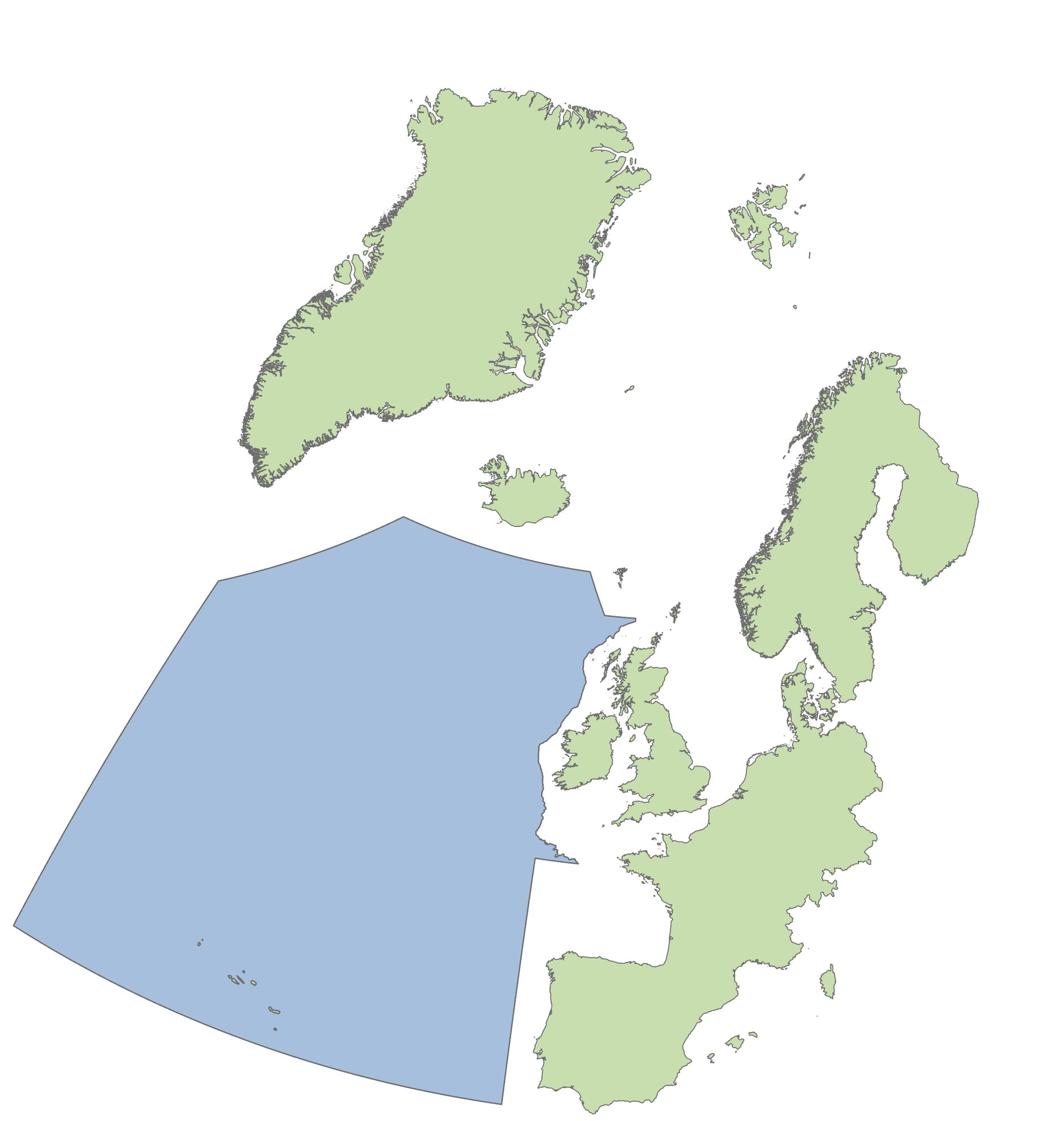
| Assessment of Status | Distribution | Population size | Demographics | Previous OSPAR status assessment | Status (overall assessment) | |
|---|---|---|---|---|---|---|
Region | I | NA | ||||
| II | NA | |||||
| III | NA | |||||
| IV | NA | |||||
| V | ↑1 | ↑1 | ↑1 | ● | ||
Assessment of key pressures | Contamination by heavy metals | Climate change | Marine litter | Illegal Unreported fishing | Threat or impact | |
|---|---|---|---|---|---|---|
Region | I | NA | ||||
| II | NA | |||||
| III | NA | |||||
| IV | NA | |||||
| V | ↑1 | ↑5 | ↑1 | ↑5 | ||
Explanation to table:
Distribution, Population size, Condition
Trends in status (since the assessment in the background document)
↓ decreasing trend or deterioration of the criterion assessed
↑ increasing trend or improvement in the criterion assessed
←→ no change observed in the criterion assessed
? trend unknown in the criterion assessed
Previous status assessment: If in QSR 2010 then enter Regions where species occurs ( ○) and has been recognised by OSPAR to be threatened and/or declining (● ) based on Chapter 10 Table 10.1 and Table 10.2 . If a more recent status assessment is available, then enter ‘poor’/’good’
Status*(overall assessment)
red – poor
green – good
? – status unknown
NA - Not Applicable
*applied to assessments of status of the feature or of a criterion, as defined by the assessment values used in the QSR 2023 or by expert judgement.
Key Pressure
↓ key pressures and human activities reducing
↑ key pressures and human activities increasing
←→ no change in key pressures and human activities
? Change in pressure and human activities uncertain
Threats or impacts (overall assessment)
red – significant threat or impact;
green–no evidence of a significant threat or impact
Blue cells – insufficient information available
NA – not applicable
1 – direct data driven.
2 – indirect data driven.
3 – third party assessment, close-geographic match.
4 – third party assessment, partial-geographic match.
5 – expert judgement.
Confidence
Medium
Background information
Year added to OSPAR List: 2008 (OSPAR, 2008)
P. aspera was nominated for inclusion in the OSPAR list with reference to its decline, keystone status and sensitivity with information also present on threat in OSPAR Region V particularly in the shelves of all Azorean islands and islets.
- Global/Regional importance: P. aspera distribution in the OSPAR Maritime Area is limited to Azorean islands where it occurs on rocky substrates in the intertidal and shallow sublittoral. Limpets are known to have an influence on the structure and function of rocky shore communities, are thus considered a keystone species (Raffaelli & Hawkins, 1996).
- Decline: A combination of easy access to sublittoral populations, improved refrigeration systems, increased commercial value and a hypothetical “limpet disease” led to a decline of stocks mainly in the central group of islands and a collapse of the fishery by 1988 (Martins et al., 1987; Santos et al. 1995; Hawkins et al., 2000; Ferraz et al., 2001).
- Sensitivity: P. aspera is thought to be a protandrous hermaphrodite. In heavily exploited populations the average size decreases and therefore the number of the large sized females is affected. This may lead to an increased likelihood of recruitment failure due to lowered reproductive output (Martins et al., 1987).
- Anthropogenic pressures and biological factors: The main threat to P. aspera is overexploitation by fisheries. Fishery closure in the central group of archipelago islands, in 1985, results in higher fishing effort in the remaining islands, mainly São Miguel and Santa Maria. Progressively tighter fisheries regulations, namely the establishment of seasonal fishing closures, minimum legal catch sizes and limpet protection zones have been introduced but limpet populations are still very much reduced in many islands (Hawkins et al., 2000).
Background Document: OSPAR (2010) concluded that P. aspera is commercially extinct in the Azores. The vast coastal area of the archipelago, combined with the difficult access and remoteness of certain protected areas, makes them challenging to monitor and particularly difficult to control in terms of illegal, unreported, and unregulated (IUU) fishing.
Geographical Range and Distribution
P. aspera is found on the shores of all Azorean islands and islets. Beyond the OSPAR Maritime Area it may be found in the Macaronesian archipelagos of Madeira and the Canaries (Weber & Hawkins 2005).
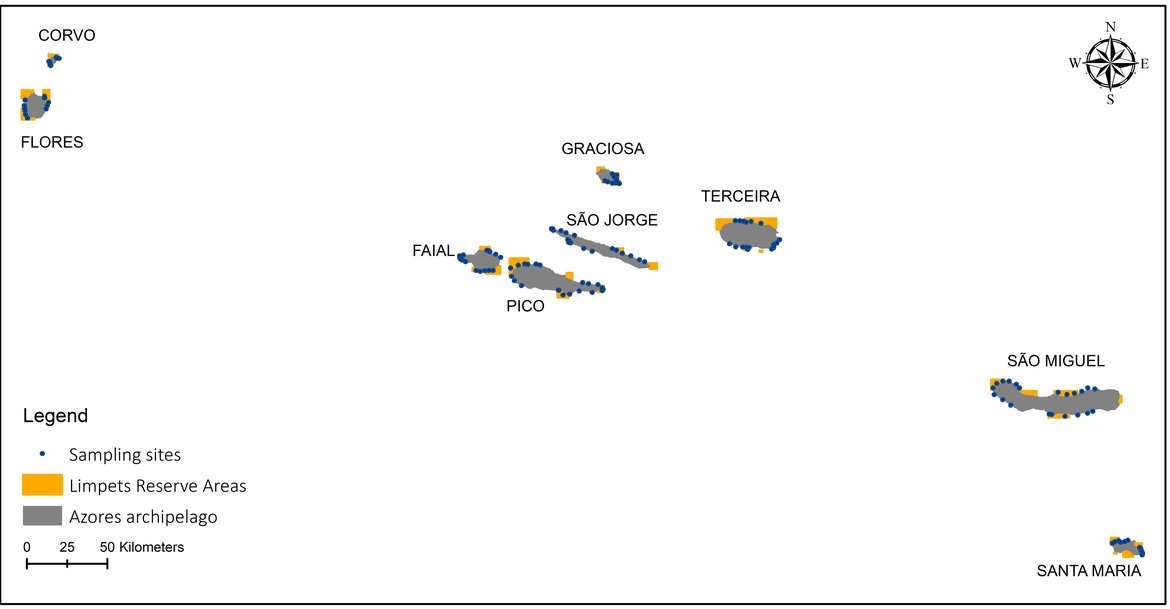
Figure 1: Azorean archipelago and sampling sites during independent limpet survey carried out in 2022 (source: Gomes et al. 2023)
Population/Abundance
During the 2022 independent limpet survey, trends in catches per unit effort (CPUE, in weight and number) and in individual size (Figure 1, Figure 2 and Figure 3) varied significantly among islands. The analysis revealed a significant difference between islands, with a significant decreasing trend in CPUE from the western group of islands (including Flores, Corvo, Faial, Pico, and São Jorge) to the eastern group (Terceira, Graciosa, São Miguel, and Santa Maria). These differences can be illustrated by an average CPUE of 307 ± 151 g/min for the first group of islands and approximately 58 ± 33 g/min for the second group. The comparison of limpet shell sizes among islands revealed significant differences between islands, with a decreasing trend in shell size following the order: Flores and Corvo > São Jorge > Pico and Faial > Graciosa and Santa Maria > Terceira > São Miguel.
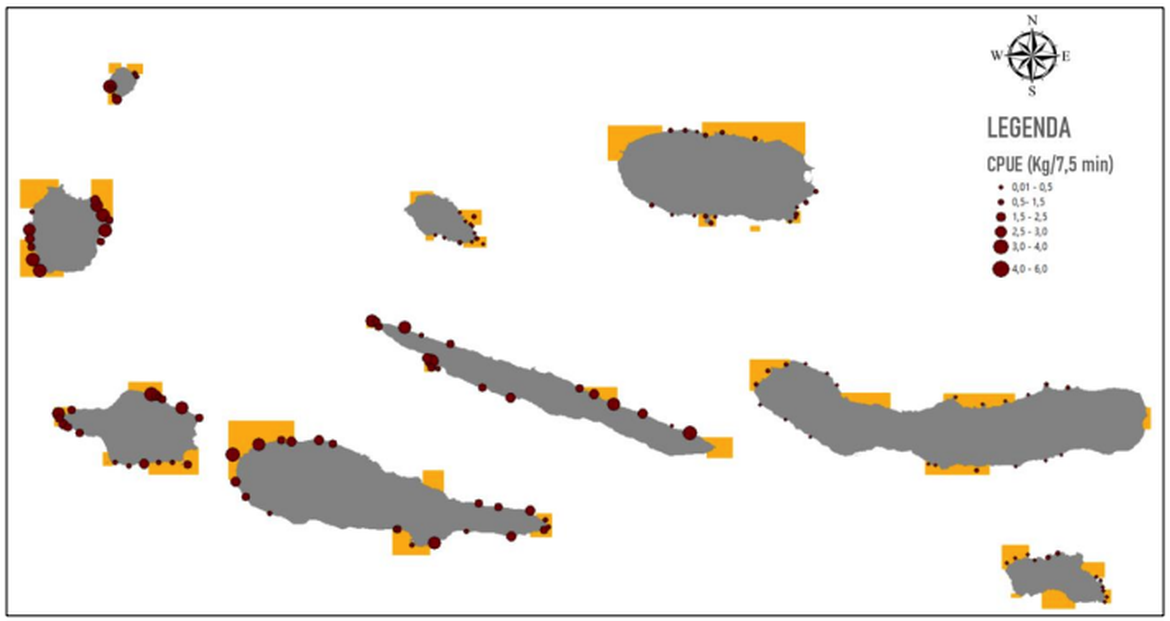
Figure 2: CPUE figures in each sampling site (source: Gomes et al. 2023)
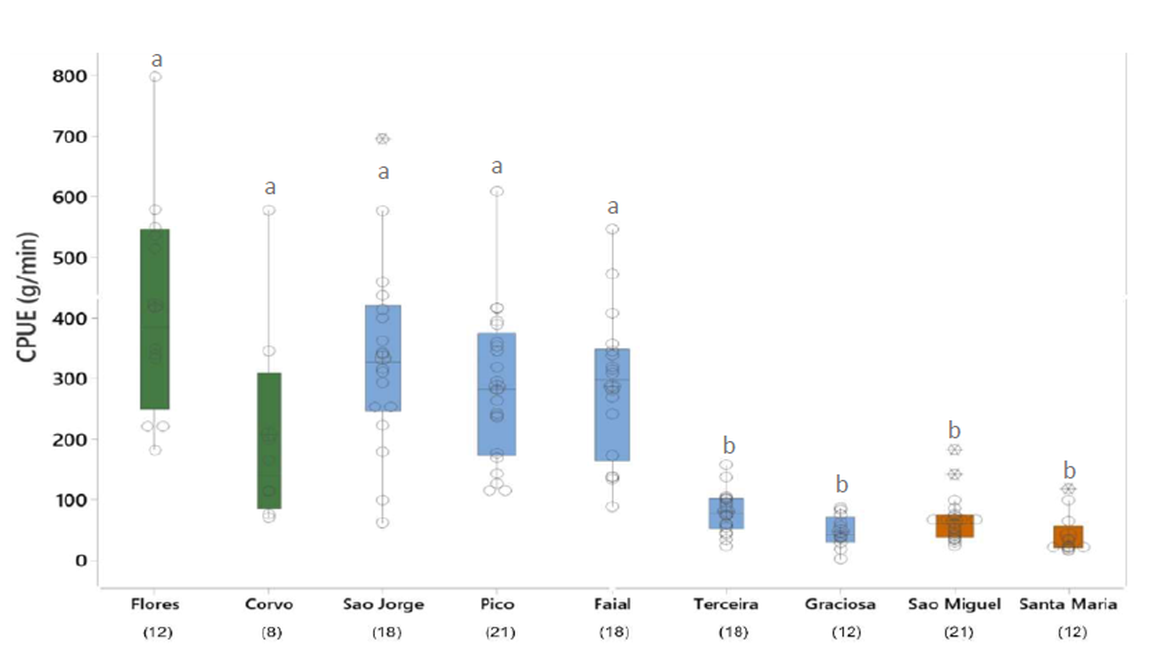
Figure 3: Variation in CPUE by island. The graph displays a summary of the distribution of the dataset within each island; the colored box represents the interquartile range with 50% of the mean values, and the line through the box represents the median. Letters (a) and (b) represent significant differences between two groups of islands (group a: Flores, Corvo, São Jorge, Pico, Faial and group b: Terceira, Graciosa, São Miguel e Santa Maria). Outliers are represented by the symbol *. The numbers in parentheses below the legend represent the number of dives performed on each Island (source: Gomes et al. 2023).
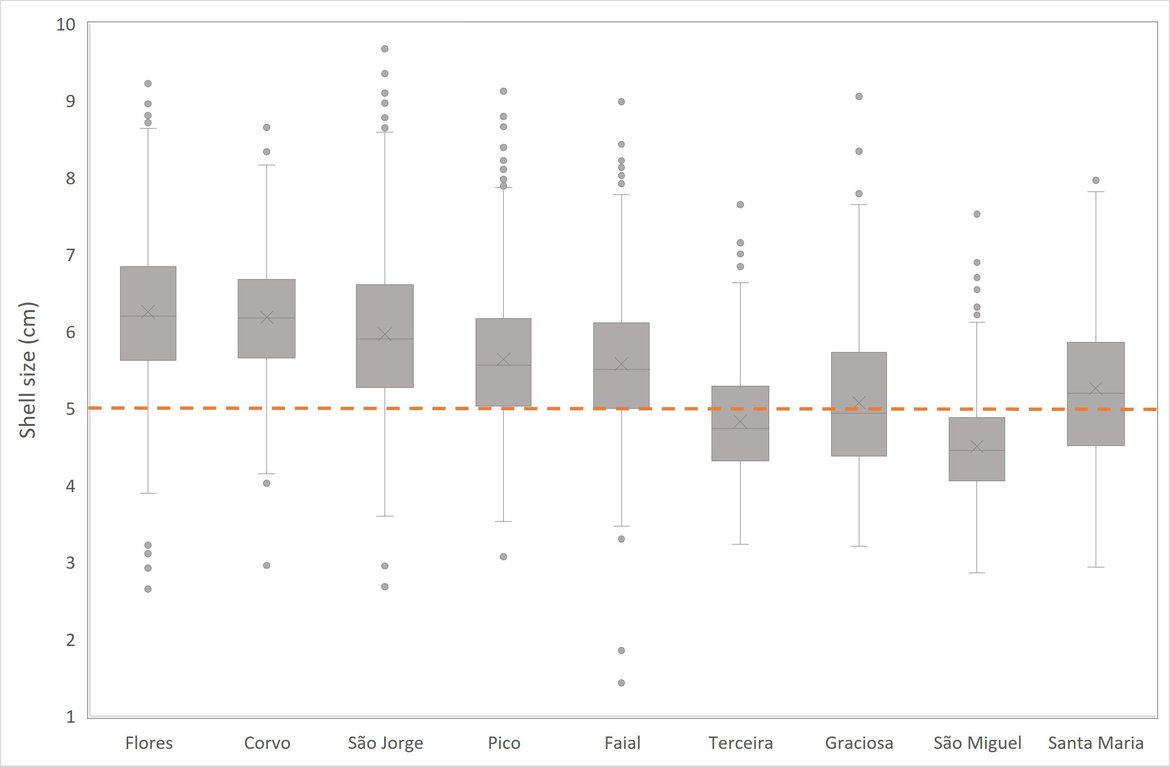
Figure 4: Distribution of sampled limpet sizes (cm) by island. The dashed red line represents the minimum catch size (5 cm) according to current legislation (source: Gomes et al. 2023).
Condition
The potential vulnerability of Azorean limpet was determined between 2019-2022 through a risk analysis based on a Productivity and Susceptibility matrix, which integrates multiple biological (productivity) and fishery impact (susceptibility) attributes. This assessment indicated a partial recovery of the species, with catch levels and independent abundance estimates approaching historical values. Consequently, this led to a reduction in susceptibility and the exclusion from the group of vulnerable species (Gomes et al., 2023; Torres et al., 2022).
Threats and impacts
IUU fishing appears to be the main threat across the archipelago, and continues to threaten sustainable management efforts, alongside a growing tourism market demand (Gomes et al., 2023; Torres et al., 2022).
Contamination by heavy metals, namely cadmium, occurs in P. aspera across the archipelago and is being monitored by the project MoniPOL (Martins et al., 2023).
Marine litter is also occasionally observed in P. aspera specimens (Okeanos, UAc) and climate change can negatively impact limpet populations across the archipelago.
Measures that address key pressures from human activities or conserve the species
Recent data showed different levels of recovery among the islands which require the implementation of management measures tailored to each island as a separate management unit. It means that management strategies must be customised to the ecological and exploitation conditions of each island. Reduction in fishing effort (reduction in the number of licenses issued and daily catch limit) on islands where the sign of recovery is less visible 'or not visible at all', such as São Miguel, Santa Maria, Graciosa and Terceira has been adopted since 2023.
Conclusion (including management considerations)
Improvement in the status of P. aspera in OSPAR Region V since the last assessment in 2010 has been documented. However, these results should be interpreted with caution, as the 2022 survey used slightly different methodologies and involved different divers/catchers. The current assessment indicates that P. aspera is recovering on some islands, while others continue to show signs of overexploitation. In addition, emerging pressures, including increased tourism and climate change, have intensified in recent years, posing further challenges to this vulnerable species. Over the last 3–4 years, demand and pressure on the species have increased, without a corresponding rise in enforcement or education efforts. In fact, results from 2025 survey already indicate a decrease in CPUE in some islands compared to 2022.
The main pressures affecting P. aspera is IUU fishing and contamination by heavy metals. Exceptionally high sea surface temperatures in the Azores are recorded as the intensity and frequency of marine heat waves in the north Atlantic and in the Azores increases (Gomes e Afonso, personal com). These events can negatively impact both the recruitment and survival of P. aspera, potentially undermining population recovery.
Therefore, continuous monitoring must be implemented and improved, and awareness actions and the application of severe dissuasive sanctions as well as management measures adjusted to each island according to the population condition.
Knowledge gaps
Existing monitoring programmes in Region V must continue to achieve long time-series to understand the varying population status and exploitation levels across different islands. Additionally, it is necessary to understand the dimension of illegal harvesting and connectivity studies as well as investigations into the effects of ocean acidification and ocean warming in parallel with a programme of environmental awareness directed to the local population and tourists. It should include an explanation of what is happening with the stocks and the importance of protecting the limpets in the breeding period, as well as providing information to visitors about what they can and cannot eat in each season.
The effects of invasive species, such as the algae Rugulopteryx okamurae, together with the impacts of climate change on coastal shallow ecosystems—which can directly influence limpet populations—are increasingly recognised as critical factors that warrant thorough understanding.
Ferraz, R.F., Menezes, G.M. & Santos, R.S. (2001). Limpet (Patella spp.) Mollusca: Gastropoda) exploitation in the Azores, during the period 1993- 1998.
Gomes, I., Torres, P., Milla, D. & Afonso, P. (2023). Relatório técnico de atualização sobre o estado da população da lapa-brava (Patella aspera) nos Açores. MoniCO - Programa de Monitorização de Espécies e Habitats Costeiros dos Açores. GAMPA. IMAR/Okeanos, 48 pp.
Hawkins, S.J., Corte-Real, H.B., Corte-Real, S.M., Pannacciulli, F.G., Weber, L.C. & Bishop, J.D.D. (2000). Thoughts on the ecology and evolution of the intertidal biota of the Azores and other Atlantic islands. Hydrobiologia 440: 3-17.
Martins, I., Oliveira, S. & Goulart, J. (2023). MoniPol- Plano Regional de Monitorização de Contaminantes em Organismos Marinhos para Consumo Humano, ano 1-projeto piloto. Portaria nº32/2009, de 28 de abril, alterada pela Portaria nº47/2010, de 13 de maio. Instituto de Investigação em Ciências do Mar - Okeanos, Universidade dos Açores, Horta, Portugal. 29.
Martins, H.R., Santos, R.S. & Hawkins, S.J. (1987). Exploitation of limpets (Patella spp). In the Azores with a preliminary analysis of the stocks. ICES. C.KM.1987/K:53.
OSPAR Commission. (2008). Case Reports for the OSPAR List of Threatened and/or Declining Species and Habitats. 261 pp.
OSPAR Commission. (2010). Background Document for Azorean limpet Patella aspera. 15 pp.
Raffaelli, D. & Hawkins, S.J. (1996). Intertidal Ecology. Kluwer Academic Publishers. Dordrecht, The Netherlands. 356pp.
Santos, R. S., S. J. Hawkins, L. R. Monteiro, M. Alves & E. J. Isidro (1995). Marine research, resources and conservation in the Azores. Aquatic Conservation: Marine and Freshwater Ecosystems, 5 (4): 311-354.
Torres, P., i Figueras, D. M., Diogo, H., & Afonso, P. (2022). Risk assessment of coastal fisheries in the Azores (north-eastern Atlantic). Fisheries Research, 246, 106156.
Weber, L.I. & Hawkins, S.J. (2005). Patella aspera and P. ulyssiponensis: genetic evidence of speciation in the North-east Atlantic. Marine Biology. 147: 153-162. DOI 10.1007/s00227-004-1540-2
Sheet reference:
BDC2026/Azorean limpet