


Status Assessment 2026 - Maerl Beds
The status of maerl beds regarding distribution, extent and condition is generally unknown throughout the OSPAR Maritime Area. In the Wider Atlantic (OSPAR Region V), maerl beds are currently being mapped meaning that trends cannot yet be deduced, and the overall assessment is Unknown. For Arctic Waters (Region I), Great North Sea (Region II), Celtic Seas (Region III), and Bay of Biscay and Iberian Coast (Region IV) overall status is based on the 2019 status assessment, as the status of maerl beds is unlikely to have changed since the previous assessment.
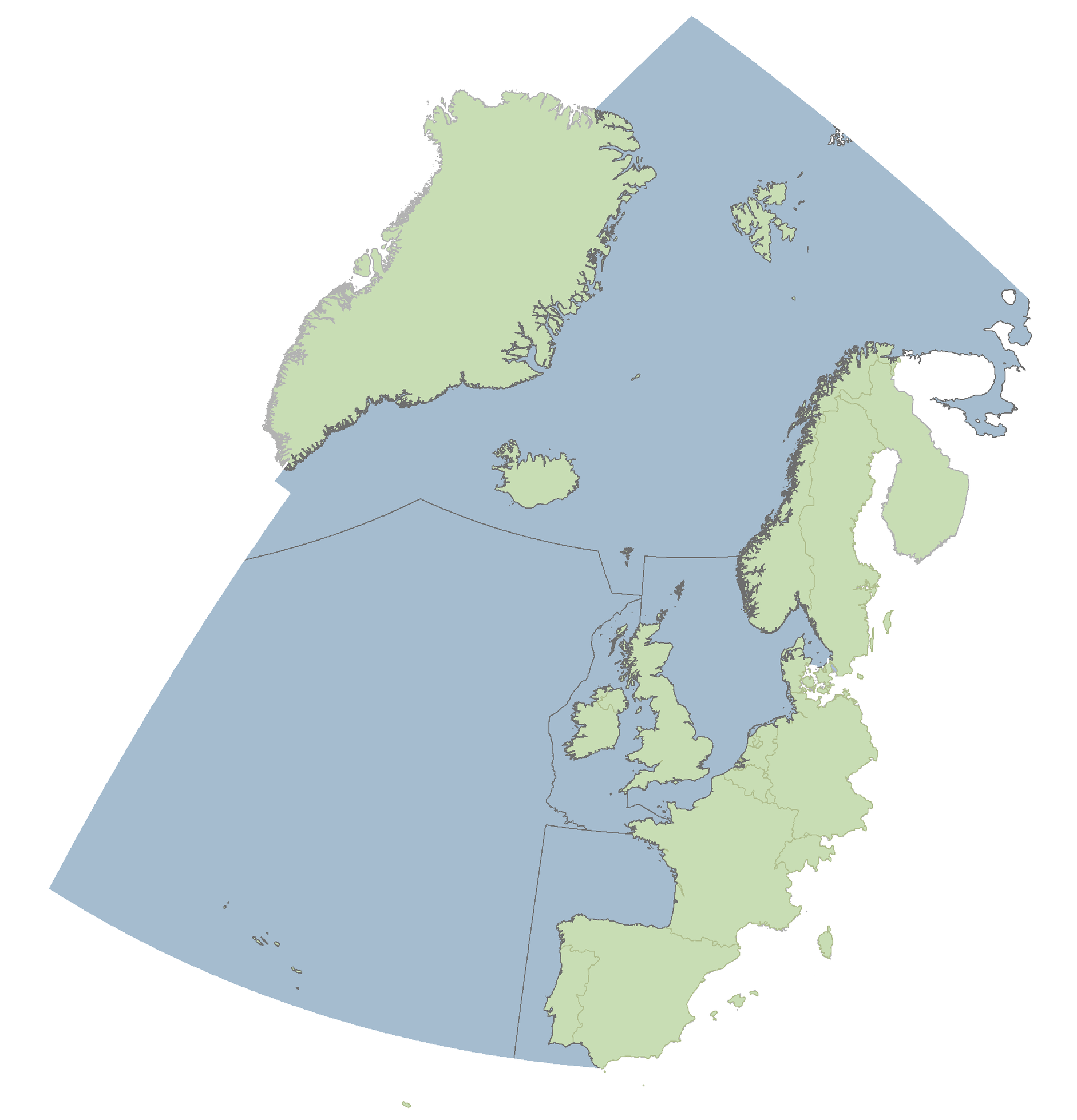
| Assessment of Status | Distribution | Extent | Condition | Previous OSPAR status assessment | Status (overall assessment) | |
|---|---|---|---|---|---|---|
Region | I | ?1,5 | ?1,5 | ?1,5 | ● | Unknown |
| II | ?1,5 | ?1,5 | ?1,5 | ● | Poor | |
| III | ?1,5 | ?1,5 | ?1,5 | ● | Poor | |
| IV | ←→1,5 | ?1,5 | ?1,5 | ● | Poor | |
| V | ?1,5 | ?1,5 | ?1,5 | Unknown | ||
Assessment of key pressures | Commercial extraction | Fisheries | Mariculture | Introduction or spread of non-indigenous species | Nutrient and organic enrichment | Placement of cables and pipelines | Climate change | Threat or impact | |
|---|---|---|---|---|---|---|---|---|---|
Region | I | ?5 | ↓1,5 | ↑1,5 | ?5 | ↑1,5 | ?5 | ↑3,5 | Significant threat1,3,5 |
| II | ↓5 | ↑1,5 | ↑1,5 | ?5 | ↑1,5 | ↑1,5 | ↑3,5 | Significant threat1,3,5 | |
| III | ↓5 | ↑1,5 | ↑1,5 | ←→5 | ↑1,5 | ↑1,5 | ↑3,5 | Significant threat1,3,5 | |
| IV | ↓5 | ←→1,5 | ↑1,5 | ?5 | ↑1,5 | ?5 | ↑3,5 | Significant threat1,3,5 | |
| V | ←→5 | ←→5 | ↑5 | ↑5 | NA | NA | ↑3,5 | Significant threat1,3,5 | |
Explanation to table:
Distribution, Population size, Condition
Trends in status (since the assessment in the background document)
↓ decreasing trend or deterioration of the criterion assessed
↑ increasing trend or improvement in the criterion assessed
←→ no change observed in the criterion assessed
? trend unknown in the criterion assessed
Previous status assessment: If in QSR 2010 then enter Regions where species occurs ( ○) and has been recognised by OSPAR to be threatened and/or declining (● ) based on Chapter 10 Table 10.1 and Table 10.2 . If a more recent status assessment is available, then enter ‘poor’/’good’
Status*(overall assessment)
red – poor
green – good
? – status unknown
NA - Not Applicable
*applied to assessments of status of the feature or of a criterion, as defined by the assessment values used in the QSR 2023 or by expert judgement.
Key Pressure
↓ key pressures and human activities reducing
↑ key pressures and human activities increasing
←→ no change in key pressures and human activities
? Change in pressure and human activities uncertain
Threats or impacts (overall assessment)
red – significant threat or impact;
green–no evidence of a significant threat or impact
Blue cells – insufficient information available
NA – not applicable
1 – direct data driven.
2 – indirect data driven.
3 – third party assessment, close-geographic match.
4 – third party assessment, partial-geographic match.
5 – expert judgement.
Confidence
Low due to low volume of data for analysis. There are significant knowledge gaps about the distribution, extent, condition and pressures affecting maerl beds throughout the OSPAR Maritime Area, meaning that the confidence in this assessment is low.
Background information
Year added to OSPAR List: 2004
The original evaluation of maerl beds against the Texel-Faial criteria referred to declines, sensitivity, ecological significance and threat.
- Decline: Maerl beds were observed to have declined in both extent and quality in the OSPAR Regions. In particular, declines were noted in Region III. For example, off the west coast of Scotland and Irish coast declines were noted due to activities such as scallop dredging. Furthermore, maerl beds in Brittany (France) had declined, and in some places completely disappeared, in part due to activities such as extraction.
- Sensitivity: Maerl beds are sensitive to a range of pressures, including substrata loss, smothering, increase in suspended sediment, abrasion and physical disturbance. Recovery is low due to the extremely slow growth rates and poor regenerative abilities of maerl.
- Ecological significance: Maerl beds support an extremely biodiverse community and may act as a nursery habitat for other species, including commercially targeted shellfish and fish species.
- Threat: Maerl beds were considered threatened from several activities. Commercial extraction caused wide-scale declines in France, with maerl used as a fertilizer. Due to the very slow growth rate, maerl is considered a non-renewable resource. Physical disturbance by bottom fishing methods had the potential to cause widespread and long-lasting damage. The spread of the invasive species, nutrient enrichment/pollution from agricultural waste, mariculture, and sewage discharges were also noted as threats.
- Last status assessment: 2019. OSPAR (2019) concluded that maerl beds were in poor status in Regions II, III and IV, and the status in Region I was unknown. The assessments in Regions II, III and IV were based on results from Article 17 reporting in 2019 (the requirement under the EU Habitats Directive for Member States to report on the conservation status of specified species and habitats every six years), which mainly used expert opinion to identify trends in status, based on a mixture of quantitative data, literature, and knowledge of sensitivity, pressures and activities. Along with the threats identified in the original OSPAR listing assessment (against the Texel-Faial criteria), increased bottom water temperature and ocean acidification due to climate change were also noted.
Geographical Range and Distribution
The geographical range of maerl beds extends from southern parts of the Barents Sea to the mid-Atlantic (including the Canary Islands and Madeira; Neves et al., 2021) and southern parts of the Irish Sea (Figure 1). Maerl beds are widely recorded from Svalbard and Scandinavia to Portugal and the Azores and particularly abundant off the west coasts of Scotland, Ireland, and Brittany (France). There are unpublished reports of maerl in fjordic locations off Greenland. In recent years, knowledge on the distribution of maerl beds in Iceland has increased (Brynjólfsdóttir, 2024). Dense, high coverage beds have been observed in the Westfjords of Iceland, and more limited areas of maerl beds were found in some locations in East and South-west Iceland. However, Iceland has not assessed changes in trends in distribution, extent and condition and therefore will not be considered further in the assessment. Maerl beds are generally found in depths of <40m, where light can penetrate. Beds can be found in the intertidal zone as seen in Galicia (Spain).
The OSPAR List of Threatened and/or Declining Species and Habitats (OSPAR Agreement 2008-06) currently states that maerl beds occur in all OSPAR Regions and are T&D in Region III.
The UK hosts the largest number of records in Region II (based on the 2019 status assessment; OSPAR, 2019), followed by France, Norway and Sweden. Whilst England (UK) and France assessed distribution as stable since 2019, Scotland (UK), Norway and Sweden (Västra Götaland) assessed it as unknown. Therefore, the trend in distribution was assessed as unknown.
In Region III, the UK is home to roughly two-thirds of maerl bed records with a large proportion of beds found in Scotland (OSPAR, 2019). Maerl beds are also recorded in France and Ireland. France assessed distribution as stable since 2019. Ireland did not respond to the data call but in Ireland, it is known that more than 85% of maerl habitat is recorded within those bays sheltered to some extent from large swell waves on the Atlantic coast, from Roaringwater Bay in Cork (southwest) to Mulroy Bay in Donegal (northwest). Scotland has not assessed trends in the distribution of maerl beds since the last assessment. Elsewhere in the UK, England, Wales and Northern Ireland assessed distribution as stable. Overall, the trend in distribution was assessed as unknown based on the unknown status for the majority of the beds.
In Region IV, the trend in distribution of maerl beds was assessed as stable, based on beds in Spain and France. Portugal did not respond to the data call so the confidence in this assessment is low. Records on the distribution of maerl beds are not available for Portugal and Spain, despite records being available in previous assessments. These beds are not mapped in Figure 1.
The status of maerl beds in Region I has not been assessed in the last 6 years and no information was provided from Contracting Parties for Region V. In Region V, maerl beds are currently being mapped meaning that baseline data will be available for future assessments (Neves et al., 2021; João Silva per comms). Therefore, the trend in distribution was unknown for Region I and no assessment was conducted on changes in distribution for Region V.
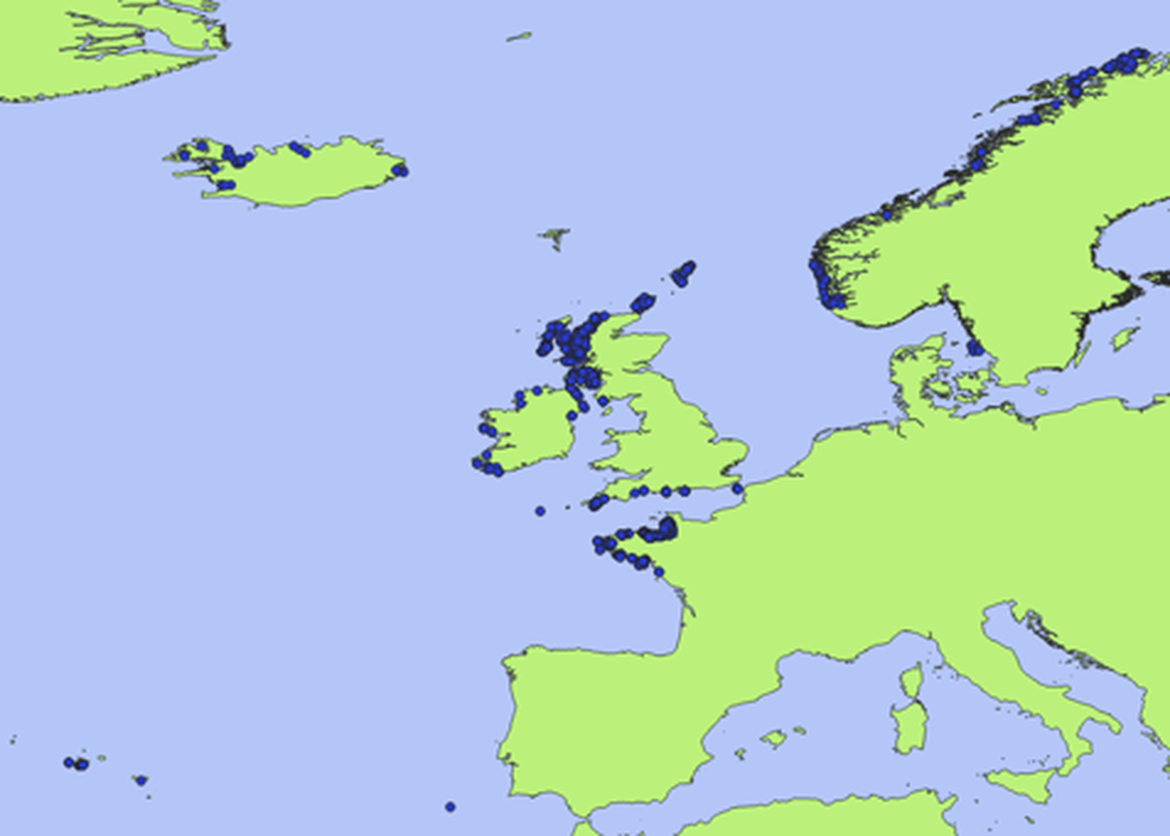
Figure 1: The current distribution of maerl bed records in the OSPAR maritime area (based on the OSPAR T&D 2025 database).
Extent
Maerl beds have been mapped in the UK, Ireland, and France. In France, most maerl beds are located in Brittany. Scarce occurrences can also be found in other areas along the French coast with dedicated mapping exercises being conducted (e.g. Oléron island). The extent of maerl beds can vary from tens to thousands of square meters. The total extent of maerl beds in the OSPAR maritime area has been estimated as 450 km2. This is likely an underestimate as polygon data is incomplete and the extent of many maerl beds remain unmapped. Some of the largest beds are found in the northeast of Brittany, the west of France (such as the Bay of Saint Brieuc, the Bay of Brest, and the Golfe du Morbihan), the west of Ireland (such as Galway Bay), and the Scottish Western Isles (such as within the Sound of Barra). Whilst there are records of maerl beds off the coast of Norway, Iceland, and Sweden, these have not yet been mapped.
In Region II, whilst England (UK) assessed extent as stable since 2019, Norway, Scotland (UK), and Sweden have not assessed changes in extent. Therefore, trend in extent in Region II is assessed as unknown.
Similarly, in Region III, Ireland did not respond to the data call. For France, a complete extent assessment is currently ongoing but France will be able to report trends in the near future. Scotland (UK) has not assessed trends in extent since the previous data call. Whilst extent was assessed elsewhere in the UK, trends were mixed with extent assessed as stable in Wales and Northern Ireland and increasing in England. Overall, the trend in extent was assessed as unknown based on the unknown status for the majority of the beds and mixed trend for other countries.
In Region IV, Spain has not assessed trends in extent since the previous data call, and Portugal did not respond to the data calls. For France, a complete extent assessment is currently ongoing but France will be able to report trends in the near future. Overall, the trend in extent was assessed as unknown for Region IV.
The status of maerl beds in Region I has not been assessed in the last 6 years and no information was provided from Contracting Parties for Region V. In Region V, maerl beds are currently being mapped meaning that baseline data will be available for future assessments (Neves et al., 2021; João Silva per comms). Therefore, trend in extent was unknown for Region I and no assessment was conducted on changes in distribution Region V.
Condition
The condition of maerl beds can be monitored in several different ways including the ratio of live to dead maerl, spatial integrity (e.g. do fishing gear tracks cut across the bed), morphology of maerl thalli (individual pieces of maerl) and the abundance, composition and diversity of the associated biota.
In the North-East Atlantic, declines in maerl condition have been well documented due to activities such as demersal fishing (e.g. scallop dredging) and commercial extraction.
In Region II, condition varied and was assessed as good by Norway bad by England (UK) and France (according to the lastest MSFD assessment), varied by Sweden (Västra Götaland) and unknown by Scotland (UK). The trend in condition was assessed as unknown for Norway, Scotland (UK) and Sweden (Västa Götaland) and improving in England (UK). Overall, the trend in condition in Region II is assessed as unknown based on the unknown status for the majority of the beds.
In Region III, France and Ireland did not respond to the data call. Scotland (UK) has not assessed condition or trends in condition since the previous data call, and elsewhere in the UK, condition was assessed as good by England and Northern Ireland, and poor by Wales, with trends in condition stable. Recent reporting (2025) under the Habitats Directive (Article 17) for Ireland stated that the overall Status of maerl remains bad with a deteriorating trend, as in 2019, due to the deterioration in the quality of the maerl beds caused by the deposition of pseudofaeces and/or extensive algal cover on the beds, the presence of negative indicator species such as the opportunistic ascidian Ascidiella aspersa, and the presence of the invasive alien species Sargassum muticum. The latest MSFD assessment concluded that French maerl beds in Region III are generally in poor condition with stable trends in most beds since 2015 (Boyé et al., 2024). Overall, the trend in condition was assessed as unknown based on the unknown status for the majority of the beds, and varied trends in beds that have been assessed.
In Region IV, Spain has not assessed condition or trends in condition since the previous data call, and Portugal did not respond to the data call. The latest MSFD assessment concluded that French maerl beds in Region IV are generally in poor condition with stable trends in most beds since 2015 (Boyé et al., 2024). Overall, the trend in condition was assessed as unknown for Region IV due to the lack of reporting from Contracting Parties.
Maerl bed condition is currently assessed as good in the Norwegian part of Region I, however, the trend in condition (2019-2025) is unknown in this Region. No information was provided on the condition of maerl beds from Contracting Parties for Region V. In Region V, maerl beds are currently being mapped, meaning that information on their condition will be available for future assessments (Neves et al., 2021; João Silva pers. comm). Therefore, trend in condition was unknown for Region I and no assessment was conducted on changes in distribution in Region V.
Threats and impacts
Commercial extraction, mariculture and fisheries were identified both during the original evaluation (Hall-Spencer et al., 2010) and the 2019 status assessment (OSPAR, 2019). The 2019 status assessment also identified dredging for navigational purposes, the introduction or spread of non-indigenous species, tourism and recreational activities, siltation rate changes, and changes in suspended solids as current and future threats to maerl beds (OSPAR, 2019). The current assessment agrees with the threats and impacts identified in the previous OSPAR assessments. However, the following additional impacts were identified:
- Nutrient enrichment
- Organic enrichment
- Placement of cables and pipelines
- Climate change
Mobile bottom-contact fisheries still represent one of the largest threats to maerl beds across all Regions. The OSPAR Feeder Report on Fisheries (OSPAR, 2021a) states that demersal fishing effort (mainly beam and otter trawling) has declined since 2003. Mobile bottom-contact fisheries have also been increasingly managed at many maerl beds, which will reduce this pressure in some localised areas. This suggests that this key pressure may be reducing, although it is still noted to be stable or increasing by some Contracting Parties during this assessment. Fisheries can also have indirect impacts on maerl beds by impacting trophic pathways, which can take time to re-establish. For example, in Västra Götaland (Sweden), fishing pressure on top predators has led to an increase in filamentous algae growth on maerl beds, as populations of small fish have increased, decreasing the presence of grazers. In the bay of Brest it’s suspected that degrading maerl modifies silicon cycling therefore modifying phytoplankton dynamics in the bay (Lopez-Acosta et al., 2022).
Commercial aggregate extraction has stayed stable in Regions I, III, and V, and decreased in Region II (OSPAR, 2023a). Whilst aggregate extraction has increased in Region IV, it is not considered a threat to maerl beds. Additionally, in Regions II, III & IV, commercial aggregate extraction of maerl beds is considered to have decreased having been banned by France and the UK. No disturbance by commercial aggregate extraction was noted by the UK or Denmark in the BH3b assessment (OSPAR, 2023b). There is no information on this threat for maerl in Region I, although given the wider assessment (OSPAR, 2023a), the pressure could be considered stable and still having a negative impact on maerl beds. In Region V, commercial aggregate extraction was noted as stable (expert judgement; João Silva pers. comm).
Mariculture is another key threat to maerl beds, which can cause nutrient and organic enrichment. The OSPAR Feeder Report on Aquaculture (OSPAR, 2021b) states that the aquaculture sector is growing globally in part driven by the demand for protein. There will be spatial differences in this trend, driven for example by climate change and competition with other sectors.
The introduction or spread of non-indigenous species, in particular the invasion of the slipper limpet Crepidula fornicata, has been noted as a threat in England (UK). Although evidence from France and Wales (UK) suggests that Crepidula outbreaks can decline after reaching a spike (Grall and Hall-Spencer, 2025). Invasive macroalgae are an increasing threat in both mainland Portugal and the Canary Islands (João Silva per comms).
Nutrient enrichment and organic enrichment were highlighted by Contracting Parties to be an additional threat to maerl beds. Enrichment can promote the growth of ephemeral algae which can smother maerl beds. Whilst enrichment is linked to pollution (for example, from run-off from land), its impacts may be exacerbated by climate change, with an increase in dissolved CO2 also promoting fleshy algal growth (Brodie et al., 2014; Grall and Hall-Spencer, 2025). The OSPAR report on Waterborne and Atmospheric Inputs of Nutrients and Metals to the Sea (OSPAR, 2022c) states that progress has been made in reducing nutrient input into the oceans; however, efforts to reduce inputs vary spatially. For example, in Norway, this nutrient enrichment was noted to be increasing for maerl beds. Likewise, it was identified as the second most threat to maerl condition in France in the latest MSFD assessment (Boyé et al., 2024 ; Helias et al., 2024). The OSPAR Condition of Benthic Habitat Communities report indicates that nutrient and organic enrichment is of particular issue in Regions II (such as the Kattegat) and III (such as the Southern Celtic Sea and that Bay of Biscay) (OSPAR, 2023c).
The placement of cables and pipelines, associated with renewable energy development, was noted to be an additional threat in Region II. Impacts from infrastructure development have been increasing in the North-Atlantic, in part due to the expansion in Offshore Renewable Energy Generation (OSPAR, 2021b).
Maerl beds are highly sensitive to climate change (Lopez-Acosta et al., 2022). In the North-East Atlantic, there are several species of maerl that can form maerl beds (Hall-Spencer, 2010). The geographical range of these species can influence their sensitivity to temperature increases, with species such as Boreolithothamnion glaciale considered particularly sensitive (Adey and McKibbin, 1970; Blake and Maggs, 2003; Hernandez-Kantun et al., 2017). Phymatolithon lusitanicum is also sensitive to elevated temperatures, although may be able to recover following marine heatwaves (Sordo et al., 2019; Schubert et al., 2021). Climate change may also affect maerl indirectly by favouring ephemeral species (in conjunction with nutrient enrichment) that could then overgrow maerl beds. It may also rewire trophic interactions with indirect cascading effects on maerl (Legrand et al., 2017)
As calcifiers, maerl species are also sensitive to ocean acidification (Brodie et al., 2014; McCoy and Kamenos, 2015; Martin and Hall-Spencer, 2017; Sordo et al., 2018). Other climate pressures, such as increased storm frequency are also projected to have an impact (Grall and Hall-Spencer, 2025).
Measures that address key pressures from human activities or conserve the species
OSPAR routinely reports on the implementation of Recommendations for OSPAR threatened and/or declining (T&D) species and habitats (for an overview of this process, click here).
Other recommendations from OSPAR Recommendation 2013/03 on furthering the protection and recovery of maerl beds in the OSPAR maritime area relate to monitoring, reporting and assessment. Since the previous assessment in 2019, 2101 point and 2838 polygons records have been submitted to OSPAR.
Reporting and assessment form part of this maerl bed OSPAR T&D status assessment. The assessment aims to report on the distribution, extent, condition of maerl beds and threats and pressures to beds and is carried out every 6 years. Four Contracting Parties responded to this data call (Norway, Sweden, Spain and UK). Data was missing from 5 countries (France, Ireland, Iceland, Denmark and Portugal) although France and Ireland did review drafts of this status assessment and Iceland provided data on the current distribution of maerl beds in Iceland.
Conclusion (including management considerations)
The overall status of maerl beds is generally poor throughout the OSPAR maritime area. This status is based on previous status assessment, rather than the findings of this assessment due to changes in distribution, extent and condition generally assessed as unknown across all Regions. This was either due to Contracting Parties not monitoring maerl beds at a sufficient scale in the last 6 years to assess trends or Contracting Parties not responding to the data call. In some Regions, trends in distribution, extent and condition are noted by some Contracting Parties, however data was not available for Contracting Parties that harbor the highest proportion of maerl bed area in each region.
Key pressures to maerl beds remained mobile bottom-contact fisheries, commercial extraction of maerl and mariculture. Nutrient and organic enrichment were also highlighted by Contracting Parties as being a threat to maerl beds. The impacts from nutrient and organic enrichment may increase over the coming century, as increased concentration of dissolved CO2 in the water column favours the growth of fleshy algae. The spread of invasive species and the placement of cables and pipelines (associated with the grown renewable energy sector) are also considered key threats to maerl beds. Maerl is highly sensitive to ocean acidification and temperature (for certain maerl beds). The impact of cumulative anthropogenic pressures, along with climate change, means that pressures are increasing in the assessed Regions (I, II, III and IV).
Management considerations for maerl beds include, amongst others: minimising or avoidance of damage by reducing pressures, establishment of Marine Protected Areas, controlling inputs of pollutants, and increasing awareness of the importance of maerl beds through assessments and reports. Current management recommendations are only for maerl beds in Region III but should apply to maerl beds in Regions II and IV also. This is based on knowledge on threats and overall status in these regions in the 2019 status assessment.
Knowledge gaps
Knowledge gaps exist around the condition of beds. The definition of maerl bed habitat includes both live and dead maerl beds. However, assessment on condition often focuses on the proportion of live versus dead maerl. Whilst this can be a good indication of whether a bed is deteriorating, more work is needed to understand the condition of dead beds. These beds still provide similar ecological services including habitat provision for a range of species. Dead maerl beds may be under a greater threat from exploitation through extraction of substratum. Nevertheless, it should be noted that dead maerl tends to disappear naturally through dissolution. Habitat definitions for maerl beds will be reviewed under the new OSPAR Benthic Regional Action Plan. The new definition could consider work by Jardim et al., (2025) to create a unified terminology for maerl beds.
The use of spatial mapping to explore conditions should be investigated. This could include the use of photogrammetry models to assess changes in extent and the proportion of live versus dead maerl. Often records of maerl beds are single points, however maerl beds can extend over many meters to kilometers. Artificial Intelligence may be able to assist in spatial mapping of maerl beds. The use of multispectral camera could also be useful. Tests have been conducted in the bay of Brest (FR), with results available by 2026.
Maerl is slow growing, and changes in condition can be difficult to distinguish. Repeated surveys over decadal timescales may be needed to detect change. Work is currently underway in the UK to define what recovery looks like with regards to maerl beds.
There has been increasing interest in the number of species that form maerl beds across the OSPAR Regions. The species of maerl across the OSPAR Regions can vary (Peña et al., 2021). Understanding genetic connectivity between beds and the species which form beds is important when considering management (Jenkins et al., 2021). For example, with regard to climate change, some species may be more sensitive to changing temperatures than others (i.e. Blake and Maggs, 2003). Furthermore, the reproduction and formation of maerl beds is poorly understood and warrants further research.
Maerl beds are beautiful habitats that support a very wide range of species. Their global distribution, role in shaping the oceans, role as ecosystem engineers, and diversity of life they support mean that they provide an excellent basis for improving ocean literacy amongst the public (Joshi and Burdett, 2024). In many countries, maerl beds are not well known. Increasing public awareness should be a focus of all Contracting Parties.
The assessment process
This assessment was hindered by the lack of data around the status of maerl beds. Of the countries that responded to the data call, changes in distribution, extent and condition were often assessed as unknown. Furthermore, very few countries have monitored maerl beds periodically over sufficient time scales to detect changes in extent and condition.
The use of indicators as proxies for threats and pressures and habitat condition should be considered by OSPAR, with guidance produced for those carrying out status assessments. For example, the use of BH3a indicator which looks at the extent of physical disturbance to benthic habitats from mobile bottom-contacting fishing gears (OSPAR, 2023d). It should be emphasized that such impact assessments require fine-scale fishery data in coastal areas which are only partially covered by VMS data.
Many Contracting Parties were unable to respond to the data call for this assessment. In many cases this was linked to resourcing issues. During the expert panel meeting, a number of scientists attended who were able to share local knowledge of the status of maerl beds. Gaps between scientists and those responding to the data call were evident. We recommend that OSPAR considers how to engage the scientific community in assessment and reporting. Not only would this allow for expert and local knowledge, but it could also help with resourcing issues currently experienced by a number of Contracting Parties.
Adey, W.H. and McKibbin, D.L., 1970. Studies on the maerl species Phymatolithon calcareum (Pallas) nov. comb. and Lithothamnion corallioides (Crouan) in the Ria de Vigo. Botanica Marina, 13: 100-106.
Blake, C. and Maggs, C.A. 2003. Comparative growth rates and internal banding periodicity of maerl species (Corallinales, Rhodophyta) from northern Europe. Phycologia, 42: 606-612.
Boyé A., Robert A., Janson A.-L., Beauvais S. and Dedieu K., (2023). Évaluation de l’état écologique des habitats benthiques en France métropolitaine au titre de la DCSMM. Rapport scientifique pour l’évaluation 2024 (cycle 3) du Bon État Écologique au titre du descripteur 1 – « Habitats Benthiques » de la DCSMM. Ifremer-PatriNat-OFB, 640 pages.
Brynjólfsdóttir, U.Ý. 2024. Maërl Beds in the Arctic: Distribution Analysis in Icelandic Waters, M.S. thesis, Faculty of Life and Environmental Sciences, University of Iceland, 109 pp.
Grall, J., and Hall-Spencer, J.M. 2025. Maerl Bed Conservation: Successes and Failures. Aquatic Conservation: Marine and Freshwater Ecosystems, 35: e70058.
Hernandez-Kantun, J.J., Hall-Spencer, J.M., Grall, J., Adey, W., et al. 1997. Chapter 10: North Atlantic Maerl Beds. In: Riosmerna-Rodríguez, R., Nelson, W., and Aguirre, J. (eds.), Maerl/Maerl Beds a Global Perspective. Switzerland: Springer, 362pp.
Victor L. Jardim, V.L., Grall, J.M., Barros-Barreto, B., Bizien, A. 2025. A Common Terminology to Unify Research and Conservation of Coralline Algae and the Habitats They Create. Aquatic Conservation: Marine and Freshwater Science, 35(3): e70121.
Jenkins, T.L., Guillemin, M-L., Simon-Nutbrown, C., Burdett, H.L., et al. 2021. Whole genome genotyping reveals discrete genetic diversity in north-east Atlantic maerl beds. Evolutionary Applications, 14(6): 1558-1571.
Joshi, S., and Burdett, H. 2024. The Benefit of Coralline Algae Science to Elevate Ocean Literacy. Aquatic Conservation: Marine and Freshwater Ecosystems, 34(11): e70006.
Legrand, E., Riera, P., Lutier, M., Coudret, J., Grall, J., and Martin, S.: Species interactions can shift the response of a maerl bed community to ocean acidification and warming, Biogeosciences, 14, 5359–5376.
López-Acosta, María, Manuel Maldonado, Jacques Grall, et al. 2022. « Sponge Contribution to the Silicon Cycle of a Diatom-Rich Shallow Bay ». Limnology and Oceanography 67 (11): 2431 47.
Mathieu Helias, Jacques Grall, Victor L Jardim, Chirine Toumi, Thomas Burel, Changes in maerl-associated macroalgal community dynamics as evidence of anthropogenic pressure, Annals of Botany, Volume 133, Issue 7, 6 June 2024, Pages 1025–1040.
Martin, S., and Hall-Spencer, J.M., 2017. Effects of ocean warming and acidification on rhodolith/maërl beds. In: Riosmerna-Rodríguez, R., Nelson, W., and Aguirre, J. (eds.), Maerl/Maerl Beds a Global Perspective. Switzerland: Springer, 362pp.
McCoy, S.J., and Kamenos, N.A., 2015. Coralline algae (Rhodophyta) in a changing world: Integrating ecological, physiological, and geochemical responses to global change. Journal of Phycology, 51: 6–24.
Neves, P., J. Silva, V. Peña, and C. Ribeiro. 2021. “Pink round stones”—rhodolith beds: an overlooked habitat in Madeira Archipelago. Biodiversity and Conservation, 30: 3359–3383
OSPAR, 2019. Status Assessment 2019 - Maerl beds. Version 1.0.2. Accessed [07/08/2025] at: https://oap.ospar.org/en/ospar-assessments/committee-assessments/biodiversity-committee/status-assesments/maerl-beds/#condition
OSPAR 2021a. Feeder Report 2021 – Fisheries. Version 1.0.0. Assessed [31/08/2024] at: https://oap.ospar.org/en/ospar-assessments/quality-status-reports/qsr-2023/other-assessments/fisheries/
OSPAR 2021b. Feeder Report 2021 - Offshore Renewable Energy Generation. Version 1.0.0. Assessed [31/08/2024] at: https://oap.ospar.org/en/ospar-assessments/quality-status-reports/qsr-2023/other-assessments/renewable-energy/
OSPAR 2021c. Feeder Report 2021 - Waterborne and Atmospheric Inputs of Nutrients and Metals to the Sea. Version 1.0.0. Assessed [08/08/2025] at: https://oap.ospar.org/en/ospar-assessments/quality-status-reports/qsr-2023/other-assessments/inputs-nutrients-and-metals/
OSPAR, 2023a. Human Activities Thematic Assessment. Version 1.0.0. Accessed [18/08/2025] at: https://oap.ospar.org/en/ospar-assessments/quality-status-reports/qsr-2023/thematic-assessments/human-activities/
OSPAR, 2023b. Extent of Physical Disturbance to Benthic Habitats: Aggregate Extraction. Version 1.0.0. Accessed [18/08/2025] at: https://oap.ospar.org/en/ospar-assessments/quality-status-reports/qsr-2023/indicator-assessments/phys-dist-habs-agg-ex/
OSPAR, 2023c. Condition of Benthic Habitat Communities: Assessment of some Coastal Habitats in Relation to Nutrient and/or Organic Enrichment. Version 1.0.0. Accessed [22/09/2025] at: https://oap.ospar.org/en/ospar-assessments/quality-status-reports/qsr-2023/indicator-assessments/condition-benthic-hab-enrich/
OSPAR, 2023d. Extent of Physical Disturbance to Benthic Habitats: Fisheries with mobile bottom-contacting gears. Version 1.0.0. Accessed [22/09/2025] at: https://oap.ospar.org/en/ospar-assessments/quality-status-reports/qsr-2023/indicator-assessments/phys-dist-habs-fisheries/
Peña, V., Bélanger, D., Gagnon, P, Richards, J.L., et al. 2021. Lithothamnion (Hapalidiales, Rhodophyta) in the changing Arctic and Subarctic: DNA sequencing of type and recent specimens provides a systematics foundation. European Journal of Phycology, 56(4): 468-493.
Schubert, N., Santos, R., Silva, J. 2021. Living in a Fluctuating Environment Increases Tolerance to Marine Heatwaves in the Free-Living Coralline Alga Phymatolithon lusitanicum. Frontiers in Marine Science, 8:791422.
Sordo, L., Santos, R., Barrote, I., Silva, J. 2019. Temperature amplifies the effect of high CO2 on the photosynthesis, respiration and calcification of the coralline algae Phymatolithon lusitanicum. Ecology and Evolution, 9(19): 11000-11009.
Sordo, L., Santos, R., Barrote, I., Silva, J. 2018. High CO2 decreases the long-term resilience of the free-living coralline algae Phymatolithon lusitanicum. Ecology and Evolution, 8(10): 4781-4792.
Sheet reference:
BDC2026/Maerl_beds_OSPAR