


Levels and trends in marine contaminants and their biological effects – CEMP Assessment report 2026
Acknowledgements
Intersessional work since MIME 2025 and preparation of this report have been undertaken by the Working Group on Monitoring and on Trends and Effects of Substances in the Marine Environment (MIME), led by Dr Rob Fryer.
Executive Summary
This report summarises the 2026 annual CEMP assessment of levels and trends of contaminants and their biological effects. The full assessment is available online in the OSPAR Hazardous Substances Assessment Tool (OHAT): https://dome.ices.dk/ohat/?assessmentperiod=2026.
There were 15647 time series (of three years or more) in biota, of which 11185 were assessed for trends, 9963 for environmental status and 2994 for human health status; 9661 time series in sediment, of which 3782 were assessed for trends and 7306 for status; and 2234 time series in water, of which 1465 were assessed for trends and 748 for status.
Full Report
The 2026 annual CEMP assessment can be viewed on the OSPAR Hazardous Substances Assessment Tool (OHAT). It assessed 15647 time series (of three years or more) in biota, of which 11185 were assessed for trends, 9963 for environmental status and 2994 for human health status; 9661 time series in sediment, of which 3782 were assessed for trends and 7306 for status; and 2234 time series in water, of which 1465 were assessed for trends and 748 for status. Compared to the 2022 assessment (used for the QSR), the number of time series has increased by 4% for biota, 47% for sediment and 59% for water. A breakdown of trends and status by region and determinand is given in Appendix 1 Tables 1-7.
The assessment methodology is described in the help files on the OHAT and is essentially the same as that used for the 2025 assessment.
Regional trends and environmental status were assessed for metals, polycyclic aromatic hydrocarbons, polychlorinated biphenyls, and polybrominated diphenyl ethers in biota and sediment, polycyclic aromatic hydrocarbon metabolites (PYR1OH) in fish, organotins in sediment, and imposex (VDS) in whelks. For biota, time series from mammals and birds were included in the regional trend assessments, but not in the regional status assessments as the comparability of thresholds for mammals and birds against those for fish and shellfish needs further investigation. Regional health status was assessed for metals, polycyclic aromatic hydrocarbons, polychlorinated biphenyls and polybrominated diphenyl ethers in biota. The results of the regional assessments are summarised in Appendix 1 Tables 8-12, with full details available on the OHAT.
The changes in regional environmental status since 2025 (Table 1) show a mixture of improvement and decline, with no obvious pattern to the changes.
The biota and sediment CHASE scores are shown in Figure 1 and Figure 2 respectively. The scores for 2022-2025 are shown for comparison. There is little change for biota. There are larger changes for sediment, although these must be interpreted with care. The increases in the Northern North Sea and the Irish and Scottish West Coast in 2024 and 2025 respectively are due to a change in analytical laboratory (see 2024 and 2025 CEMP Assessment Reports) and the increase in the Gulf of Cadiz in 2025 is due to a shift from an imputed mercury contaminant ratio to one based on the available time series (see 2025 CEMP Assessment Report). The CHASE scores for Channel in 2024 and 2025 are higher than those in 2022, 2023 and 2026. However, this is because there was an error in the normalisation process for French sediment data in the 2024 and 2025 Assessments which has now been corrected.
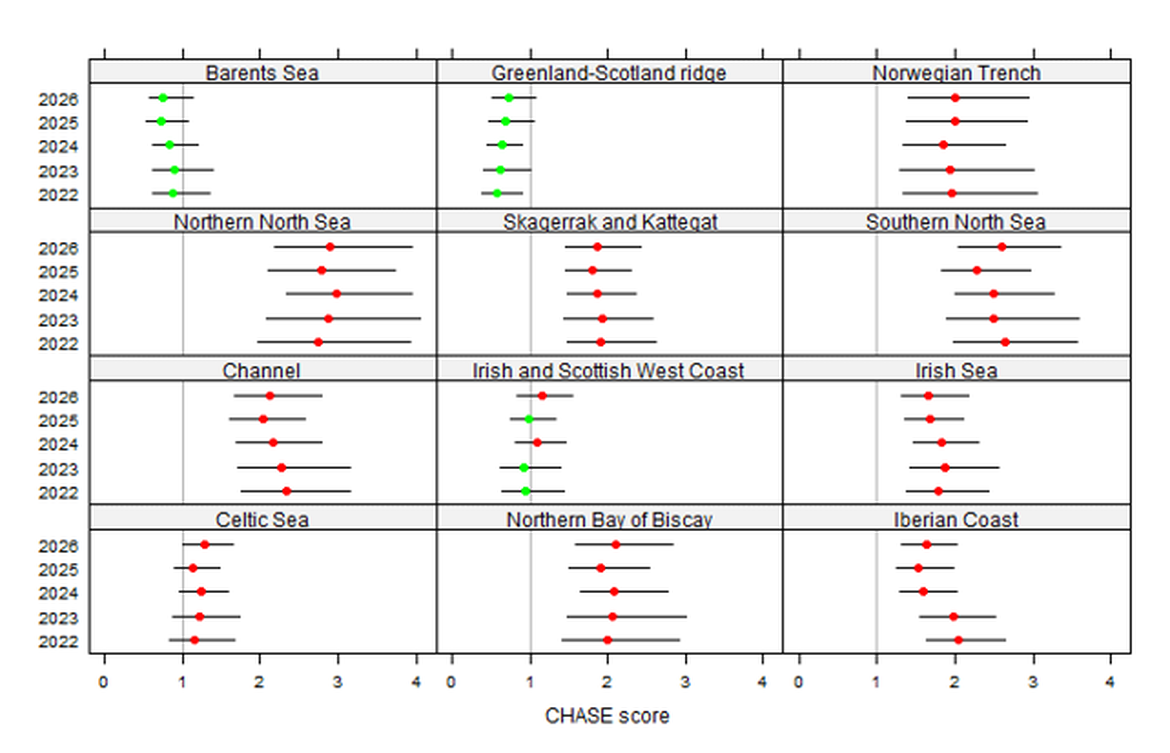
Figure 1: Biota CHASE scores with 95% confidence intervals for 2022 - 2026
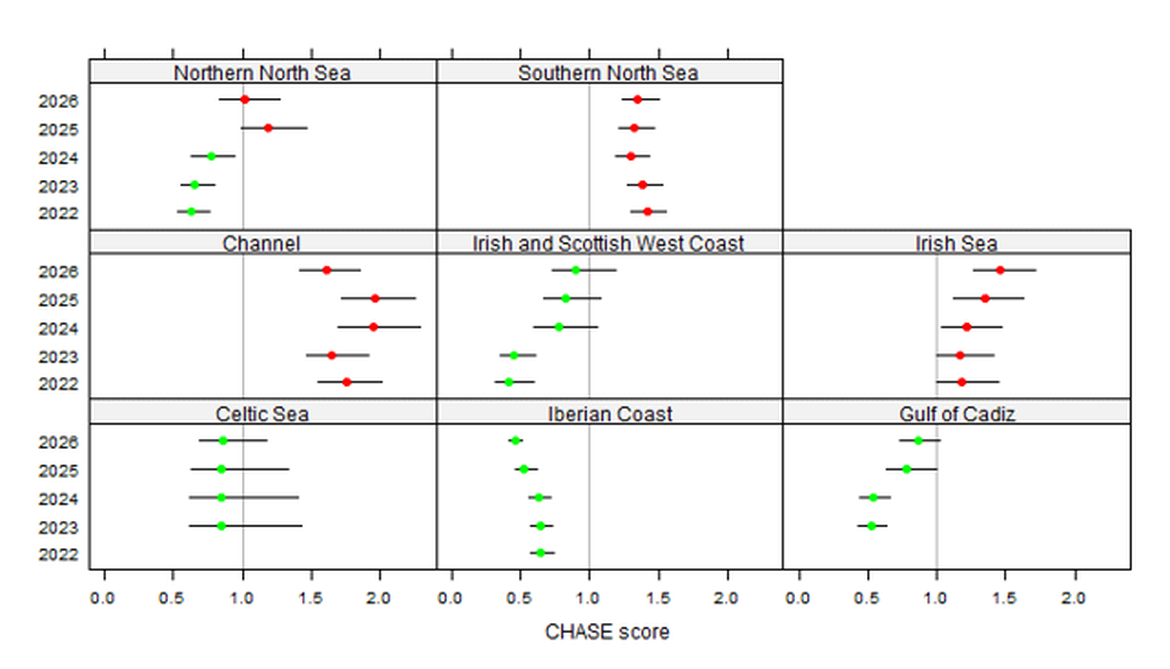
Figure 2: Sediment CHASE scores with 95% confidence intervals for 2022 - 2026
| Region | Subregion | Determinand (group) | 2024 | 2025 | |
|---|---|---|---|---|---|
| Biota | 2 | Skagerrak and Kattegat | Lead | orange | blue |
| 3 | Irish Sea | CB118 | red | green | |
| Irish Sea | Imposex | blue | green | ||
| Sediment | 2 | Channel | Copper | red | green |
| Channel | PBDEs | blue | green | ||
| 3 | Celtic Sea | Arsenic | orange | blue | |
| Celtic Sea | CB118 | red | green | ||
| 4 | Iberian Coast | PAHs | blue | green | |
| Gulf of Cadiz | Cadmium | green | blue |